


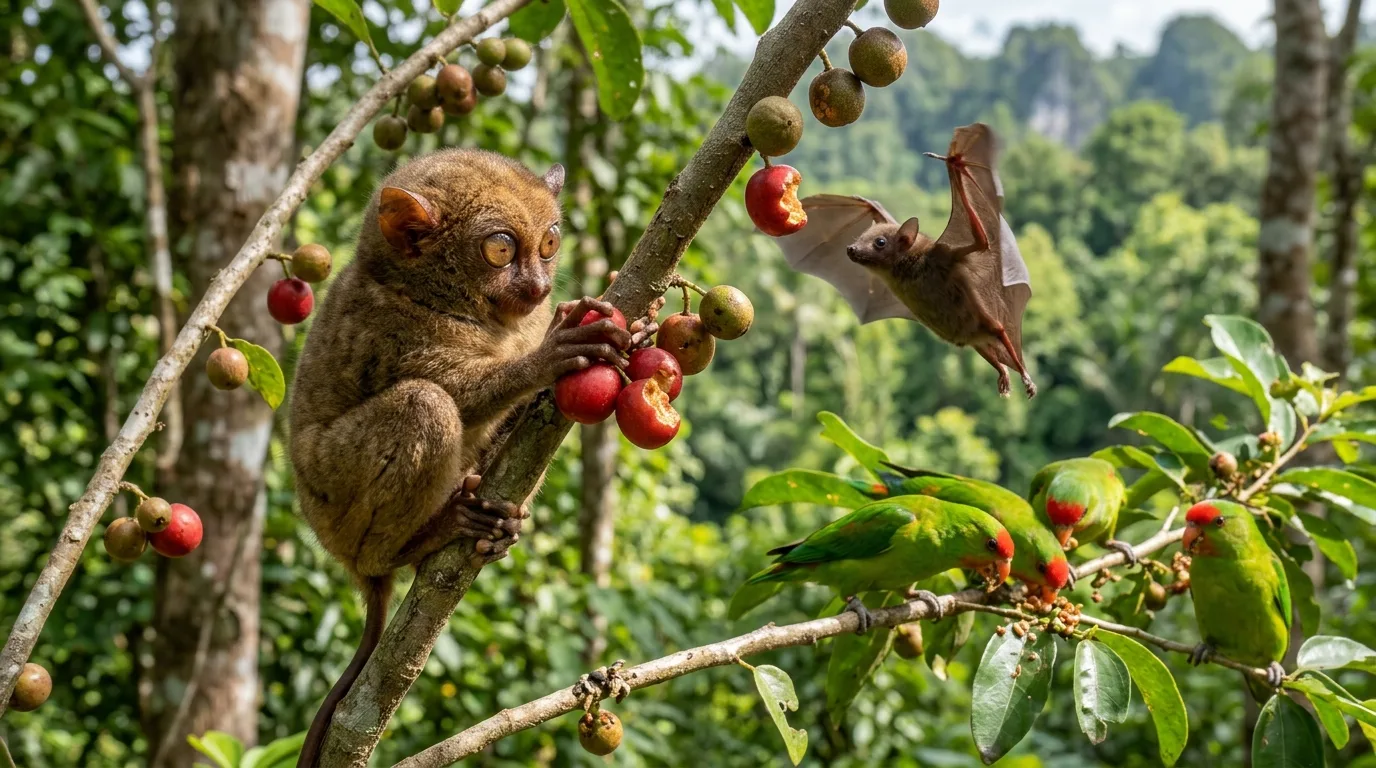
Fruit Trees Provide Food for Wildlife
BOHOL - Fruit-bearing trees can become important food sources for many wild animals. Birds may feed on small fruits, while fruit bats and other mammals consume ripe produce when it becomes available. Insects also visit flowering trees and may feed on nectar or pollen before fruits develop. These natural food sources can help wildlife survive without depending entirely on cultivated crops or human-provided food. The variety of fruit trees in an area can also influence which animals are able to find suitable food throughout different seasons.
Animals Help Trees Grow in New Places
The relationship works in both directions because animals contribute to the reproduction and spread of plants. Birds and fruit bats can carry seeds away from the trees where they feed, depositing them in other locations through their droppings or by dropping partially eaten fruits. Some animals and insects also help pollinate flowers, allowing certain trees to produce fruit and seeds. Over time, these natural processes can support plant growth and help maintain vegetation in suitable habitats. This makes wildlife an important part of how forests and other green spaces regenerate.
Protecting Trees Also Protects Wildlife Habitats
Preserving mature fruit trees and planting suitable native species can help maintain food sources and shelter for local wildlife. Homeowners, farmers, and communities can contribute by keeping existing trees where possible, avoiding unnecessary cutting, and choosing plants that support native animals. Protecting connected green spaces is also important because wildlife needs safe places to feed, rest, and move between habitats. In Bohol, where communities, farms, and natural areas exist alongside one another, caring for fruit-bearing trees can support both local landscapes and the animals that depend on them. A single tree may seem like a small part of the environment, but many trees together can help sustain a much wider network of life.
