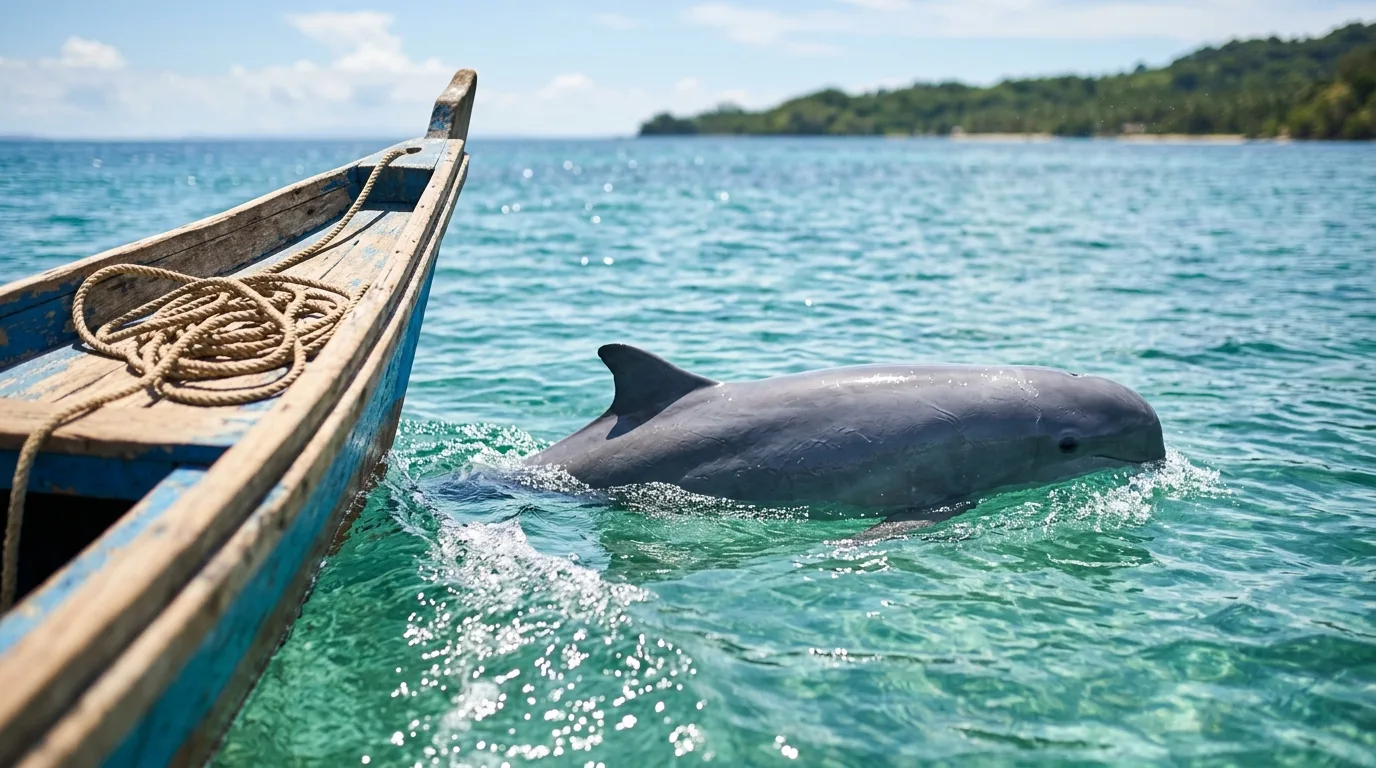
ILOILO — The Bureau of Fisheries and Aquatic Resources Region 6 has launched the "Waddy Alert" campaign to guide communities in responding to stranded marine mammals, particularly the critically endangered Irrawaddy dolphin. The initiative teaches proper first-response techniques to protect these rare creatures.
A Call to Report Strandings Immediately
Residents who encounter a stranded whale, dolphin, or Irrawaddy dolphin are urged to contact local responders or report directly to the BFAR Region 6 Facebook page. Reports may also be made through the hotline 0930 457 3909. Swift reporting allows trained teams to reach the animal before its condition deteriorates.
Every stranding incident carries valuable information for scientists. Each report helps responders determine where and when strandings occur, identify possible causes, and assess potential dangers to both animals and humans. This data contributes to monitoring programs, habitat understanding, and more effective conservation planning.
The ASAPS Response Protocol
The campaign outlines four key actions under the ASAPS framework. The first is Approach with Care. Responders should limit physical contact to essential body parts and call trained local government, BFAR, or volunteer responders for assistance.
Supportive Care involves protecting the animal's blowhole from water or sand to ensure proper breathing. The eyes must not be touched due to sensitivity, though they may be moistened with seawater rather than fresh water. The pectoral fins should never be held, pulled, or twisted to avoid injury.
Alleviating Stress and Protecting from Elements
The third action is to Alleviate Stress by keeping crowds away and preventing loud noises or strong physical contact. The animal should be positioned in a balanced posture to ease breathing and prevent injury. Keeping the skin moist with seawater is critical to prevent dehydration, while avoiding the blowhole and dorsal fin.
The fourth action is to Protect from the Elements. Responders should use appropriate methods to keep the animal out of direct sunlight, strong wind, or heavy rain. Umbrellas, tents, or tarpaulins can provide shade and reduce stress on the stranded creature.
Fisherfolk as Frontline Observers
BFAR-6 emphasized that fisherfolk serve as the eyes of the sea. As the first to observe unusual events in coastal waters, their experience and familiarity with the marine environment make them crucial partners in conservation. Their observations help monitor strandings, and their reports trigger proper responses.
The agency encouraged the public to share information about stranded marine mammals. Community participation strengthens protection efforts for the region's marine life. Protecting these creatures is a shared responsibility that requires collective action.