


CLARK FREEPORT ZONE, PAMPANGA — For decades, the standard playbook for government-led labor programs has focused almost entirely on a single goal: taking unemployed individuals and giving them basic vocational training to help them enter the job market. While this entry-level approach remains a vital civic safety net, it often overlooks a critical reality in rapidly developing economies. Once workers secure a position inside a fast-evolving corporate environment, they can easily find their skill sets stalling, mismatched, or outpaced by changing global industry standards.
A Targeted Approach to Workforce Excellence
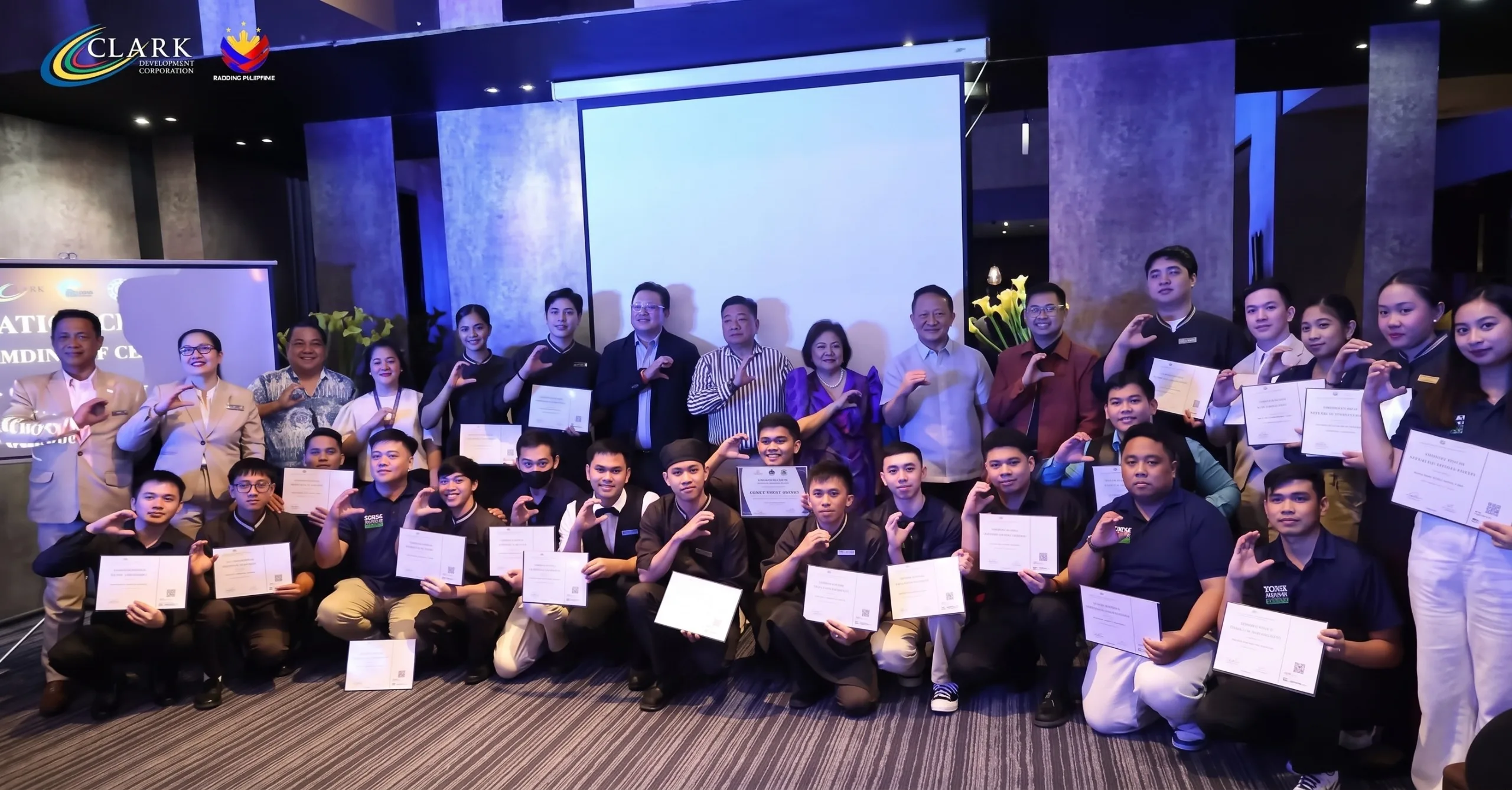
The 10-day initiative, facilitated in close coordination with the Gonzalo Puyat School of Arts and Trades, marked a significant shift in labor economics by focusing directly on existing, front-line hospitality workers already employed within Clark's premier gaming and resort facilities rather than seeking outside applicants. Twenty of these professionals successfully cleared the rigorous National Competency Assessment for FBS NC II, while four others re-validated and leveled up their professional credentials. This proactive approach ensures that advanced culinary arts, premium table service, and complex mixology standards are executed with flawless precision, matching the demands of international tourists and high-net-worth investors. For a high-end corporate locator like Midori Clark Hotel and Casino, having a workforce that undergoes continuous, formalized testing means their service delivery remains highly competitive on the world stage.
Rewriting Career Trajectories Through Certification
For the employees themselves, this structural upskilling completely rewrites their career trajectories. Top performer Ethan John Dayrit, speaking on behalf of the graduating class, shared a moving testament to how the intense training sharpened their technical skills while helping them realize their true professional potential. By earning an official NC II certification, these workers aren't just performing daily tasks anymore—they are building a verified portfolio of expertise that opens doors to promotions, leadership roles, and long-term career mobility. This initiative aligns with TESDA's broader mandate to provide quality technical education and skills development, with the agency having benefited from significant legislative support including the Republic Act 12063, also known as the Enterprise-Based Education and Training Program, which institutionalizes industry-driven training partnerships. By prioritizing continuous learning over basic placement, the partnership between the CDC, TESDA, and private enterprises is setting a sophisticated new benchmark for workforce management—proving that the true strength of an economic zone isn't just measured by the number of jobs it creates, but by how aggressively it polishes, protects, and future-proofs the talent it already has.
