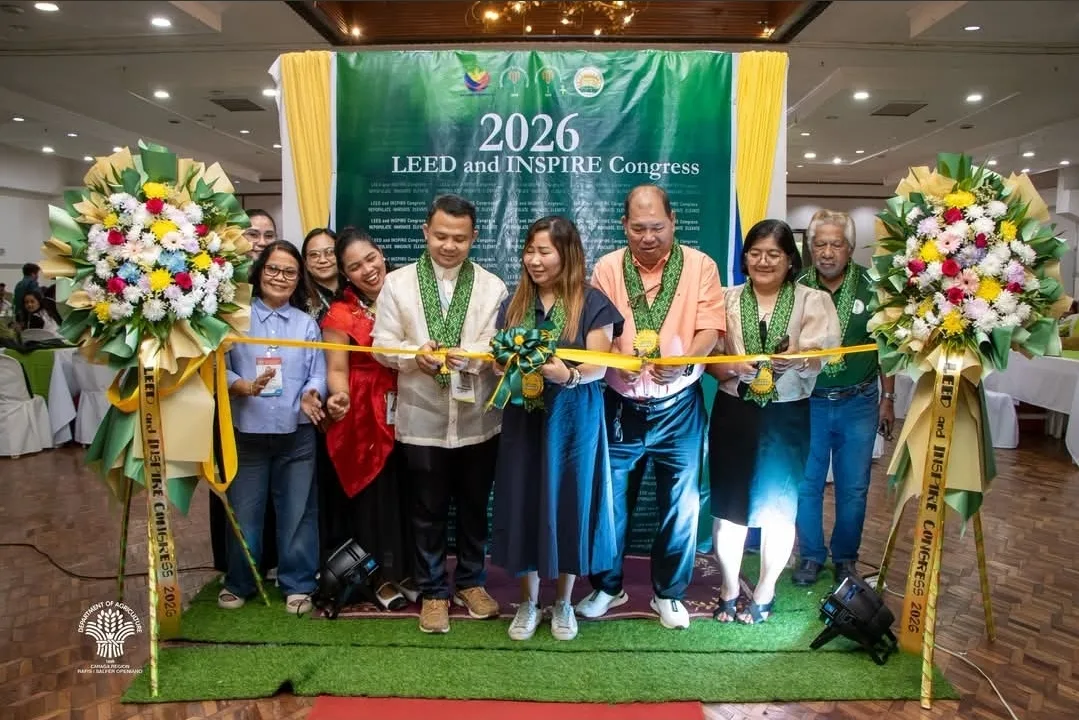
BUTUAN CITY — A congress of livestock and poultry beneficiaries is not usually where one expects to hear about operational frameworks and supply-chain mapping. But at the LEED and INSPIRE Congress 2026, held from October 28 to 30, the conversation moved past production figures and into the mechanics of running an enterprise. The Department of Agriculture (DA) Caraga Livestock Program, working with the Agricultural Training Institute (ATI) Caraga, gathered 124 beneficiaries of the Livestock Economic Enterprise Development (LEED) Program and 21 beneficiaries of the Integrated National Swine Production Initiatives for Recovery and Expansion (INSPIRE) Program for three days of knowledge exchange.
From Backyard Raisers to Enterprise Operators
The distinction matters. LEED and INSPIRE do not simply distribute animals and walk away; both operate on a revolving-capital model that expects beneficiaries to expand production and reinvest proceeds into future operations. That design turns a grant into a business, and a business requires management skills that are not always part of a farmer's training. The congress addressed that gap directly. Sessions focused on how beneficiaries can exchange knowledge, experience, and best practices in managing their livestock businesses, with the goal of improving operations and sustaining income rather than merely increasing headcount.
A Framework for Seeing the Whole Operation
One of the resource persons, Dr. Rey Salvador F. Convocar, chairperson of the Santa Josefa Agriculture Cooperative and a LEED beneficiary himself, shared the SIPOC operational framework—Supplier, Input, Process, Output, and Customer—as a tool for understanding and improving business flow. The value of SIPOC lies in its simplicity. It forces an operator to identify where inputs come from, what happens between receipt and sale, and who ultimately buys the product. For a cooperative managing poultry or swine, that clarity can expose bottlenecks that were previously invisible. Convocar also stressed flock health and buyer connections through multiple market channels, two practical levers that determine whether a livestock enterprise survives beyond its first cycle.
Peer Learning as the Real Curriculum
The congress was designed around the premise that beneficiaries learn best from each other. Convocar's presence as a fellow beneficiary, not an outside consultant, gave his lessons a credibility that a formal lecture could not match. He has navigated the same constraints, dealt with the same market conditions, and made the same decisions the audience faces. That peer-to-peer dynamic is the congress's quiet strength. It transforms a government program into a network, and a network into a source of durable support when individual beneficiaries encounter problems they cannot solve alone.