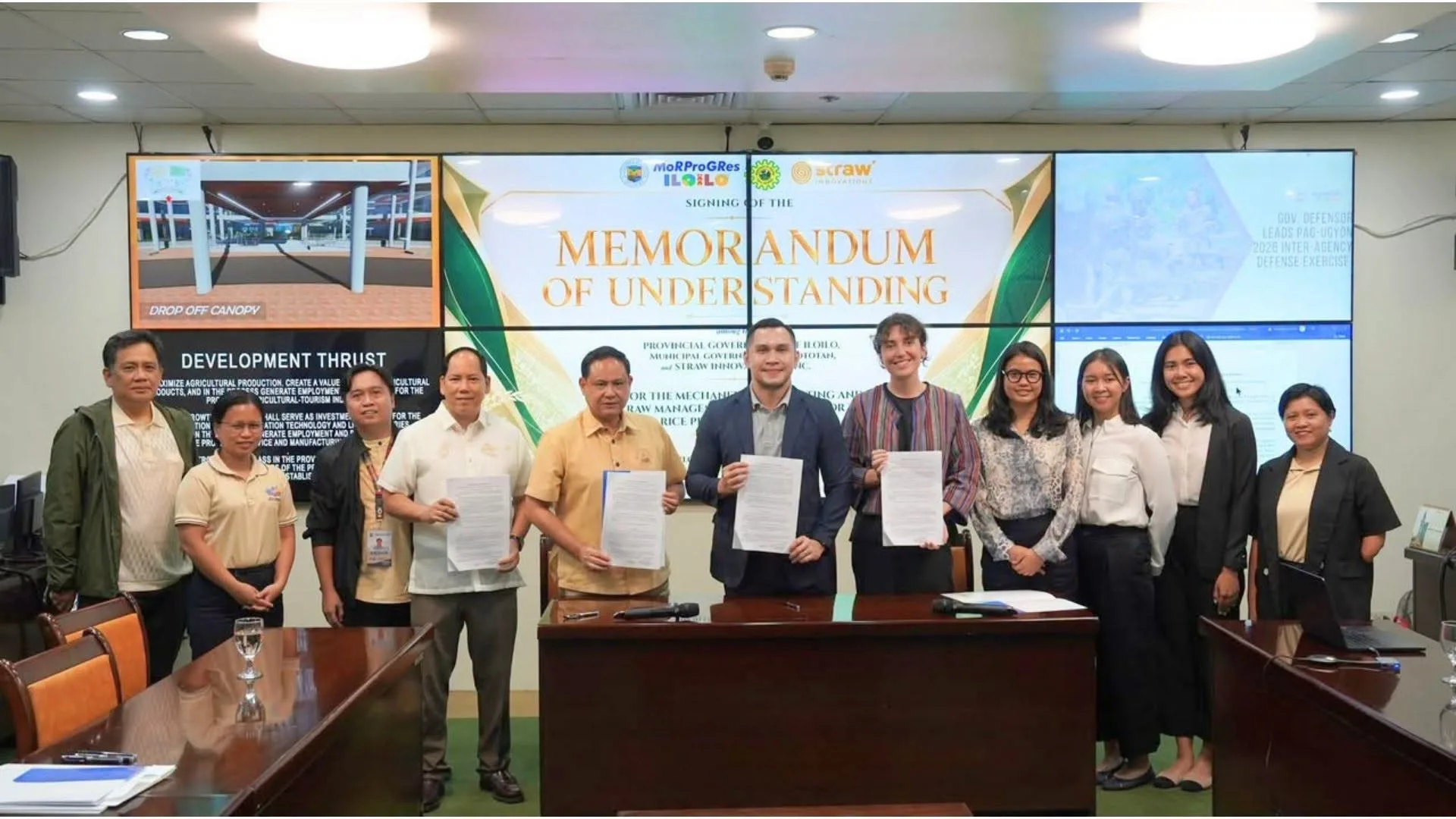
ILOILO CITY — The United Kingdom and the Philippines are expanding cooperation on sustainable agriculture in Iloilo. A new partnership aims to reduce post-harvest losses, improve rice harvesting, and turn rice straw into valuable products like compost, biochar, and renewable energy feedstocks.
A Three-Year Agreement for Sustainable Rice
The Iloilo Provincial Government, Municipality of Pototan, and UK company Straw Innovations Inc. signed a three-year Memorandum of Understanding. The agreement focuses on improving rice harvesting, milling, and straw management in the province. This collaboration brings together UK expertise, private-sector innovation, and local government leadership.
Governor Arthur Defensor Jr. signed on behalf of the provincial government. Pototan Mayor Rafael Enrique Lazaro represented his municipality. Jay-Rness D. Ceria, Brand and Marketing Manager, signed for Straw Innovations. Ellen Anthony, Second Secretary for Climate at the UK's Foreign, Commonwealth & Development Office, witnessed the signing.
Modernizing the Harvest Process
The partnership centers on improving operations at the Rice Processing Complex in Pototan. The goal is to synchronize the use of combine harvesters with drying and milling operations. This coordination will reduce delays and post-harvest losses while making harvesting more efficient.
Straw Innovations will provide combine harvesters and technical support. The company will also conduct operator orientation and assist with equipment deployment and maintenance. This ensures that farmers can use the modern machinery effectively and safely.
Turning Waste into Wealth
Rice straw, often treated as agricultural waste, will now become a valuable resource. The initiative promotes better straw management through collection, mulching, and composting. Farmers can convert straw into organic compost and biochar, enhancing soil health and creating additional income streams.
The project also explores converting rice straw into renewable energy feedstocks. This circular approach reduces the need for harmful field burning. It contributes to cleaner air and supports climate-resilient agricultural practices across the province.
A Triple Partnership for Progress
The Iloilo Provincial Government will oversee coordination through its Provincial Technical Working Group. This ensures alignment with existing programs like the Provincial Agriculture and Fisheries Enhancement Strategy-Rice. The province provides the strategic framework for the initiative.
The Municipality of Pototan will identify farmer groups and coordinate local harvesting activities. The local government will also inform farmers about voluntary coordination of harvesting schedules. This grassroots involvement ensures community ownership and participation.
Supporting Farmers and Communities
The collaboration is designed to create new income opportunities for farmers. By minimizing post-harvest losses, farmers retain a higher volume of saleable grain. Turning waste into revenue further strengthens agricultural communities in Iloilo.
The initiative also addresses environmental concerns. Eliminating field burning reduces smoke and greenhouse gas emissions. Improved soil health from compost and biochar enhances long-term farm productivity.
A Commitment to Climate-Resilient Agriculture
The MOU will remain effective for three years and may be renewed. This long-term commitment signals sustained support for Iloilo's agricultural sector. The partnership positions the province as a pioneer in circular agricultural practices.
By combining technology, sustainability, and local leadership, the project creates a model for rice production. It demonstrates how international cooperation can deliver tangible benefits to local communities. The initiative supports stronger food security and green growth in the region.
Building a Stronger Agricultural Future
The agreement underscores the importance of modernization in Philippine agriculture. Access to advanced equipment and technical training empowers farmers. Streamlined coordination reduces inefficiencies that have long plagued the sector.
For Iloilo, this partnership is a step toward a more resilient and profitable rice industry. The focus on sustainability ensures that growth does not come at the expense of the environment. It is a blueprint for agricultural development across the country.