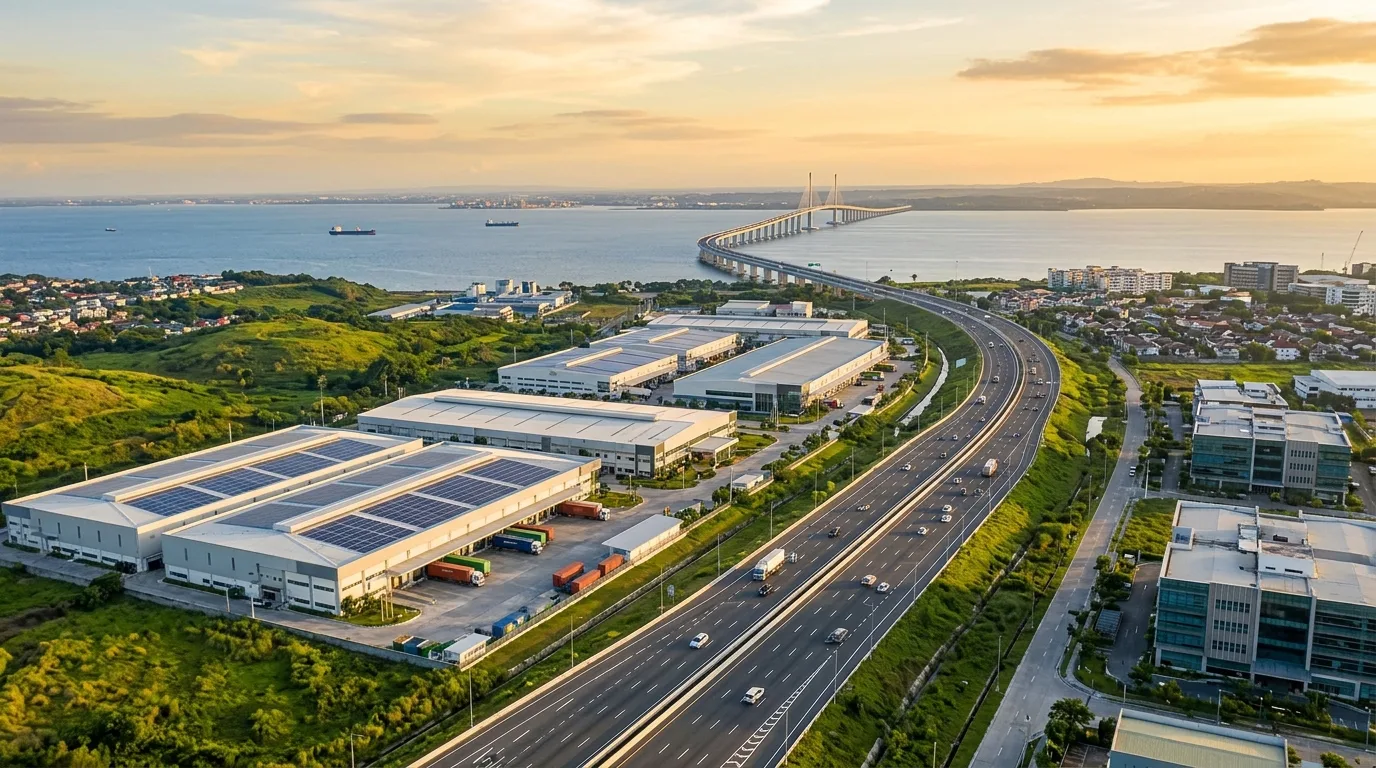
Cavite’s rapid transformation into a premier economic hub is driven by massive infrastructure developments—including the Cavite-Laguna Expressway (CALAX) and the proposed Bataan-Cavite Interlink Bridge—that seamlessly connect its 12 industrial estates to Metro Manila. This evolving corridor offers businesses lower startup costs, access to a vast, skilled labor pool, and a prime location for export-oriented manufacturing and logistics.
Infrastructure Driving Connectivity and Growth
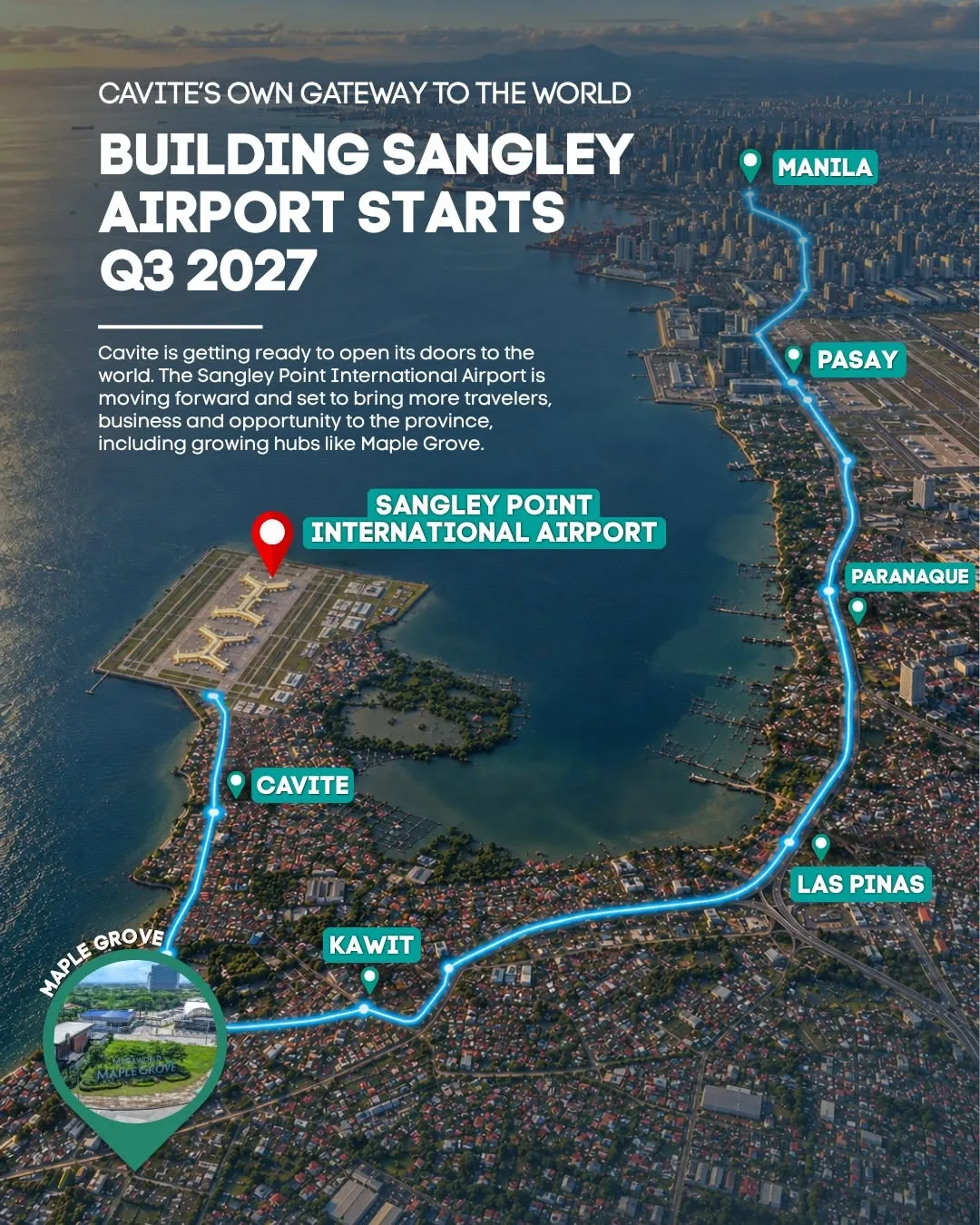
Cavite's strategic location south of Metro Manila has been enhanced by a network of major infrastructure projects. The Cavite-Laguna Expressway (CALAX) connects the province to the South Luzon Expressway (SLEX), significantly reducing travel time and improving access to industrial and commercial centers. The Cavitex C5 Link, now fully operational, provides a 15-minute transit between Parañaque and Taguig, connecting Cavite's industrial zones directly to Metro Manila's commercial heart . These roads, along with CAVITEX and C5-CAVITEX Interchange, provide direct links to Makati in just 30-45 minutes .
The upcoming Bataan-Cavite Interlink Bridge (BCIB), a 32.15-kilometer bridge system across Manila Bay, is poised to create a direct gateway that bypasses Metro Manila . Once fully operational by March 2030, the bridge is expected to cut travel time between Cavite and Bataan from nearly five hours to less than an hour . This connection will strengthen trade, expand markets, and open new opportunities for logistics facilities, warehouses, and commercial centers, particularly in western Cavite areas like Naic . The project, part of the Build Better More program, is estimated to cost $3.91 billion (about P219.31 billion), with financing from the Asian Development Bank and the Asian Infrastructure Investment Bank.
Industrial Estates and Manufacturing Powerhouse
Cavite is a major manufacturing center with 12 fully operational industrial estates and economic zones, hosting more than 760 locator companies . The Cavite Economic Zone in Rosario and General Trias serves as the flagship public economic zone, at the heart of an ecosystem that directly employs over 164,000 workers, with each direct job generating an estimated three to four additional indirect jobs . Key industrial parks include the Cavite Export Processing Zone, Gateway Business Park, Cavite-Carmona Industrial Estate, and First Cavite Industrial Estate, which house manufacturers in electronics, automotive parts, and packaging .
Cavite is a principal semiconductor manufacturing center, hosting global companies such as Schneider Electric, Fujitsu, First Sumiden Circuits, Onsemi, NXP Semiconductors, Brother Industries, and Maxeon Solar Technologies . Recent investments from Chinese manufacturers in the Cavite Economic Zone further reinforce Cavite's position in regional supply chains for electronics, robotics, and precision metal products . The presence of PEZA-registered facilities like those in Suntrust Ecotown Tanza provide tax incentives and streamlined import-export processing, making Cavite highly attractive for cost-efficient operations.
Office and Residential Sectors on the Rise
Cavite's office market is gaining momentum, with 12,000 square meters of transactions in 2025, primarily driven by expanding BPO firms seeking wider talent pools and competitive rents . Imus, Bacoor, and Kawit are emerging as key business districts due to mature infrastructure and proximity to Metro Manila . The residential market remains anchored by end-users and OFW investments, with affordable and mid-income house-and-lot projects in General Trias, Imus, Tanza, and Dasmariñas driving demand .
Cavite continues to attract investors not just because of its location and expressways, but also due to policies that make it easy to set up operations . With a presence in manufacturing, logistics, tourism, housing, and innovation, Cavite has become a major driver of national economic growth, positioning itself as a premier destination for businesses and families alike .