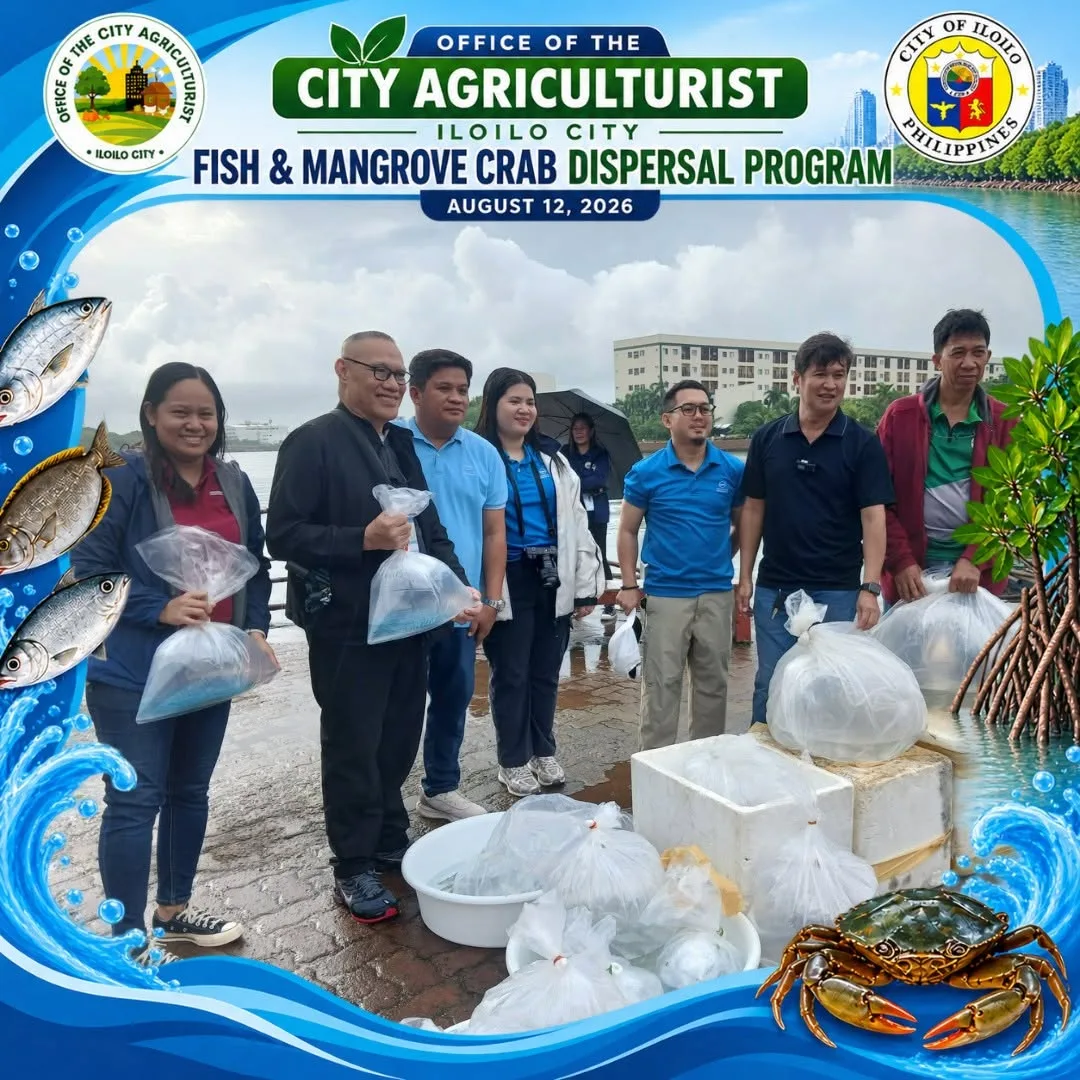
ILOILO — The Office of the City Agriculturist (OCA) led a major restocking of the Iloilo River early on August 12, 2026, releasing thousands of fish and mangrove crabs to boost the waterway’s biodiversity. The dispersal aims to strengthen local fisherfolk livelihoods and sustain the river’s ecological health.
A Morning of Renewal at Esplanade 3
As the sun rose over Esplanade 3, OCA personnel, city officials, and community partners gathered with containers of fingerlings and juvenile crabs. The activity moved quickly, with each bucket poured gently into the brackish water to minimize stress on the young animals. The sight of the river receiving new life drew early morning joggers and passersby to stop and watch.
A total of 3,600 aquatic creatures were released into the Iloilo River in a carefully planned dispersal. The batch included 200 pompano, 200 rabbitfish, 200 bangus, and a significant 3,000 mangrove crabs. Each species was chosen for its role in the local ecosystem and its value to the small‑scale fishers who depend on the river for their daily catch.
Strong Partners Behind the Initiative
The Southeast Asian Fisheries Development Center (SEAFDEC), through its Chief Dan Baliao, donated the entire stock, continuing a long‑standing partnership with Iloilo City. SEAFDEC’s aquaculture expertise ensures that the fingerlings and crabs are healthy and suited to the river’s brackish conditions. This collaboration merges scientific know‑how with on‑the‑ground community action.
Councilor Malabor and the Radio Mindanao Network (RMN) also played key roles, supporting the dispersal as part of their commitment to river development. Their involvement reflects a growing recognition that protecting the Iloilo River requires both government leadership and civic engagement. The partnerships formed around this event turn a one‑time restocking into a sustained movement.
A River at the Heart of the City
The Iloilo River, a 13‑kilometer urban waterway, has undergone years of rehabilitation from a polluted channel into a thriving ecosystem. Mangrove reforestation, regular clean‑ups, and a closed fishing season during spawning months have allowed fish populations to recover. The dispersal program adds another layer, replenishing species that are vital to the food web and to local food security.
Mangrove crabs, in particular, play a crucial role in maintaining the health of the estuarine environment. They scavenge decaying matter and aerate the mud, improving water quality and supporting the growth of young mangroves. The 3,000 crabs released will spread along the riverbanks, quietly doing the work that keeps the ecosystem balanced.
A Legacy of Leadership
The restocking effort builds on the environmental foundation laid by former Mayor Jerry P. Treñas and continues under the administration of Mayor Inday Raisa S. Treñas. City Agriculturist Iñigo Garingalao emphasized that the dispersal is not an isolated event but part of a broader strategy to protect the river for future generations.
The early morning ceremony was simple, yet it carried a powerful message. A healthy Iloilo River means food on the table for fishing families, a scenic escape for residents and tourists, and a resilient natural buffer against floods. The city government remains committed to working with partners to create opportunities for fisherfolk while safeguarding the waters that define the city’s identity.