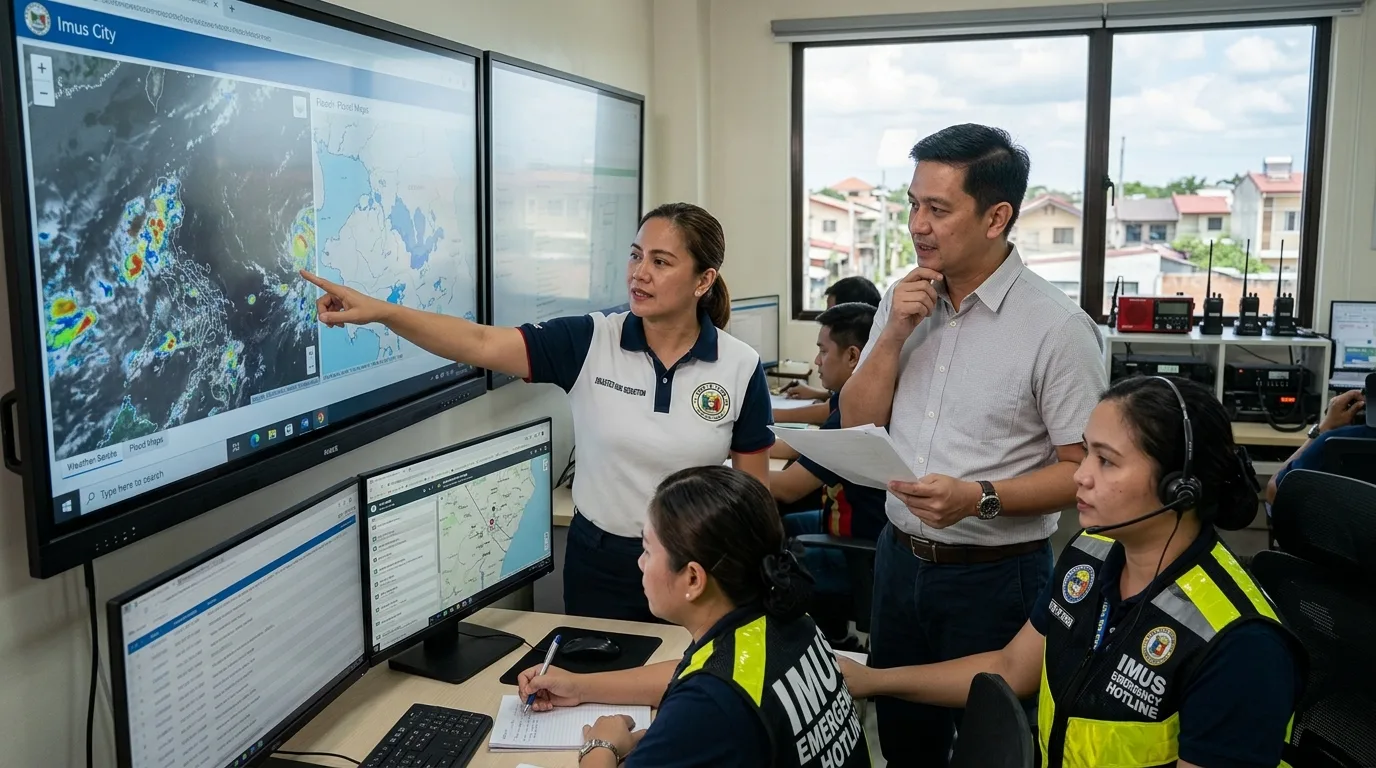
The City Council of Imus officially approved the "Safe Waters Ordinance" and the "Anti-False Emergency Communications Ordinance" during its regular session on April 25, 2026, to enhance public safety and order in the city. These measures reflect the council's continuing commitment to protecting the welfare of Imuseños and strengthening local governance.
Safe Waters Ordinance: Protecting Communities During Severe Weather
The Safe Waters Ordinance is designed to protect the public from hazards in identified danger zones during severe weather conditions. The measure aims to prevent accidents and casualties by regulating access to high-risk areas when typhoons, flooding, or other natural calamities threaten the safety of residents.
Vice Mayor Homer Saquilayan, together with City Councilor Larry Nato, emphasized that these ordinances reflect the council's continuing commitment to uplift the lives of residents and provide sustainable opportunities for growth. Vice Mayor Saquilayan noted, "Our responsibility is to make sure that every ordinance we pass translates into real benefits for our people. These measures are not just policies on paper, but actions that will directly impact the community".
Anti-False Emergency Communications Ordinance: Penalizing Prank Calls and Fake Reports
The Anti-False Emergency Communications Ordinance penalizes individuals who make prank calls or report fake emergencies and disasters. False emergency reports waste valuable government resources and can delay response to actual emergencies, putting lives at risk.
Councilor Nato added, "We remain steadfast in our mission to lighten the burden of our constituents. Tuloy-tuloy lang po tayo sa ating hangarin na mas mapagaan ang buhay ng bawat isa". The Cavite Traffic Management Office also expressed its support, highlighting that improved governance and livelihood programs go hand-in-hand with effective traffic and mobility solutions. The Imus City Council assures the public that this is only the beginning of a series of initiatives aimed at fostering inclusive development, with the collaboration of local offices and the active participation of citizens.