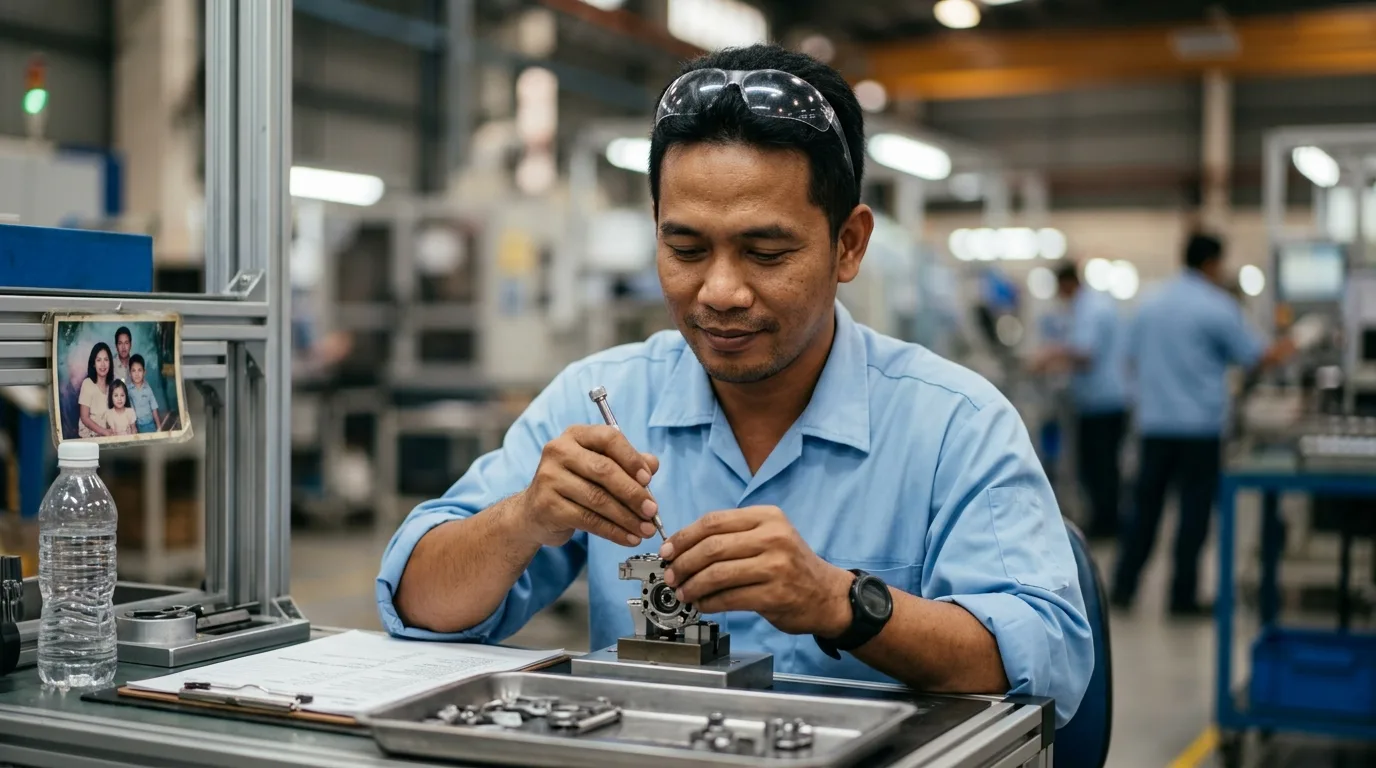
KUALA LUMPUR — Malaysia will raise its minimum wage to 2,000 ringgit per month beginning June 2027, a move that promises higher earnings for thousands of Filipino workers. Prime Minister Anwar Ibrahim announced the increase during his budget speech on Friday, October 9, 2026.
A Direct Boost for Filipino Workers
The wage adjustment from 1,700 to 2,000 ringgit translates to approximately $490 or ₱28,000 monthly. For documented, lower-income, and semi-skilled Filipino workers in Malaysia, this represents a significant increase in take-home pay. Higher disposable income means larger remittances sent back to families in the Philippines.
The wage hike forms part of a broader income reform package that includes expanded tax relief measures. Individual income tax relief will increase to 12,000 ringgit annually from 9,000 ringgit, its first revision since 2010. These measures aim to address rising living costs while putting more money into workers' pockets.
An Expansionary Budget for 2027
Anwar proposed a 459.8 billion ringgit budget for 2027, an increase of 3.6 percent over the revised 2026 allocation. The spending plan includes 83 billion ringgit for development expenditure and 376.8 billion ringgit for operating expenditure. Revenue is projected to rise 4.7 percent to 380.8 billion ringgit.
The government also announced 16 billion ringgit in cash aid for lower-income Malaysians. Support measures for first-time home buyers and small businesses were expanded. These initiatives reflect a pragmatic approach ahead of possible early elections, with the government seeking to demonstrate that economic growth benefits ordinary households.
OFWs in Malaysia: Key Facts
Malaysia hosts a significant population of overseas Filipino workers, many employed in manufacturing, services, and semi-skilled sectors. The minimum wage increase directly impacts those earning at or near the previous threshold. Higher earnings translate into increased financial support for families in the Philippines.
The timing is crucial as global inflation continues to pressure household budgets. Every additional ringgit sent home helps cushion Filipino families against rising prices of food, utilities, and education. The wage adjustment also makes Malaysia a more attractive destination for Filipino workers considering overseas employment.
Fiscal Consolidation and Economic Outlook
Malaysia remains committed to fiscal consolidation despite the expansionary budget. The fiscal deficit is projected to decline to 3.3 percent of GDP in 2027, improving from the revised 2026 target of 3.6 percent. Anwar emphasized that the government has built capacity to respond to economic challenges when circumstances demand it.
The economy is expected to grow between 4.2 and 5.2 percent in 2027, supported by strong demand for technology products and semiconductors. Gross exports are projected to rise 31 percent this year. Headline inflation is forecast at 1.8 to 2.8 percent in 2027.
Trade and Regional Implications
Stronger Malaysian consumer demand from wage increases and tax relief benefits Philippine exports. Malaysia is one of the Philippines' major ASEAN trading partners, with bilateral trade exceeding $8 billion. Increased household spending fuels demand for Philippine food products, agricultural goods, and manufactured items.
The wage increase also sets a regional precedent that could influence labor policies in neighboring countries. For OFWs, Malaysia's commitment to improving worker welfare signals a positive environment for Filipinos seeking employment opportunities abroad.