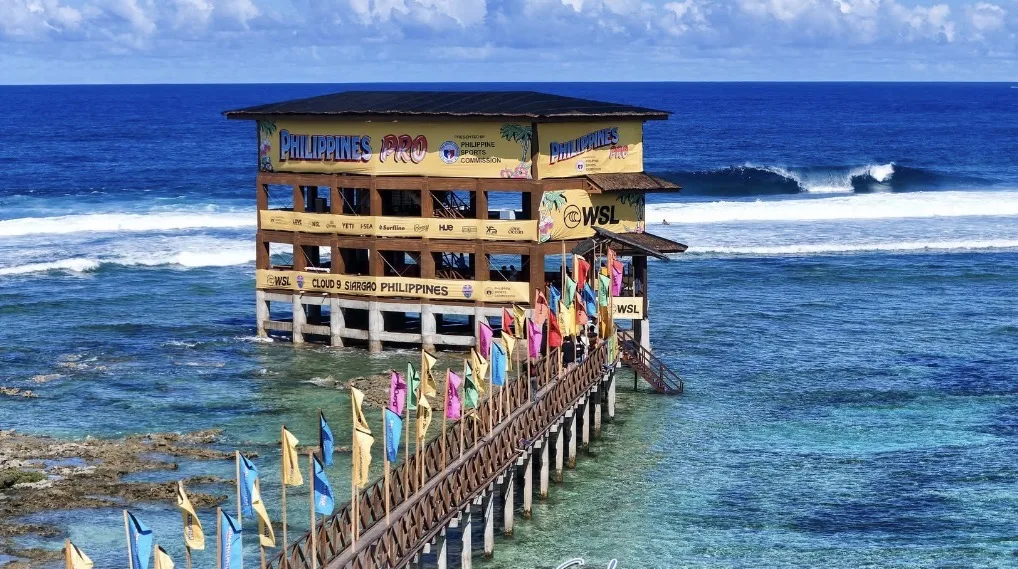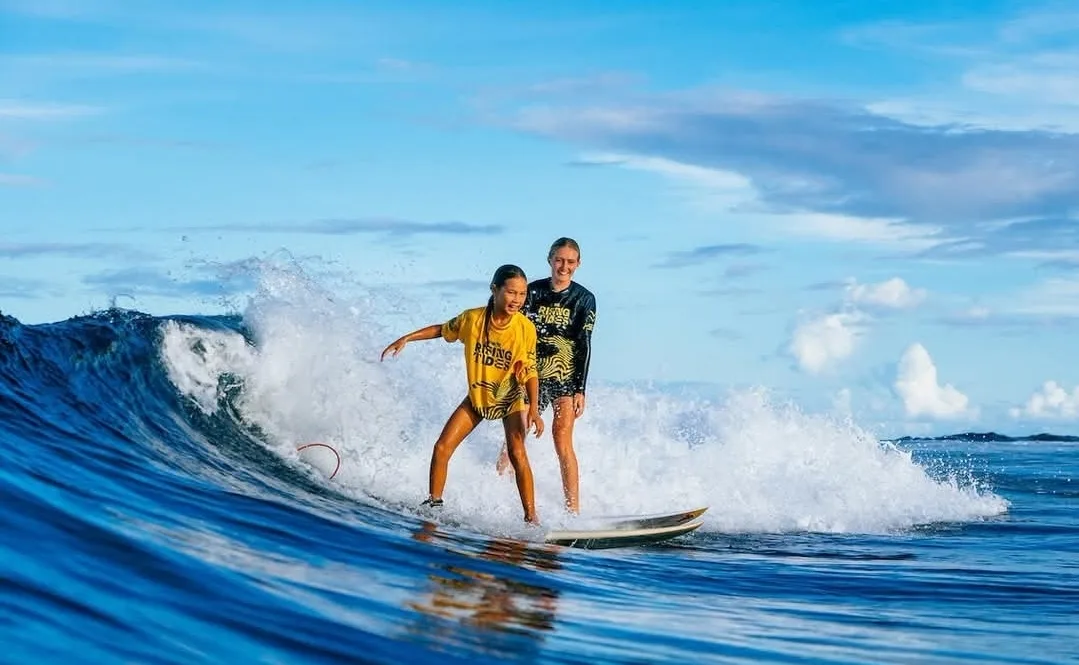
GENERAL LUNA, SURIGAO DEL NORTE — For one morning, the hierarchy of professional surfing briefly flattened. On October 29, 2026, at Cloud 9, a group of local junior surfers—boys and girls who normally watch the world's best from the boardwalk—paddled into the same lineup as the athletes they study on screens. The occasion was Rising Tides, the World Surf League's grassroots initiative, which turned the reef into an open-air classroom two days before the Philippines Pro competition window opened.
A Session Without Rankings
Rising Tides operates on an unusual premise for a sport built on heats and scores: it removed the contest. There were no jerseys, no priority rules, no judges. The session brought together Yolanda Hopkins, Erin Brooks, Jesse Starling, Italo Ferreira, Connor O'Leary, and Bronson Meydi with young Siargaonons who already knew the wave but had never shared it with anyone at this level. What passed between them was not instruction in the formal sense. It was proximity—watching how a world-class surfer reads a set, positions for a section, or decides to let a wave go.
What the Juniors Took From It
The value of that proximity is difficult to quantify, which is precisely why programs like this matter. A young surfer who has spent years watching Cloud 9 from the rail learns one thing; a young surfer who has paddled out beside a Championship Tour athlete learns something else entirely. The gap between aspiration and possibility narrowed when the person they admired was sitting on the same peak, waiting for the same set. WSL Asia-Pacific leadership framed the program around that idea: showing local youth that reaching the highest level of the sport is a realistic path, not a distant fantasy.
The Pipeline Behind the Program
Rising Tides is not a one-off gesture. It travels with the Championship Tour, appearing at stops around the world, and it operates by invitation, with participating children registered in advance. At Cloud 9, the program also involved local youth serving as board caddies along the boardwalk before competitions, a role that placed them inside the event's daily machinery rather than at its edges. The Philippine Sports Commission supported the broader event with an eye toward youth development, and the presence of three Filipino wildcards in the main draw—John Mark Tokong, Jayuard Alciso, and Mara Lopez—gave the juniors a visible local reference point for what the pathway could produce.