


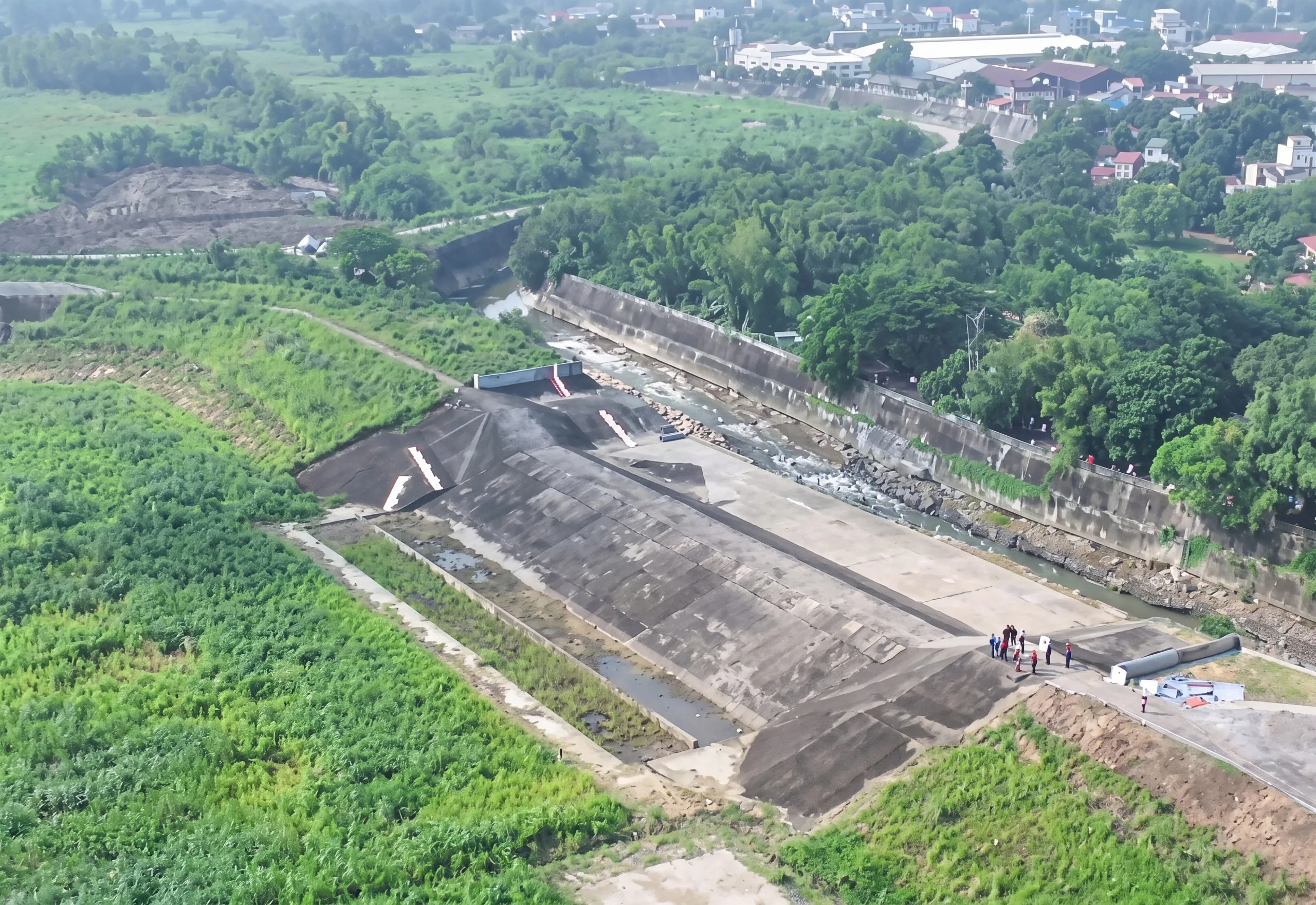
IMUS CITY, CAVITE - marked a historic milestone on September 1, 2026, as the Department of Public Works and Highways (DPWH) and the Japan International Cooperation Agency (JICA) formally turned over the first-ever flood retarding basin in the Philippines to the Provincial Government of Cavite. The PHP2.4-billion project, located in Barangay Anabu 1-G, is designed to protect low-lying communities from the severe flooding that has long plagued the province.
A Collaborative Effort to Protect Cavite Communities
The Imus Retarding Basin is part of a broader PHP22-billion flood risk management project in Cavite, with another retarding basin located in Bacoor City. Funded through a JICA loan, the project includes an 84-meter overflow dike with approximately 1.3 kilometers of surrounding dune and 1.1 kilometers of separating dike. The DPWH excavated around two million cubic meters of soil to achieve a depth of seven meters across the 35-hectare land area.
DPWH Secretary Vince Dizon personally led the turnover ceremony, joined by Interior and Local Government Secretary Jonvic Remulla, Cavite Governor Abeng Remulla, and Imus City Mayor Alex Advincula. Dizon noted that before the facility's construction, floodwaters in the area would reach chest-deep levels, but with the retarding basin in place, "the water from the main Imus River has a designated catchment area instead of overflowing into the streets, homes, and communities."
Interior Secretary Remulla, who saw the retarding basin project at its early stages during his tenure as Cavite governor, expressed hope that the project can be replicated in other parts of the country. "This was technology perfected in Japan, and the Japanese government generously provided us with. If we could only do this all over the Philippines, in all areas that experience severe flooding, the floods would disappear here in the Philippines." He also stressed that corruption-free implementation and good governance can deliver projects that genuinely benefit communities, citing the "clean transaction" between JICA and the Philippine government.
A Model for Future Flood Control Infrastructure
Dizon noted that the Imus Retarding Basin will serve as a master model for future flood control infrastructures across the nation. "It is important for our countrymen to see this so that they do not lose hope that if we do this, and do it right. Just like what was done here in Cavite, there is also a solution to the problem in Central Luzon," he said.
The facility temporarily stores excess floodwater during heavy downpours and gradually releases it at a regulated flow rate, preventing sudden flash floods and protecting downstream communities along the Imus River. During the dry season, the retarding basin can also serve as a recreational open area, potentially functioning as a soccer field, baseball field, or park for community use.
Mayor Advincula emphasized that construction alone is not enough—regular maintenance, monitoring of riverbanks, and community cooperation are essential to ensure the facility's long-term functionality. With the formal turnover, the Cavite Provincial Government now assumes responsibility for the operation and maintenance of this groundbreaking flood-control infrastructure, with Governor Remulla expressing confidence that the project will make Cavite more resilient during the rainy season.
