


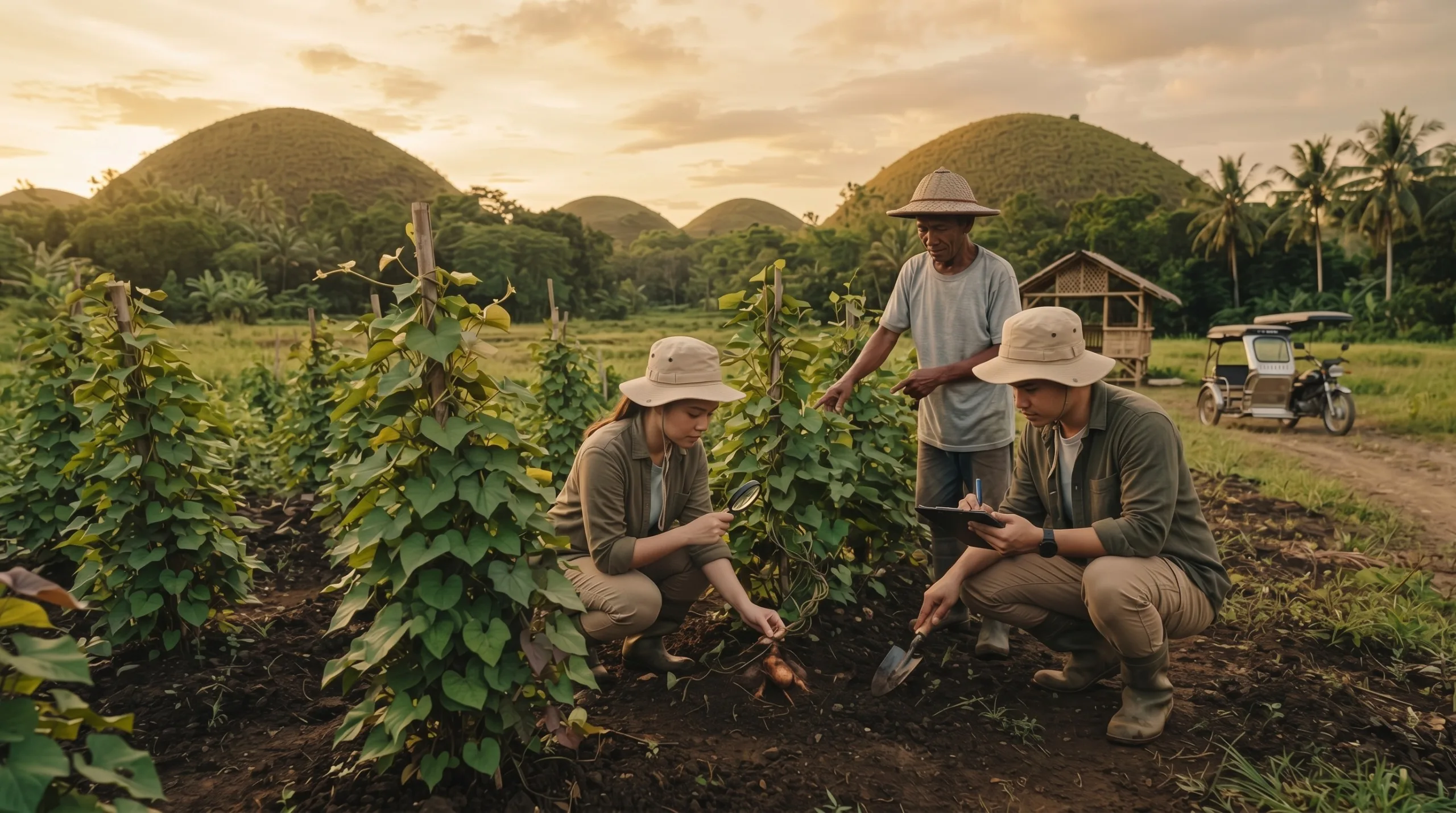
Learning to Identify a Boholano Crop
BOHOL - Agricultural Extension Workers in Bohol prepared for field documentation of Ubi Kinampay through a morphology characterization activity held on September 28, 2026, in Barangay Looc, Panglao. Technicians practiced using a morphology questionnaire designed to record characteristics of the crop's leaves, stems, vines, and tubers. They also carried out sketching exercises to help them recognize and document these physical features during future field visits with farmers. The activity is part of a wider effort to create a more detailed record of Ubi Kinampay, a crop closely associated with Bohol's agricultural and food traditions.
Turning Farm Observations Into Useful Records
Documenting a traditional crop requires more than simply identifying its name. Field observations can help researchers and agricultural workers describe the characteristics of plants found in different farming areas and compare information gathered directly from growers. Training frontline agricultural workers in consistent observation and recording methods can make future field data more organized and useful. For Bohol farmers, this type of documentation can also help preserve knowledge about a crop that has been cultivated and valued within local communities, while providing information that may support future agricultural and heritage initiatives.
Protecting a Crop Through Knowledge
Ubi Kinampay is often referred to as the “Queen of Philippine Yams” and is strongly associated with Bohol's food identity. Building a clearer record of its characteristics could contribute to efforts to establish the crop's identity as a traditional rootcrop variety and part of the province's agricultural heritage. The work also connects agriculture with Bohol's wider food and cultural landscape, including the Bohol Island UNESCO Global Geopark's GeoFood concept, which highlights the relationship between local food, communities, and the island's natural and cultural heritage. Preserving knowledge about crops such as Ubi Kinampay can therefore help ensure that agricultural traditions remain part of Bohol's future as well as its past.
