


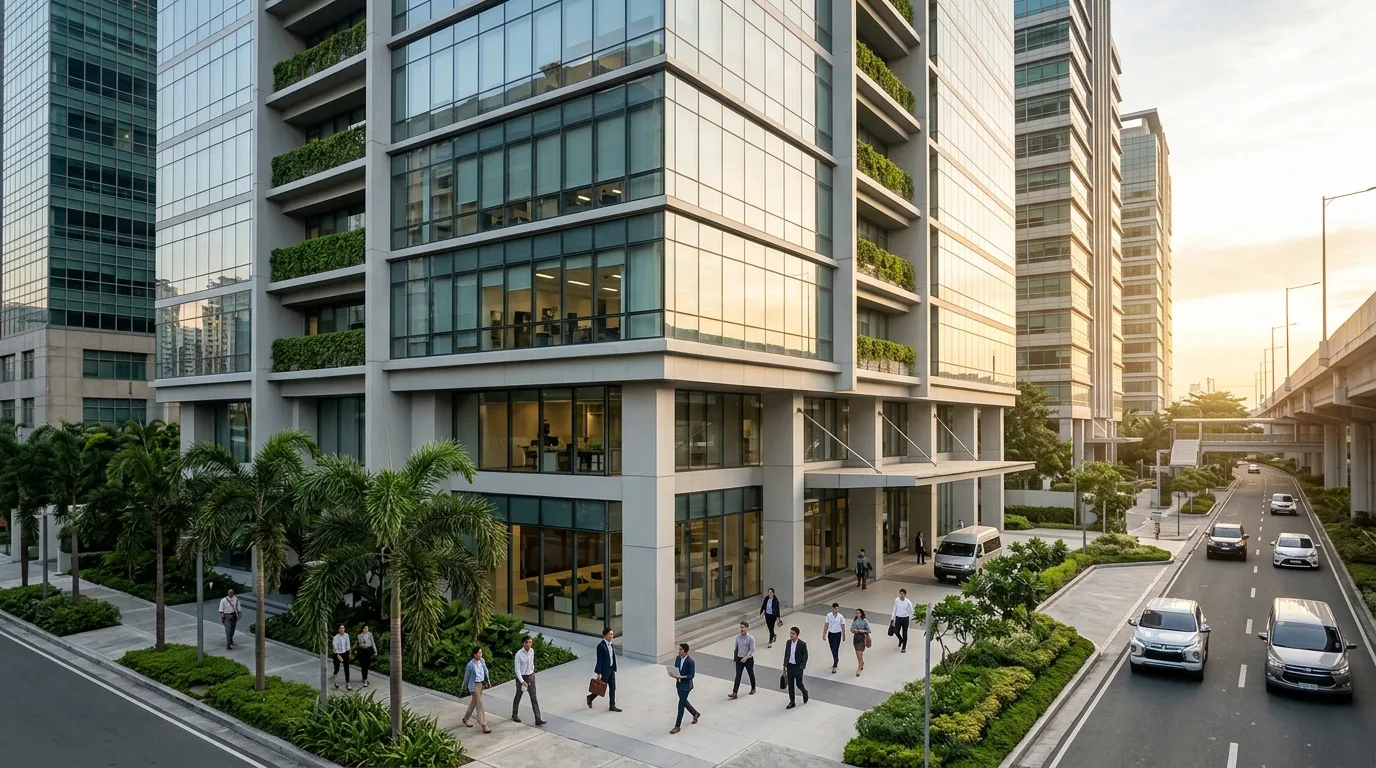
The Philippine office real estate sector is undergoing a strategic transformation as property developers pivot toward prioritizing existing asset absorption over aggressive new construction. According to mid-year market insights analyzed by the Lobien Realty Group (LRG), developers across the National Capital Region (NCR) are maintaining a conservative supply pipeline to stabilize vacancies within Central Business Districts (CBDs). This disciplined approach has successfully kept rental rates resilient, averaging around P1,000 per square meter in core business hubs, even as companies continue to evaluate hybrid work structures.
Consolidating Supply and Sustaining Rental Rates
The overall development pipeline in major business districts has adjusted significantly, reflecting a calculated response to post-pandemic workspace changes and varying occupancy rates. Rather than pushing forward with speculative developments, NCR developers anticipate a controlled delivery of approximately 700,000 square meters of new office supply annually through 2029. This conservative pace has helped stabilize the market, with prime districts in Makati, alongside northern and southern Metro Manila sectors, reporting notable resilience and upward momentum in rental pricing. Landlords are successfully meeting tenant requirements by upgrading building efficiencies, integrating sustainable green features, and offering flexible configurations that match modern corporate needs.
The Expansion of IT-BPMs and Regional Hubs
While Metro Manila remains the primary anchor for commercial leasing, the Information Technology-Business Process Management (IT-BPM) industry continues to seek growth opportunities beyond traditional metro centers. Projections from the IT and Business Process Association of the Philippines indicate that the sector's workforce could scale significantly toward 2028, driving a continuous need for fresh office footprints. Consequently, demand is increasingly flowing toward the Department of Information and Communications Technology’s designated "Digital Cities"—including growth centers like Batangas, Cabanatuan, Dagupan, General Santos, and Iligan—which offer competitive tax setups and robust provincial talent pools.
Infrastructure Integration and Future Market Outlook
The viability of expanding office spaces outside the capital is heavily supported by major high-capacity arterial road networks, such as the North Luzon Expressway (NLEx), South Luzon Expressway (SLEx), and the Cebu Cordova Link Expressway (CCLEx). These infrastructure projects drastically reduce inter-regional transport bottlenecks, transforming provincial corridors into highly accessible, investment-ready locations. As regional connectivity improves and economic conditions continue to steady, real estate experts anticipate a surge in transaction activity. This strong foundation ensures that the commercial property market remains well-positioned for sustainable, long-term growth across both metropolitan and provincial landscapes.
