


ILOILO — The Taiwan Technical Mission (TTM) has presented a comprehensive Smart Agriculture Development Framework to the Iloilo Provincial Government, offering a technology-driven path to increase farm yields and secure food supply. The proposal, backed by the Taiwan International Cooperation and Development Fund, was formally introduced on July 31, 2026.
A Tech‑Driven Farming Future
The framework envisions a fully integrated agricultural system that uses modern technology to solve age‑old farming problems. Provincial Administrator Dr. Raul Banias, who received the presentation on behalf of Governor Arthur Defensor Jr., acknowledged the potential of the proposal to transform local agriculture. The plan will now undergo a detailed review to match Taiwan’s model with Iloilo’s unique conditions.
Taiwan’s approach relies heavily on the Internet of Things, automated sensors, and precision data to manage crops and livestock. These tools reduce guesswork and help farmers use water, fertilizer, and feed more efficiently. The result is lower production costs and higher, more consistent yields, which directly benefits both growers and consumers.
Five Pillars of Smart Agriculture
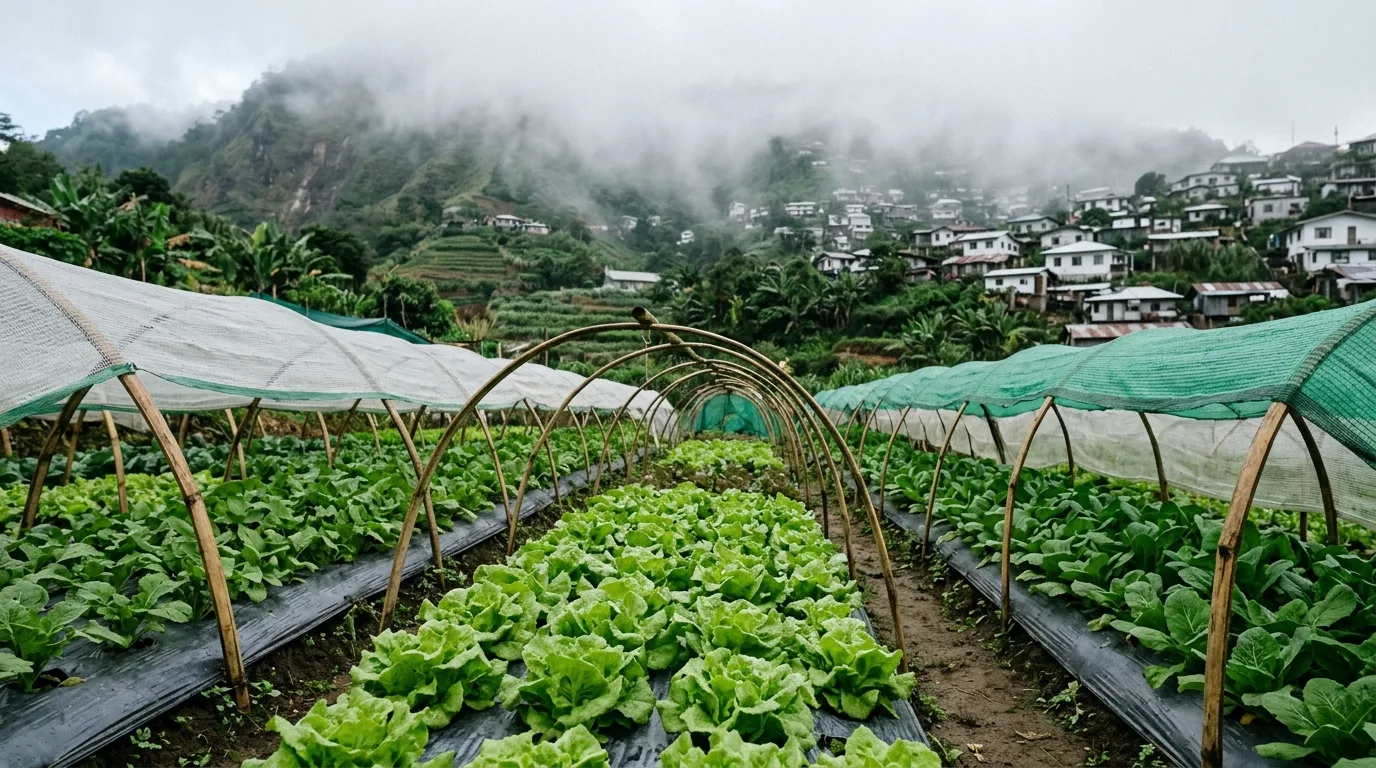
The proposal rests on five interconnected farming sectors designed to work together as one ecosystem. Grain and rice production would employ precision irrigation and automated monitoring to maximize staple crop output. Greenhouse vegetable farming would use controlled environments to protect high‑value crops from extreme weather and pests.
Orchards and high‑value crops would benefit from soil and moisture sensors that optimize fruit quality for local and export markets. Smart aquaculture would introduce water‑quality sensors and automated feeding systems to boost fish production sustainably. Poultry and livestock operations would use modern environmental controls to maintain animal health and operational efficiency.
By linking these five pillars, the framework creates a circular system where waste from one sector becomes a resource for another. The model has been proven in Taiwan, where similar approaches have lifted rural incomes and stabilized food supply chains. For Iloilo, the challenge lies in adapting the technology to the province’s socioeconomic landscape without alienating smallholder farmers.
Local Adaptation Under Review
Dr. Banias expressed gratitude for the proposal and confirmed that the Agriculture Cluster will study how to best customize the framework. The goal is to empower local farming communities with tools that are practical, affordable, and suited to Iloilo’s climate. The province sees the partnership as a way to modernize agriculture while preserving the livelihoods of its rural workforce.
The Taiwan ICDF has a long track record of supporting agricultural development projects worldwide. Their involvement signals confidence in Iloilo’s potential to become a model for smart farming in the Philippines. As the review process begins, farmers and local officials alike are hopeful that the partnership will bring tangible improvements to their fields and tables.
