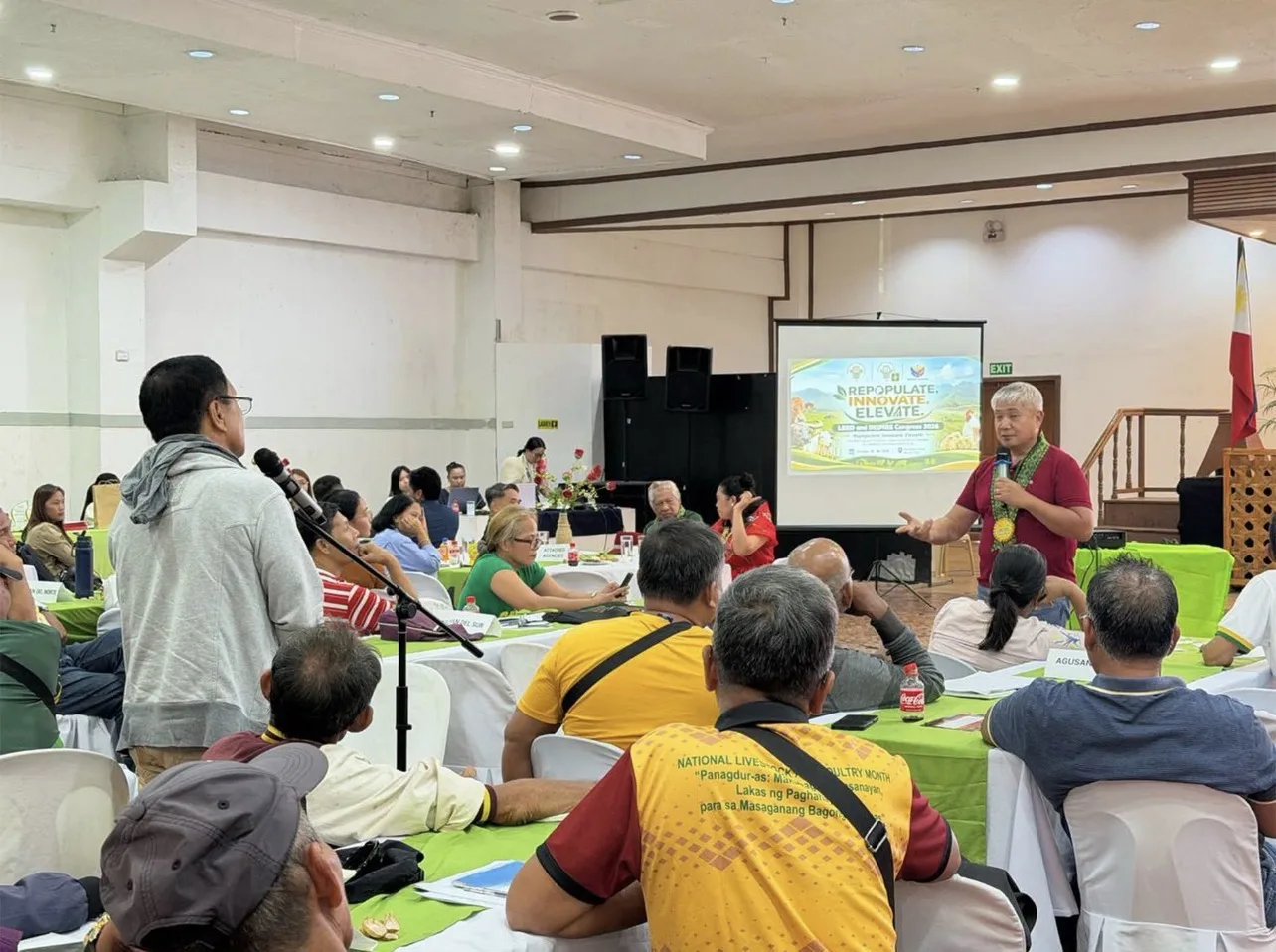
BUTUAN CITY — For three days, a bustling conference hall at the Balanghai Hotel and Convention Center became a melting pot of shared dreams, nervous ambitions, and hard-earned wisdom. From October 28 to 30, 2026, the LEED and INSPIRE Congress brought together 145 livestock and poultry farmers from across the Caraga Region. Organized by the Department of Agriculture's regional livestock division and the Agricultural Training Institute, the gathering purposefully looked past raw production targets. Instead, it focused heavily on the real, sometimes messy mechanics of keeping a small business alive. For these farmers, the shift was an intentional challenge: the programs supporting them are designed not as quick handouts, but as sustainable partnerships built on a revolving-capital model where growth depends entirely on reinvesting their own proceeds.
The Leap to Enterprise
Stepping away from the daily routine of backyard chores to manage a commercial business requires a massive shift in mindset. Recognizing that financial literacy doesn't always come naturally with farming, the congress tackled this challenge head-on. The sessions prioritized open conversations where farmers could share practical survival strategies and business tips. The underlying goal was simple yet profound: build strong management habits that secure long-term income, rather than just chasing higher livestock numbers. The room was filled with a mix of LEED and INSPIRE program participants, all working through the same demanding transition from survival-mode farming to sustainable business management.
Mapping the Journey Ahead
The breakthrough moment of the workshop came when a fellow cooperative leader and LEED beneficiary took the stage to share a corporate tool made simple: the SIPOC framework. By mapping out Suppliers, Inputs, Processes, Outputs, and Customers, he gave the audience a clear roadmap to visualize their entire operation on a single page. For a small cooperative juggling poultry numbers or managing swine health, this simple clarity can instantly reveal hidden bottlenecks that drain profits. He also spoke candidly about maintaining animal health and building reliable relationships with local buyers, the two fundamental anchors that dictate whether a newborn livestock venture survives past its very first sales cycle.
Learning from the Trenches
At its core, the congress succeeded because it treated the farmers as the true experts. Having a fellow beneficiary lead the discussion completely transformed the room's energy; his advice carried a raw credibility that no outside corporate consultant could ever replicate. He spoke as someone who had stood in their exact boots, dealt with the same unpredictable market prices, and made the same high-stakes choices. This peer-driven approach changed the entire event from a standard government seminar into a living, breathing support system, a community where local farmers can find answers and lean on one another long after the conference doors close.