


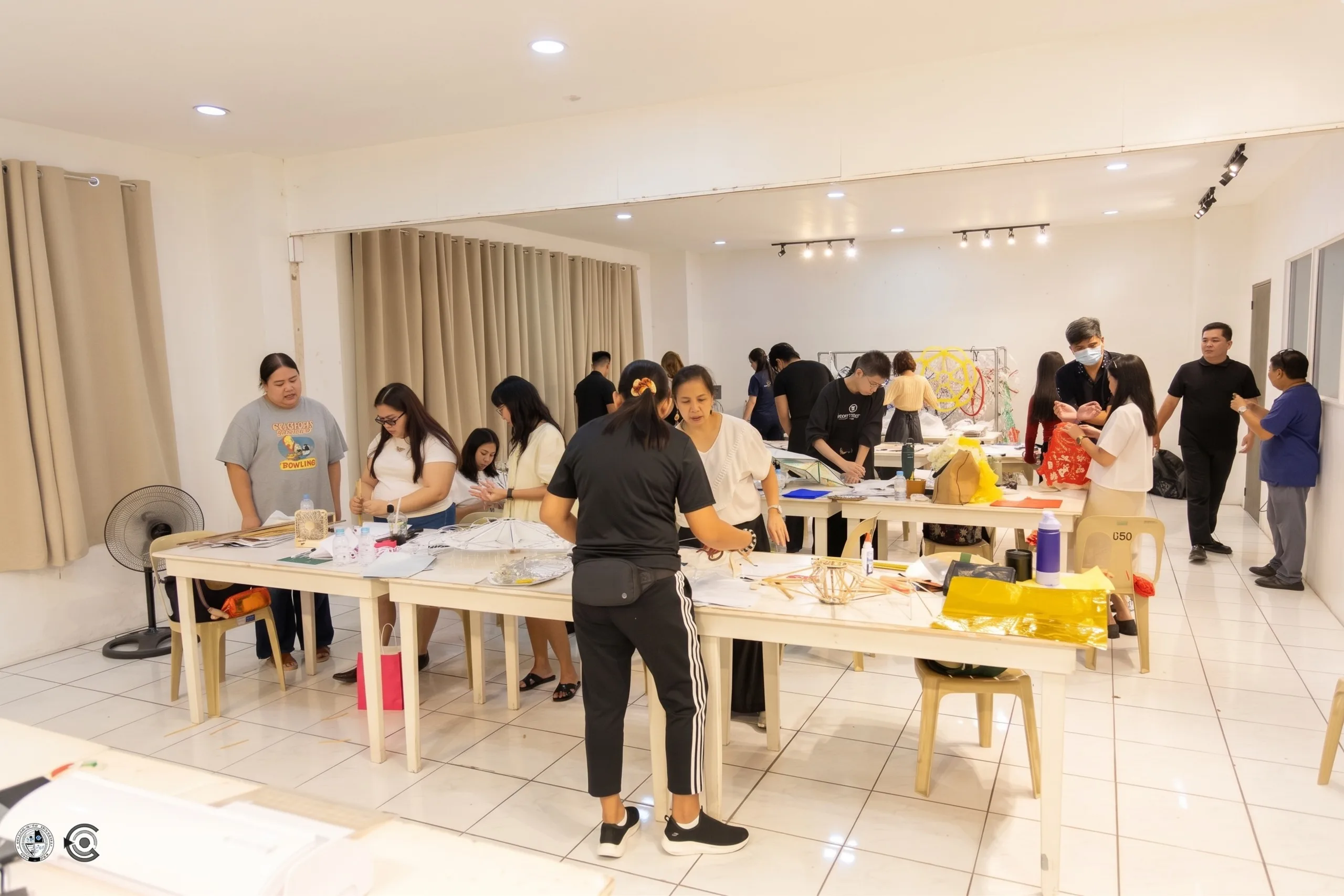
ANGELES CITY, PAMPANGA — A genuine Kapampangan Christmas lantern isn't built on an automated assembly line—it is born from paper, bamboo, and memories passed down across generations. As mass-produced, electronic plastic lanterns continue to dominate commercial holiday markets, the local craft community is making a deliberate stand to protect its soul. Spearheaded by the Angeles City Tourism Office, the newly activated School of Living Traditions has opened its community workshops for the Lubenas Parol-Making Activity. The movement transforms local youth into active guardians of a rare visual heritage, shifting the holiday focus back to slow, intentional craftsmanship.
The Art and Soul of the Lubenas Lantern
The focus of the workshop goes far beyond crafting standard home ornaments; it isolates the highly specific art of the Lubenas lantern. Rooted deeply in the spiritual history of the region, these star-shaped lanterns were originally engineered to be carried on long bamboo poles during the novena, or the nine-day dawn masses leading up to Christmas Eve. Unlike commercial lights, a true Lubenas requires a deep understanding of structural balance, delicate bamboo splitting, and precise translucent paper layering to create a soft, ethereal glow when lit from within. The Lubenas tradition traces its roots to the Spanish colonial era, when the faithful would form a procession with bamboo poles bearing lanterns of varying sizes. The event recreates the nine-day simbang gabí novena, culminating in a much-anticipated final dawn mass on Christmas Eve that traces back centuries.
A Living Tradition Passed to the Next Generation
By utilizing the School of Living Traditions instructional model—where master artisans pass down their unwritten, hands-on techniques directly to the next generation—the workshop treats local culture like a living asset rather than a static museum display. This mentorship-based approach ensures that intangible cultural heritage is preserved through practice rather than mere documentation, aligning with the National Commission for Culture and the Arts' mandate to safeguard traditions through community-based transmission. In an era of fast, disposable consumer items, this specialized training ground ensures that the radiant, geometric light guiding the streets during the holidays continues to be powered by genuine local craftsmanship, deep identity, and immense provincial pride. The workshop stands as a powerful reminder that cultural preservation begins with the hands that create, not just the eyes that admire.
