


PHILIPPINES — Filipino credit confidence has reached its highest point since 2023, driven by growing trust in formal financial institutions and digital platforms. For overseas Filipino workers, this shift arrives alongside new laws and tools designed to strengthen their financial security and build lasting wealth.
A Maturing Credit Market
TransUnion Philippines reported that the 2026 Credit Perception Index rose to 75 out of 100, up from 73 the previous year. The improvement came from gains in favorability, product trust, and product knowledge. Peter Faulhaber, President and CEO of TransUnion Philippines, described this as a sign of a maturing credit market.
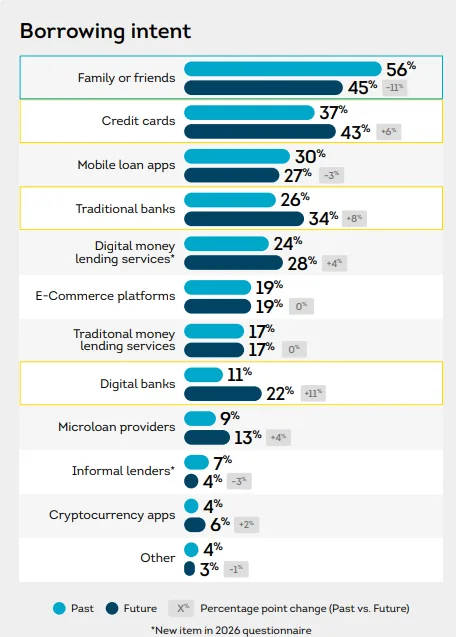
The survey of 1,000 consumers found that borrowing is shifting decisively toward formal lenders. Future borrowing intent for digital banks jumped 11 percentage points to 22 percent. Traditional banks and credit cards also saw increases, while borrowing from family and friends fell to its lowest level since 2023.
Digital Banks Open Doors for OFWs
Many OFWs have historically relied on informal lending networks due to limited credit access. Digital banks now offer a more accessible alternative, with perceived safety rising to 84 percent. UnionDigital Bank partnered with the Social Security System in April 2026 to expand micro-loans specifically for overseas workers.
RCBC's Pulz platform introduced USD hold-and-convert features for OFWs in the Middle East. This allows workers to send money home in minutes while managing currency fluctuations. These innovations remove barriers that once pushed migrant workers toward costly informal lenders.
E-Wallets as the Gateway to Formal Finance
E-wallets have become the primary entry point into the financial system for 46 percent of Filipinos. Their adoption rate reached 81 percent, with digital bank usage climbing to 52 percent. For OFWs, this means easier access to savings, remittances, and investment platforms from anywhere in the world.
GCash expanded partnerships with TransferGo for real-time remittances from Europe. Visa now allows foreign-issued cards to fund GCash wallets, while Maya launched similar cross-border solutions. The Overseas Filipino Bank removed InstaPay transfer fees starting July 7, 2026, ensuring more remitted funds reach families directly.
Adapting Amid Economic Pressures
Despite the positive credit outlook, financial confidence softened due to inflation and rising living costs. Only 64 percent of Filipinos expect their situation to improve in the next three months. Yet consumers are adapting, with 86 percent planning to save more and 73 percent seeking financial education.
For OFWs, the convergence of digital banking growth, accessible e-wallets, and a supportive environment. The tools are increasingly available; the challenge lies in using them wisely. The path to financial security is clearer than ever for those who take the first step.
