


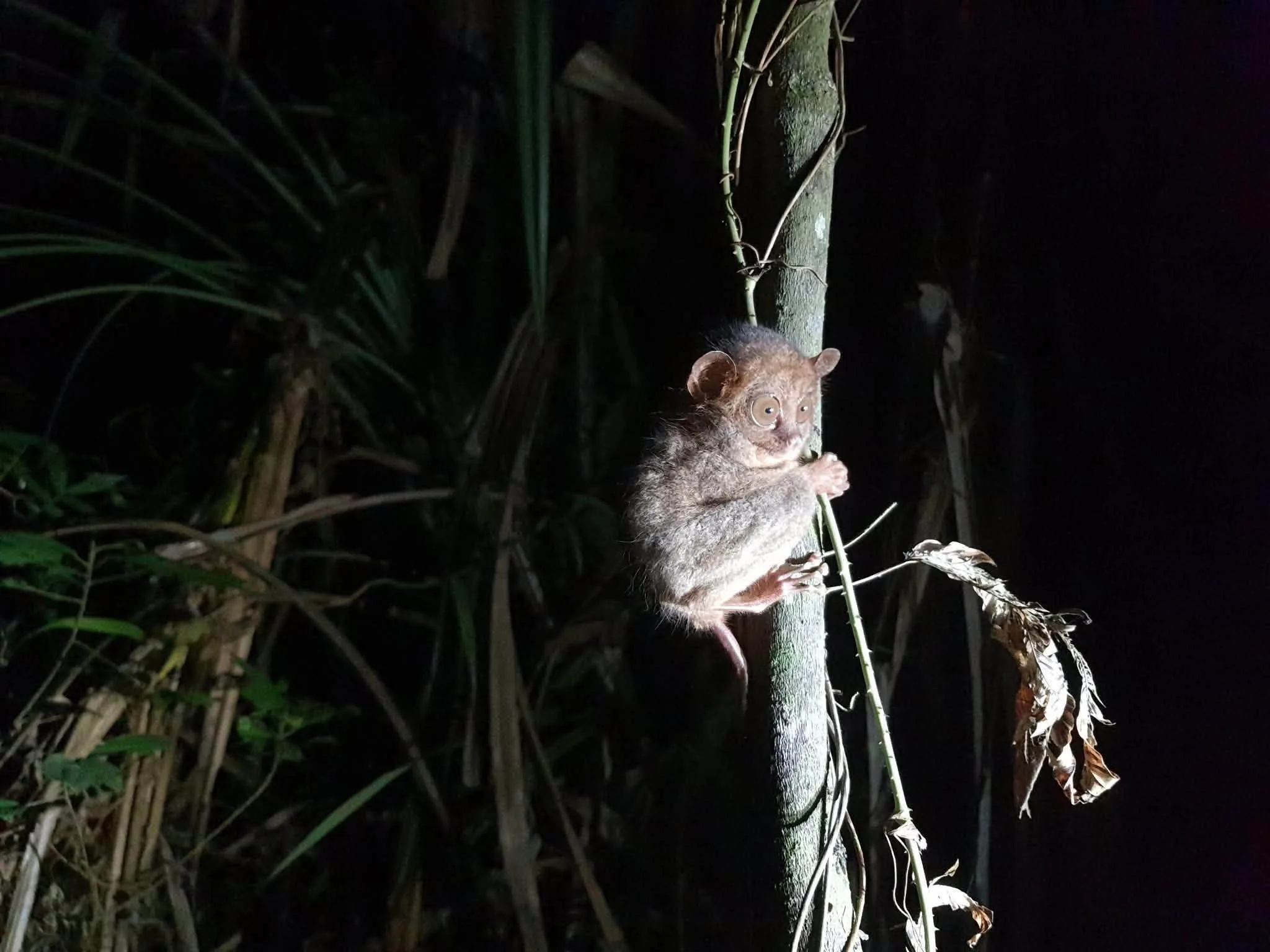
TACLOBAN CITY — While Tacloban is widely celebrated for its rich history and vibrant culture, a significant—and until recently, little-known—part of its natural heritage thrives quietly in its forested outskirts. In a landmark discovery back in 2022, researchers from the University of the Philippines Visayas Tacloban College (UPVTC) officially documented the presence of one of the world's smallest primates, the Philippine Tarsier (Tarsius syrichta), within the city's jurisdiction.
Locally known as "mago," the elusive tarsier was found inhabiting a secondary forest area in Barangay Santa Elena. The documentation, led by Associate Professor Richard B. Parilla from UPVTC's Division of Natural Sciences and Mathematics, confirms that these unique, endemic creatures—found only in the Philippines—are part of Tacloban’s diverse ecological landscape.
A Call to Protect Our Natural Heritage
The presence of the Philippine tarsier in Santa Elena serves as a powerful reminder that Tacloban’s heritage extends far beyond its historical landmarks, urban centers, and cultural traditions. It is equally defined by the lush forests that provide essential shelter to native wildlife and contribute critically to the city's unique ecological character.
As environmental awareness grows, this discovery underscores the urgent need for continued research and dedicated conservation efforts. Protecting the tarsier goes hand-in-hand with preserving the integrity of the habitats that support them. Residents and stakeholders are called upon to recognize their vital role in safeguarding these natural landscapes, ensuring that remarkable species like the "mago" continue to find refuge in Tacloban’s forests for generations to come.
