


ILOILO CITY — The University of the Philippines Visayas (UPV) and the Iloilo Provincial Government joined hands to strengthen local milkfish farming through a three‑day training from June 29 to July 1, 2026. Held at Ina Farmers Learning Site & Agri‑Farm Inc. in Barotac Nuevo, the program aimed to boost the technical know‑how of fish farmers, technicians, and extension workers across northern Iloilo.
A Hands‑On Learning Hub
Twenty‑five participants from eight municipalities—Carles, Zarraga, Banate, Dumangas, Barotac Nuevo, Estancia, Concepcion, and Anilao—attended the training, alongside staff from the Provincial Agriculture Office (PAGRO) and the Bureau of Fisheries and Aquatic Resources (BFAR) Region VI. The diverse group shared a common goal: to increase the productivity and sustainability of Iloilo’s milkfish industry, a cornerstone of local livelihoods and food security.
Organized by the Provincial Agriculture Office – Fisheries Division, the training is a key component of the Milkfish Industry Development Program. Recognizing UPV’s deep expertise in aquaculture, the province invited faculty and research personnel from the Institute of Aquaculture to lead the sessions. The collaboration bridged the gap between scientific research and the everyday realities of fishpond operators.
From Health Management to Grow‑Out
The first day set the stage with a comprehensive overview of the local milkfish industry presented by BFAR’s Jake E. Martirez. Dr. Carmelo del Castillo then discussed milkfish health management, while Ms. Rosy Janeo tackled proper handling, transport, acclimatization, and stocking of fingerlings. These sessions emphasized techniques to minimize stress and improve survival rates, directly impacting farm profitability.
On the second day, Asst. Prof. Fredson H. Huervana delved into grow‑out technologies, covering pond preparation and water quality management. Participants then engaged in an interactive workshop on stock monitoring, feeding management, and farm input calculation. The hands‑on format allowed farmers and technicians to apply new concepts to real‑world scenarios, encouraging problem‑solving and peer‑to‑peer learning.
Seeing Good Practices in Action
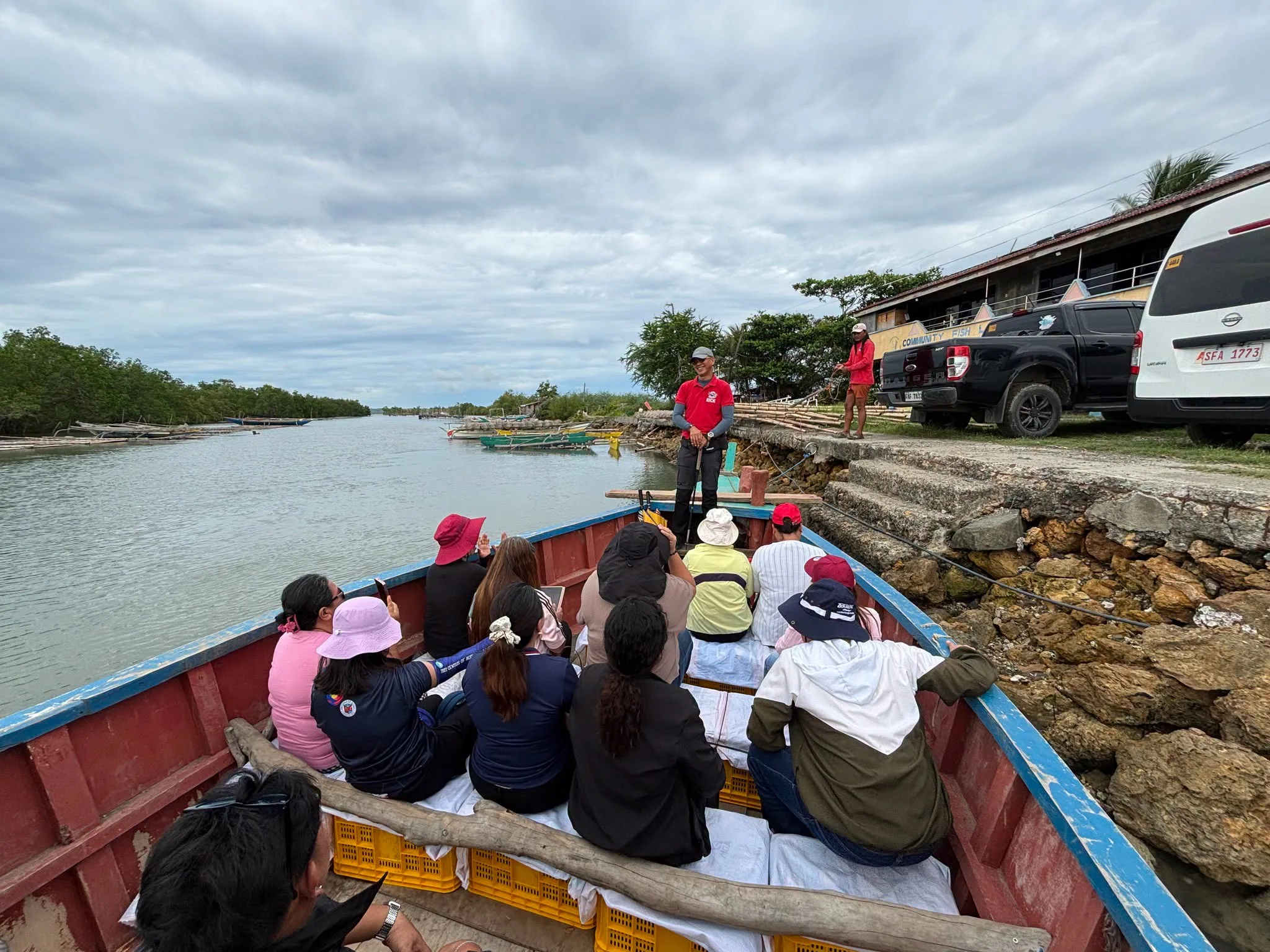
The training culminated in a field visit to Guelos’ Fish Farm in Dumangas, where participants observed Good Aquaculture Practices (GAqP) in a working operation. The visit sparked lively discussions on production challenges and practical management strategies. Farmers exchanged insights with the farm owner and experts, turning theoretical knowledge into actionable plans they could bring back to their own communities.
The experience left a strong impression on participants like Ms. Mila Silvela, a fisheries extension officer from Zarraga. She described the training as “very informative and motivational,” confident that the skills gained would help her better assist local fish farmers. Her feedback reflected the program’s success in empowering frontline personnel who play a crucial role in disseminating knowledge.
Strengthening Iloilo’s Milkfish Industry
Ms. Felina Grace Basco, head of the Provincial Agriculture Office–Fisheries Division, emphasized that the training is part of a larger, sustained effort to restore Iloilo’s reputation as a leading producer of high‑quality milkfish. She underscored the importance of science‑based innovation and strong institutional partnerships between government, academe, and the aquaculture sector.
By equipping local communities with advanced technical skills, the initiative aims to secure the economic future of coastal municipalities dependent on aquaculture. UPV’s extension mandate ensures that research findings translate into practical solutions that address the real needs of the industry, fostering a more resilient and competitive milkfish sector in the Philippines.
