


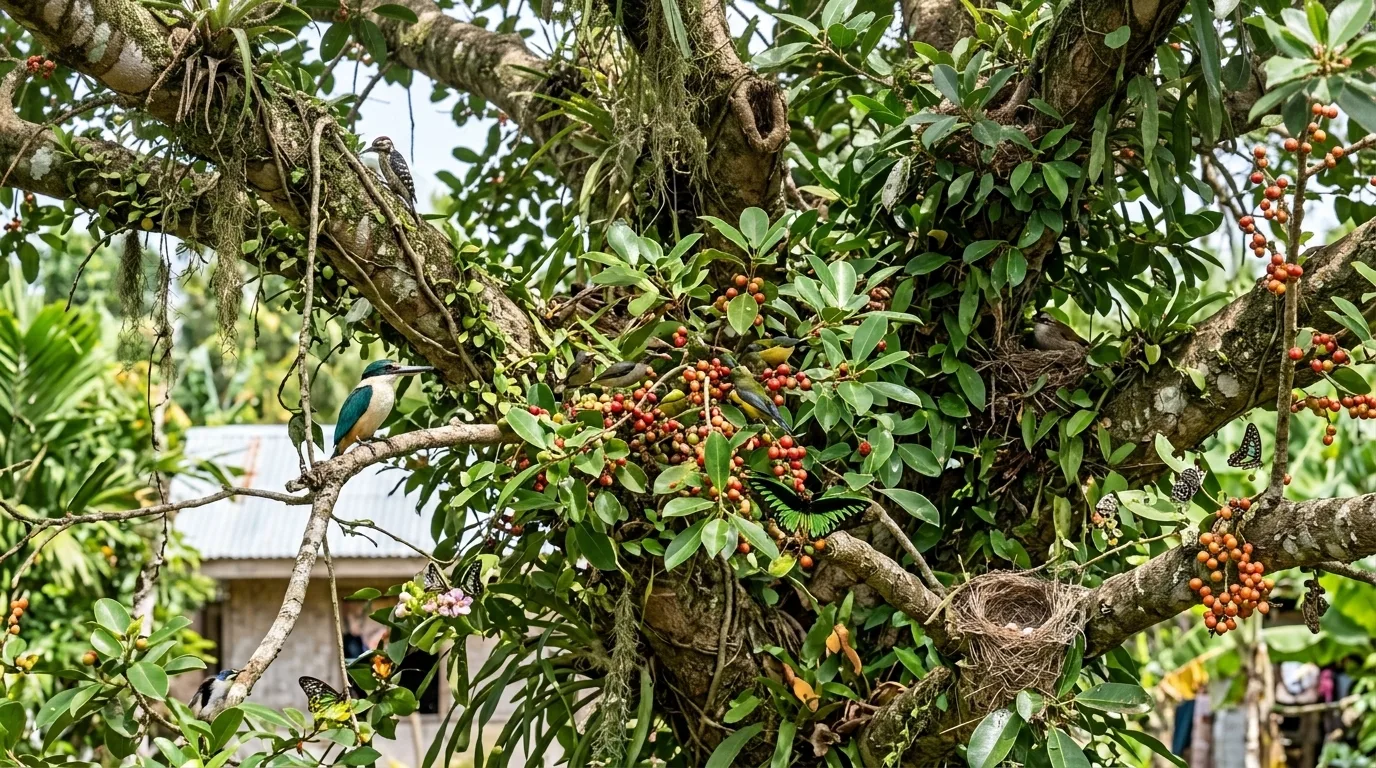
A Tree Can Become a Wildlife Home
BOHOL - Different parts of a tree can serve different purposes for wildlife. Birds may use branches for resting or nesting, while insects can live among leaves, bark, flowers, and small crevices. Some species may also use cavities in older trees as shelter. What looks like a single plant from the ground can actually function as a collection of tiny habitats, supporting different species at different levels.
Food, Shade, and Shelter in One Place
Trees can also provide valuable resources throughout the day and across different seasons. Flowers and fruits can offer food for pollinators, birds, and other animals, while leaves support insects that become food for larger species. The canopy provides shade and can create cooler conditions beneath it, giving wildlife places to rest and seek protection from heat. Fallen leaves and organic material around the roots can also contribute to the small ecosystem developing on the ground.
One Tree Can Connect a Bigger Habitat
The importance of a tree can extend beyond the space directly underneath it. When several trees, gardens, vegetation patches, and forest areas are connected, they can create more opportunities for wildlife to move, feed, and find shelter. Protecting even individual trees can therefore contribute to a larger network of habitats across Bohol. Whether standing beside a home, along a farm, or within a natural area, a healthy tree can be much more than greenery—it can be food, shelter, shade, and a living space for wildlife that may otherwise have fewer places to go.
