


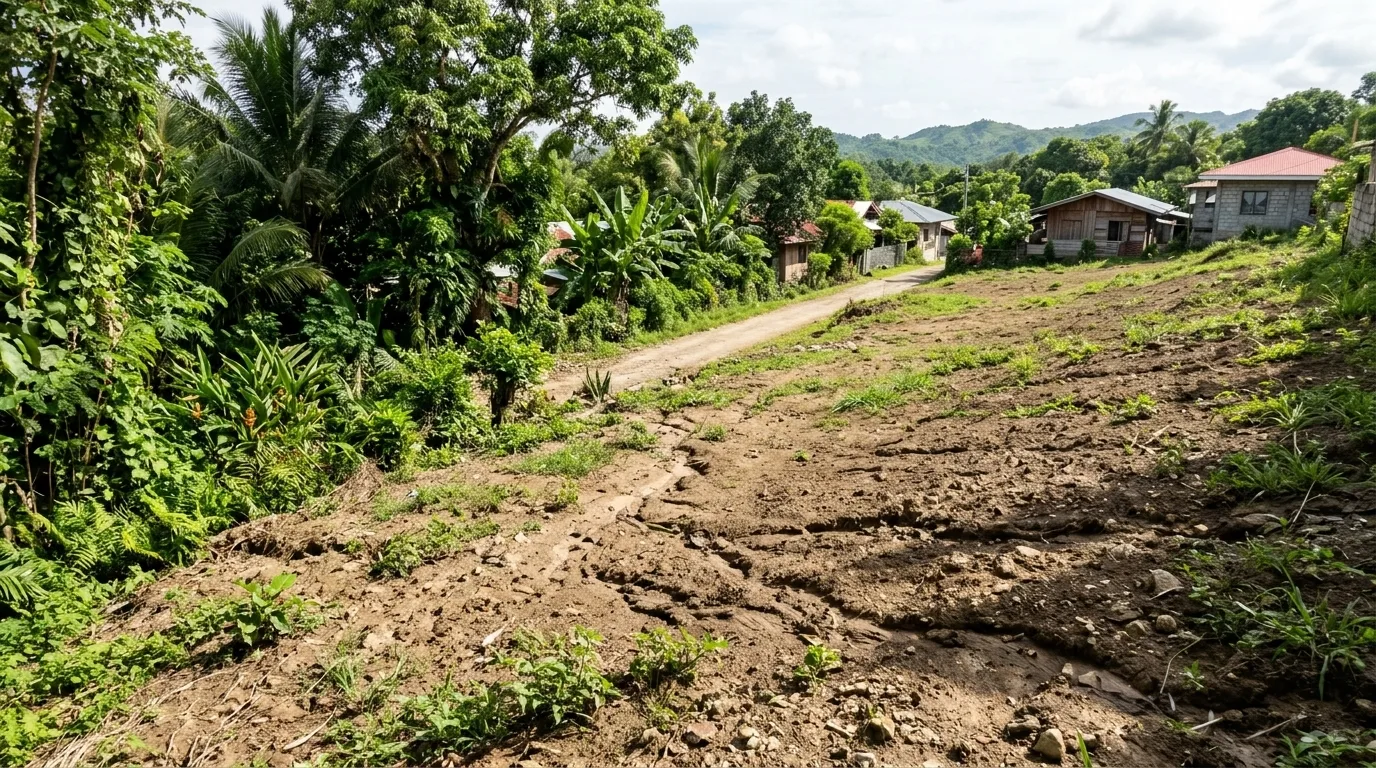
The Land Shows Its Natural Character
BOHOL - Even without a building, a lot can provide clues about how water moves across it and how the ground behaves after rainfall. Low areas may collect water, while sloped portions can influence runoff and the eventual placement of structures. Existing vegetation can also reveal something about the site’s conditions. Walking around the property after rainfall, when possible, can provide useful observations that may not be obvious on a dry day.
Look Beyond the Property Lines
What surrounds an empty lot can be just as important as the land itself. The condition of nearby roads, availability of utilities, access points, neighboring buildings, traffic, noise, and nearby developments can affect the future experience of the property. Buyers should also consider whether the surrounding area is likely to change as new projects are developed. A quiet lot today may have a different setting years later.
The Blank Canvas Still Has Limits
An empty lot offers freedom, but it does not mean every type of construction will be practical or permitted. Before imagining the house, buyers can first understand the land. Checking property documents, zoning and land-use requirements, access, drainage, soil conditions, and applicable development rules can help establish realistic possibilities. Once those fundamentals are understood, the lot becomes more than an empty space—it becomes a starting point for designing a property that works with its location instead of simply being placed on it.
