


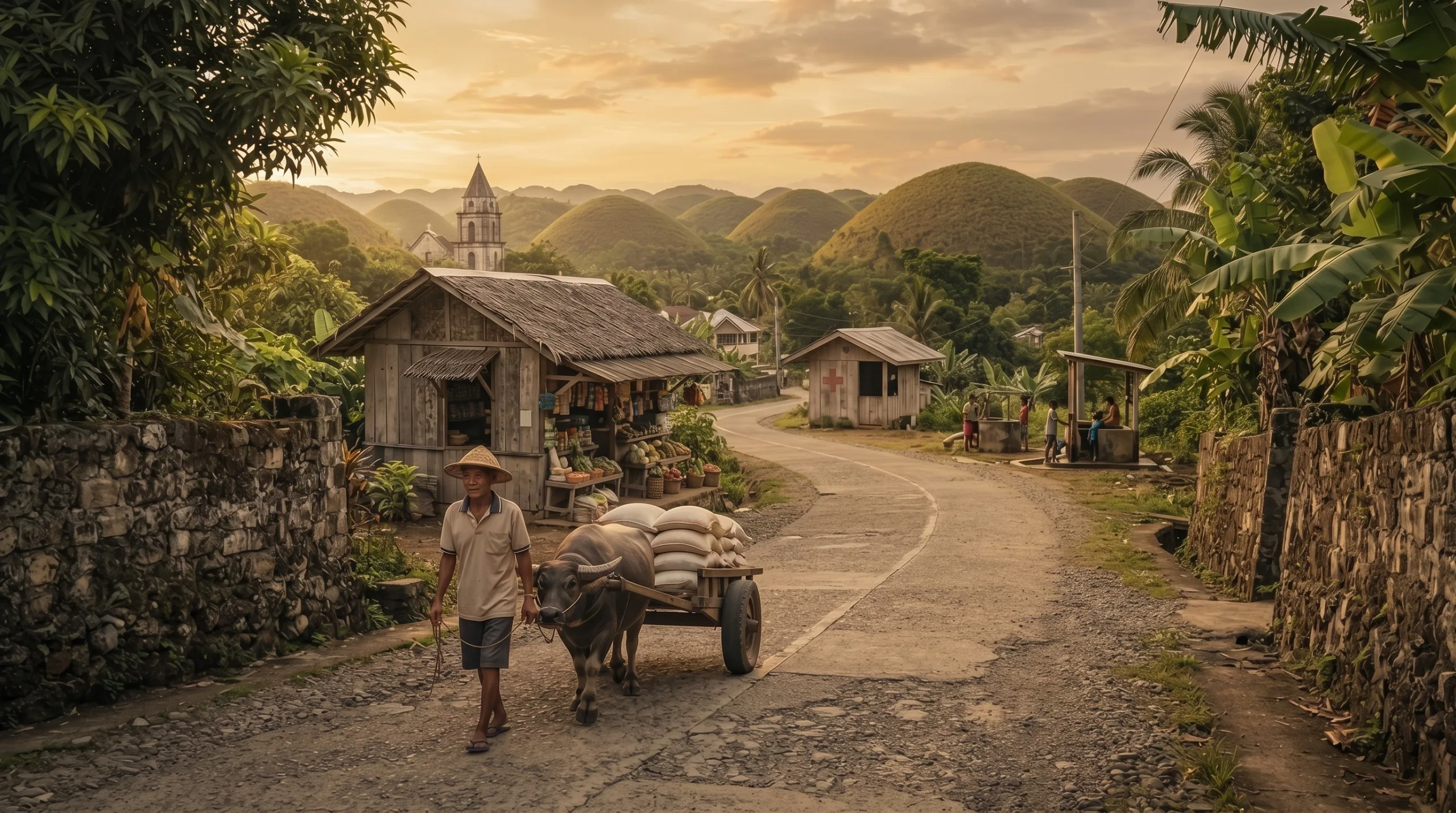
Roads Often Came Before Today’s Busy Districts
BOHOL - Some of Bohol’s communities can be better understood by looking at the roads that connected them before today's larger highways and busy commercial areas developed. Roads linked barangays with town centers, ports, markets, schools, churches, farms, and government facilities, allowing people and goods to move between communities. The province's Local Road Network Development Plan notes that improved accessibility has contributed to economic activity and better living conditions, while older planning documents show how settlement and traffic patterns developed around established urban centers such as Tagbilaran and emerging centers including Ubay, Talibon, and Tubigon.
Old Routes Can Reveal Where Communities Took Root
A road can also provide clues about why particular areas became important. Communities often grew where transportation made it easier to reach markets, agricultural areas, public services, and neighboring towns. Bohol's road-planning documents emphasize connectivity between national, provincial, municipal, and barangay roads because these networks help connect communities with economic opportunities and basic services. The province also maintains road-network and traffic maps that document how these routes connect different parts of the island. Looking at these connections today can help explain why some areas developed into commercial centers while others retained a more residential, agricultural, or rural character.
Roads Connect Bohol’s Past With Its Present
Older routes can also intersect with the province's cultural landscape. Bohol's development planning documents map tangible heritage sites such as old churches, ancestral houses, historical sites, plazas, old public buildings, and Spanish-era bridges alongside the province's road network. This relationship between transportation and heritage shows how roads have helped communities remain connected to places that carry historical and cultural value. Today, the same network continues to influence where people live, work, travel, farm, and establish businesses. Understanding these older connections can therefore give residents and property seekers another way to appreciate how Bohol's communities evolved—and why accessibility remains an important part of planning the province's future.
