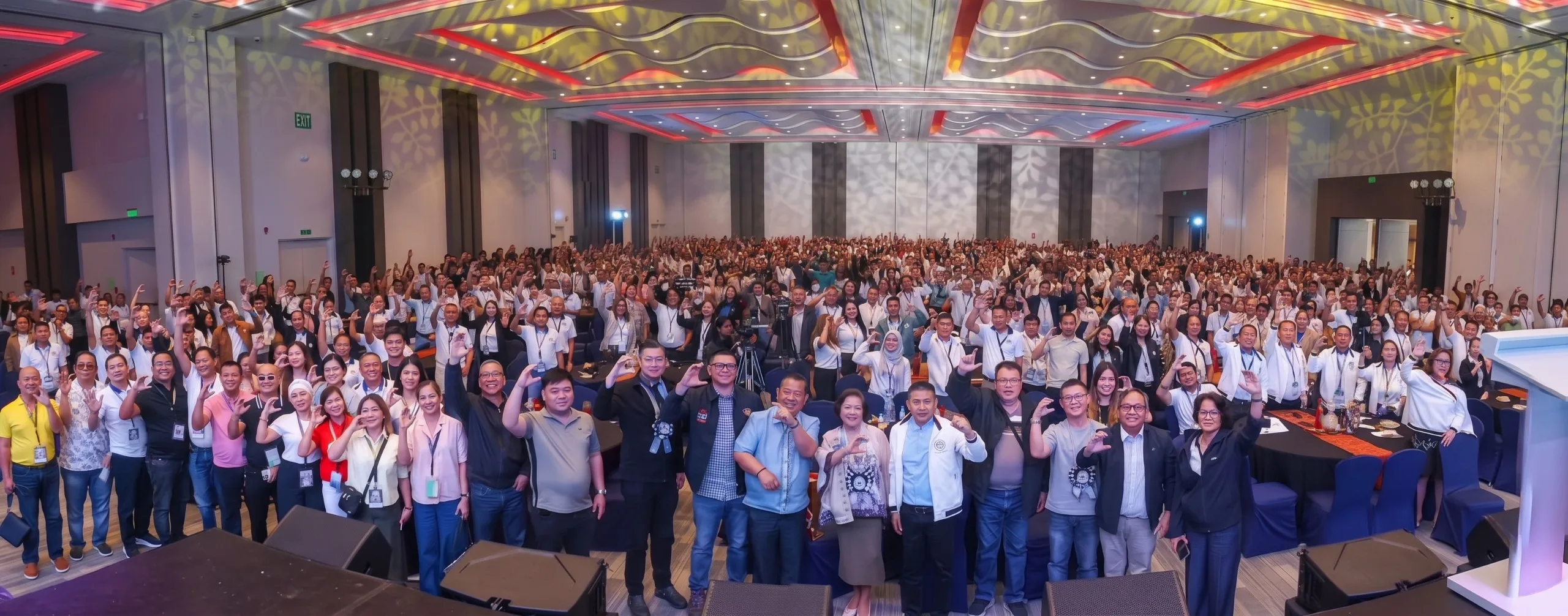
CLARK, PAMPANGA - Technology in public office should not just modernize paperwork; it must fundamentally transform the way citizens experience public service. This was the core message of Clark Development Corporation (CDC) President and CEO Atty. Agnes VST Devanadera as she addressed an expansive delegation of roughly 2,100 local legislators during Day 2 of the Philippine Councilors League (PCL) 2026 3rd Quarterly Continuing Local Legislative Education Program (CLLEP) . The keynote address was delivered on October 8, 2026, at the SMX Convention Center Clark, echoing the convention's overarching theme: "e-Legislature 2026: Empowering Sanggunians Through Digitalization, Smart Technology, and Innovative Local Policy."
The True Objective of Digitalization
Drawing from her storied background as both a national government official and a local chief executive, Atty. Devanadera challenged the councilors to redefine their roles. She emphasized that modern local councils are no longer confined to merely filing resolutions and passing ordinances—they are critical architects of community evolution. However, she issued a vital caveat: technology is a vehicle, not the final destination. "Digitalization, however, is not the objective. It should empower the Sanggunian. It should empower the local government. We are having technology because we want to improve our governance," stated Atty. Devanadera in October 2026. To guide this technological shift, she outlined three foundational principles that every local government unit must adopt: simplification of intricate government workflows, predictability of everyday public services, and keeping government human amid automated shifts.
The Irreplaceable Human Factor
Atty. Devanadera highlighted practical upgrades such as paperless legislative sessions, automated tax computations, digital archiving, and streamlined permitting. While these tools reduce administrative friction and slash citizen waiting times, their greatest value lies in freeing up public servants to connect deeper with the community. "The human factor is something you cannot divorce from digitalization," she firmly stated, noting that automated systems should serve to give personnel more time to focus on empathy, understanding, and solving the immediate grievances of their constituents. This people-centered approach ensures that technology enhances rather than replaces the essential human connections that define effective public service.
The 'Clark Blueprint' for Economic Growth
The CDC Chief urged local leaders to actively deploy smart technologies to make their respective cities and municipalities fiercely business-friendly. Lowering the cost of doing business and executing swift, hassle-free permitting systems remain the fastest routes to drawing job-generating investments. To illustrate this, she pointed to the economic engine of Clark Freeport Zone, which currently hosts over 1,200 locators and sustains a workforce of approximately 151,000 regular employees. Clark's robust economic performance is heavily anchored on proactive digital integration, fueled by systems such as the Business One-Stop Shop (BOSS) , which centralizes enterprise registrations for rapid turnaround; the Incentives Monitoring System (FIRMS) , powered by the Fiscal Incentives Review Board to manage investor portfolios; and the Business Interdependence System (BIS) , which nurtures supply chain integration across the freeport. Concluding her address, Atty. Devanadera reminded the councilors to act as responsible stewards of technology, emphasizing that prioritizing cybersecurity, protecting data integrity, and designing accessible platforms for everyday citizens must remain a top priority.