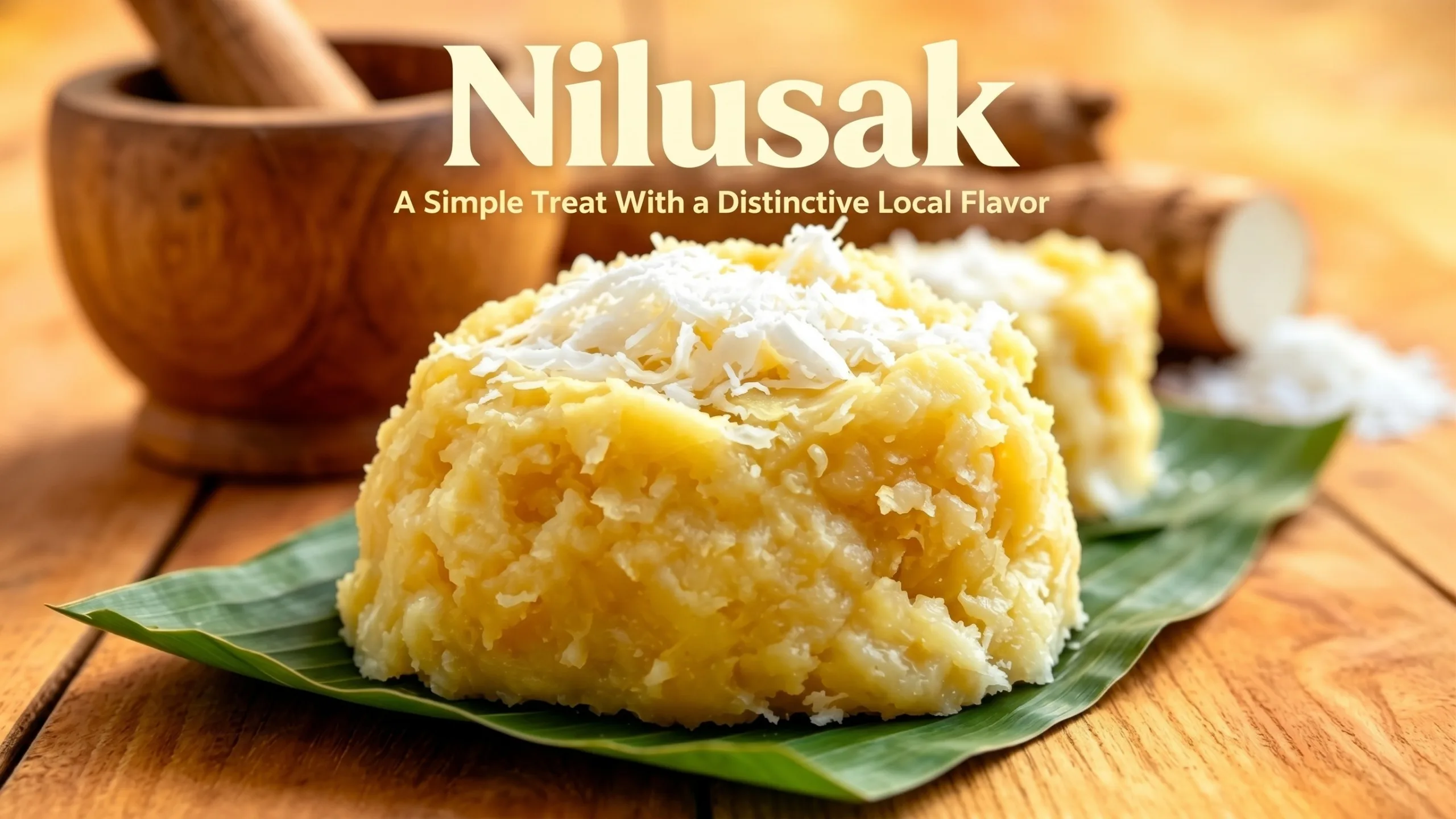
AGUSAN DEL NORTE — In Agusan del Norte and across the Caraga region, humble ingredients often become comforting delicacies, and Nilusak is one traditional treat that reflects this spirit of Filipino ingenuity. Also known as Nilupak in other parts of the Philippines, Nilusak is prepared from boiled cassava, locally called “balanghoy” in the Butuanon dialect. The cassava is mashed into a soft and pliable mixture before being combined with sugar and margarine, creating a sweet, creamy, and pleasantly chewy texture. The mixture is commonly formed into ping-pong-sized balls and covered with freshly grated mature coconut. The combination of the smooth cassava, sweetness, richness, and nutty coconut creates a simple yet satisfying snack that remains affordable and accessible.
A Tradition Passed Down Through Generations
Preparing Nilusak may be simple, but the process reflects a culinary tradition that has been practiced across generations. Cassava is first peeled and boiled until tender before being pounded or mashed until smooth. Sugar and margarine are then incorporated to provide sweetness and richness, while freshly grated coconut adds a contrasting texture and tropical flavor. Traditionally, the cassava was pounded using large wooden mortars and pestles, reflecting an older method of food preparation that remains part of the delicacy's cultural character. Different versions of Nilusak can be found in various places, with some preparations using condensed milk and butter for a richer taste. Despite these variations, its defining qualities remain its soft texture, sweet flavor, and connection to cassava as a locally available root crop.
More Than an Everyday Merienda
Nilusak is more than just a simple snack. It forms part of the food traditions that continue to connect communities in Agusan del Norte and the wider Caraga region. The delicacy can commonly be found in local markets, family gatherings, and town fiestas, where it is enjoyed as a midday merienda or a modest dessert. For travelers exploring Agusan del Norte, tasting Nilusak offers more than a chance to try a local delicacy. It provides a glimpse into the province's agricultural resources and the creativity of communities that have learned to transform simple ingredients into meaningful food traditions. In every soft, coconut-coated bite is a reminder that Filipino culinary heritage can be found not only in elaborate dishes, but also in the simple recipes lovingly prepared and passed down through generations.