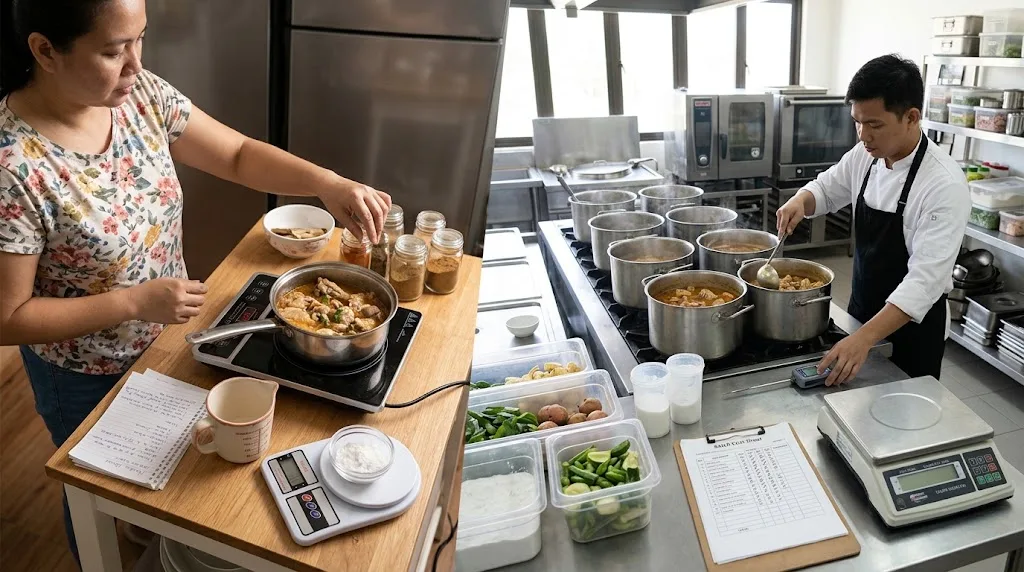
Scaling Ingredients Requires More Than Simple Multiplication
BOHOL - A recipe prepared at home is usually adjusted according to taste, available ingredients, and the number of people eating. When the same dish must serve 100 customers, however, cooks need more precise measurements and preparation plans. Simply multiplying every ingredient may not always produce the same result because larger quantities can affect cooking time, heat distribution, seasoning, and texture. Food entrepreneurs therefore test larger batches, standardize measurements, and document preparation methods to make sure each serving meets the expected quality.
Consistency Becomes Part of the Customer Experience
At home, a cook can make small adjustments depending on personal preference, but customers generally expect a familiar dish to taste the same whenever they order it. Restaurants and catering businesses need clear procedures for ingredient selection, portion sizes, cooking temperatures, and presentation. These standards help different kitchen staff prepare the same dish without significant variations. Consistency also makes it easier for business owners to estimate food costs, manage inventory, and respond to customer feedback.
Running a Kitchen Requires Time and Cost Management
Preparing food for a large number of customers involves more than cooking. Business owners must plan ingredient purchases, storage, kitchen equipment, staffing, preparation schedules, and safe food handling. They also need to account for waste and other operating expenses when setting menu prices. For Bohol entrepreneurs turning familiar family recipes into commercial products, these considerations can determine whether a popular dish becomes a sustainable business offering. The goal is to preserve the character of the original recipe while making it practical, safe, and consistent enough to serve many customers.