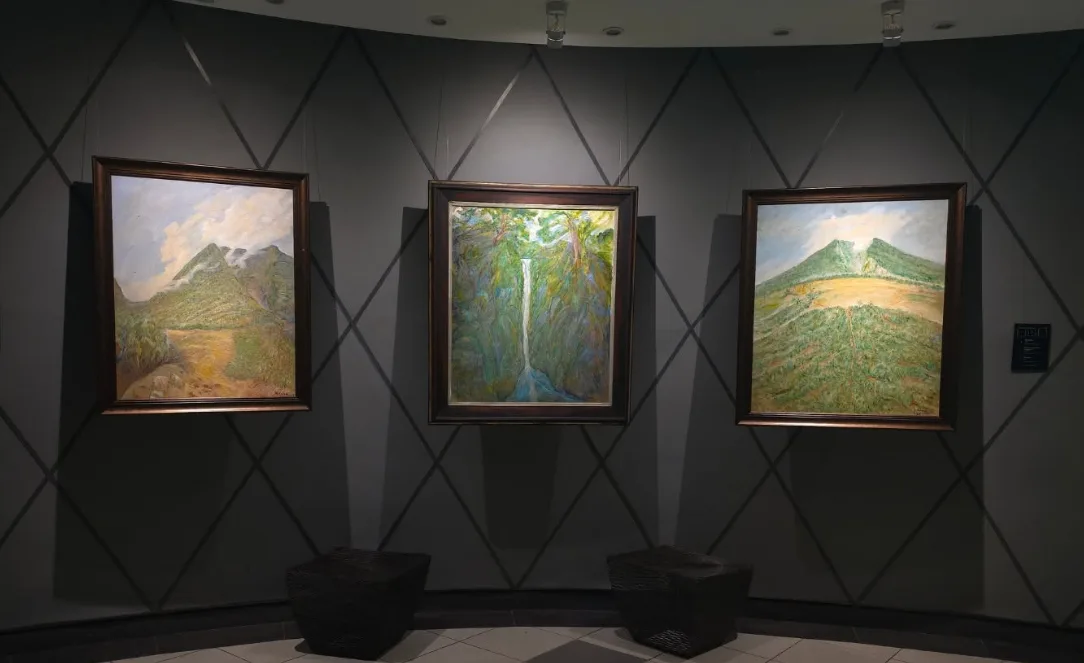
MAKATI CITY — The Yuchengco Museum at RCBC Plaza is currently hosting "The World According to Jaime de Guzman," an intimate exhibition that traces the late artist's journey from the apocalyptic reds of his youth to the quiet, mystical greens of his final years on Mount Banahaw. His story, as told through his paintings and pottery, is not merely an artistic evolution but a spiritual and psychological homecoming. It is a rare chance to follow a painter's path from the inferno of political unrest and personal anger to a place of profound peace, mysticism, and acceptance. This journey from darkness to light is one of the most compelling narratives art can tell.
A Palette Defined by Rage and Turmoil
De Guzman's early career, which skyrocketed in 1970 with the monumental murals Metamorphosis and Gomburza, was defined by intense emotional and political expression. His works from the late 60s to the 70s were characterized by "angry, dark, and foreboding" colors, with a dominating, visceral red that evoked blood and oppression. A search for spiritual refuge, following a personal family tragedy, led de Guzman to retreat from Manila's elite art circles and eventually settle at the foot of Mount Banahaw, a sanctuary of vibrant green landscapes. This move triggered a profound shift in his artistic vision, with the reds and blacks of his earlier work giving way to the "gentle greens" of the sacred mountain.
"I Cannot Use the Color Red Anymore"
This change in palette was inseparable from a change in spirit, as de Guzman reflected: "From the late 60s to the 70s, my colors were angry, dark, and foreboding. Nowadays, I cannot use the color red. I don't have anger anymore." He further elaborated, "I have come to a full circle. I've settled down. And I accept all." His twilight canvases, on view at the museum, are not just landscapes but a visual testament to that internal peace, painted from a place of radiance and personal mythology. Featuring rarely displayed paintings and pottery from the collection of art historian Saul Hofileña Jr., the exhibition reveals a unique side to de Guzman's artistry, one of peace, belief, and community.