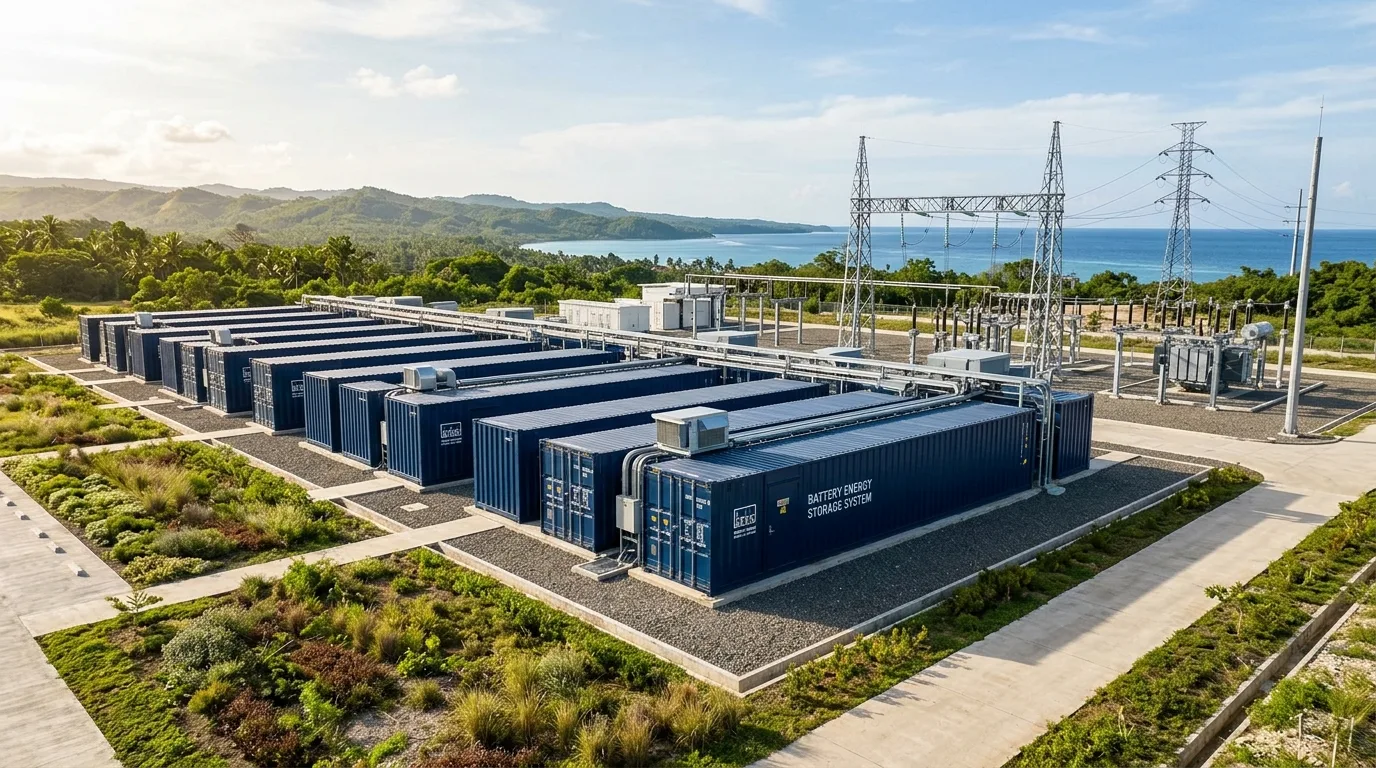
Bohol — The Department of Energy (DOE) is intensifying efforts to stabilize the Visayas grid through a major rollout of battery energy storage systems (BESS) and long-term infrastructure planning. As the region continues to grapple with frequent yellow and red alerts, the agency has committed to installing a total of 200 megawatts (MW) of battery capacity across four key provinces. This initiative serves as a critical short-term intervention to manage supply fluctuations while the government works toward larger structural power additions by 2028.
Strategic Deployment of Battery Storage
To address supply shortages and grid instability, the DOE is installing four 50-MW battery storage systems across the provinces of Iloilo (Panay), Negros, Cebu, and Bohol. Energy Secretary Sharon Garin explained that these facilities function similarly to "power banks," absorbing excess energy—particularly from solar sources that often go underutilized—and releasing it precisely when the grid requires additional supply. Managed by the National Grid Corporation of the Philippines (NGCP), these batteries provide the system with the necessary flexibility to respond to sudden drops in generation or spikes in demand within milliseconds. This deployment is expected to be implemented within one month, fulfilling a key directive from the President to provide temporary relief to the power-strained Visayas grid.
Comprehensive Plan for Grid Stability
Beyond immediate battery deployments, the DOE is implementing a multi-pronged approach to secure the region's energy independence. This includes the "Oras Natin sa Efficiency" (O.N.E.) Campaign, which encourages consumers to reduce non-essential electricity usage during peak evening hours to lower grid strain. The agency is also conducting a long-term assessment of Panay, which currently relies heavily on submarine cables, with the ultimate objective of making the island self-sufficient in power production. Secretary Garin emphasized that this broader strategy involves coordinating with electric cooperatives and local government units to upgrade transmission lines and improve overall distribution efficiency.
Future-Proofing the Visayas Power Sector
The long-term roadmap for the region includes the integration of several new baseload power plants and renewable energy projects expected to come online between 2028 and 2030, which are projected to contribute more than 450 MW to the grid. Projects such as the hydro-solar facility in Igbaras, Iloilo, are currently being facilitated to ensure a more diverse and reliable energy mix. The DOE's mandate now requires new variable renewable energy projects of 10 MW or more to integrate storage equivalent to at least 20 percent of their capacity, a policy intended to prevent volatility and align generation with real-time system needs. Through this combination of immediate contingency reserves and sustained investment in new generation, the government aims to put an end to the recurring power alerts that have affected consumers since early 2026.
no people