ILOILO — Golden morning light spills over the historic facades of Calle Real on October 5, 2026, as the province pauses to honor its educators. Across Iloilo, from the coastal shores of Carles to the green hills of Igbaras, World Teachers' Day carries a sacred quietness—a collective embrace for the quiet heroes who shape the region's soul.
A Morning of Gratitude Across the Province
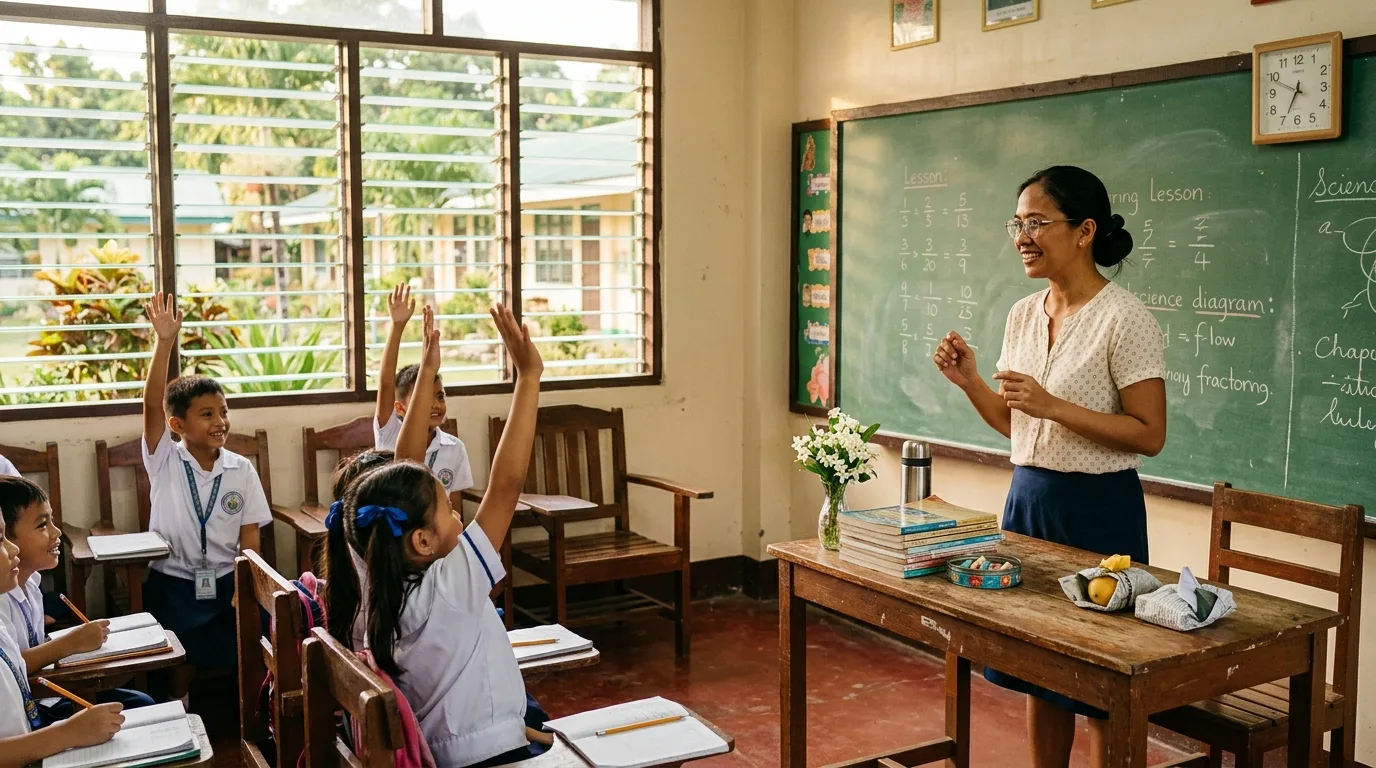
Long before the opening bell rings, classrooms undergo a quiet transformation. Little hands dusted with pencil graphite untangle ribbons of bright crepe paper. In barangay schools, children string wild sampaguita and bougainvillea blossoms gathered from family gardens, crafting fragrant garlands with immense pride.
There are no expensive luxury gifts wrapped in shiny foil here. Instead, the teacher's desk holds folded cartolina cards, sweet native mangoes wrapped in newspaper, and handwritten notes penned with trembling, earnest strokes. Every offering carries the unmistakable weight of genuine affection rather than obligation.
The Heart of an Ilonggo Educator
To understand an Ilonggo educator is to understand paga-ulikid—that deep-seated compassion that looks after another soul without expecting anything in return. In the musical cadence of Hiligaynon, affection is never loud or boastful. It is soft, constant, and enduring.
Consider Ma'am Tessie, who at fifty-eight still boards the first jeepney out of Passi City before sunrise. Her worn tote sags under test papers, colored chalk, and a small thermos of coffee. For thirty-four years, her life has been measured not in modest salary slips but in the eager footfalls of children rushing through her classroom doors.
Simple Gifts, Deep Meaning
Near the banks of the Jalaur River, a young boy in an oversized uniform steps to a wooden podium. His voice stammers over the microphone, but his eyes remain steady as he reads a poem for his mentor. Behind him, a banner hand-painted on repurposed Manila paper sways in the breeze: "Salamat gid, Teacher, sa imo pagpalangga."
Tears flow freely in these moments, unashamed and unbidden. Teachers wipe their eyes with handkerchiefs bearing the faint scent of soap and chalk dust. They remember typhoon afternoons when they stayed late to ensure every child was safely picked up, and the quiet mornings they bought lunch for the shy boy in the back row.
From Classroom to Community
By noon, the celebration moves beyond school walls. In Mandurriao, Jaro, and La Paz, bakeries and family-run carinderias post handwritten signs offering free bowls of hot Batchoy for anyone in a teaching uniform. Past pupils, now nurses, engineers, and municipal workers, make silent pilgrimages back to their old alma maters.
Outside Jaro Elementary School, a retired educator named Sir Eduardo walks the covered pathways once more. A woman in medical scrubs suddenly stops and performs the traditional mano. "Sir," she whispers, "I became a nurse because you were the first person who told me I was smart enough to try."
A Legacy of Unconditional Service
Teaching is an act of radical faith. Educators pour their minds and youth into souls who will eventually walk away into the vast world. They build stepping stones across deep waters, watching students cross into bright futures while remaining anchored on the shore.
As dusk settles along the Iloilo River Esplanade, teachers walk home carrying bags of handwritten letters and wilted bouquets. In Iloilo, this day is not merely a calendar date but a timeless anthem honoring those who see every child as a promise waiting to unfold.