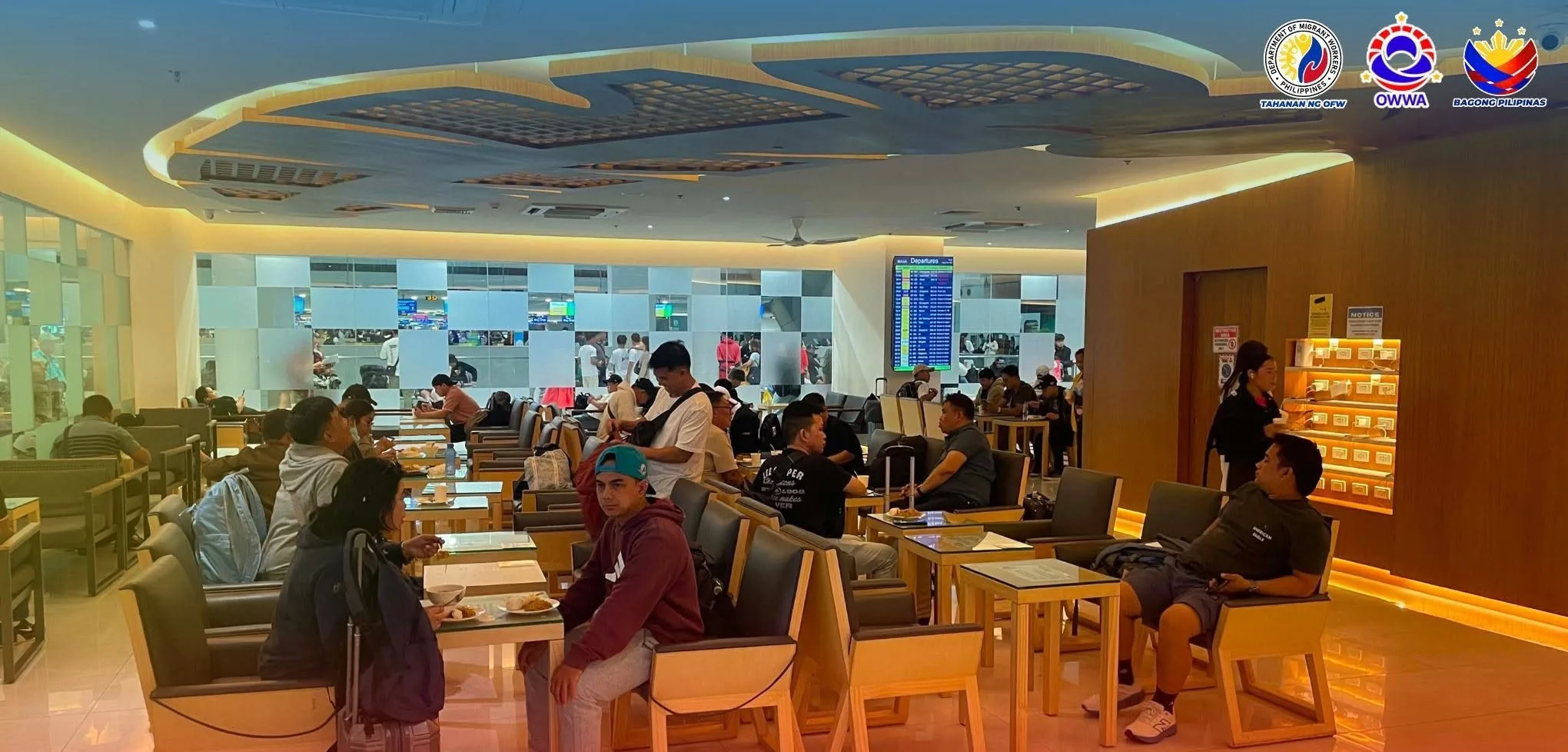
PHILIPIINES – The Overseas Workers Welfare Administration (OWWA) has issued clear guidelines for the use of OFW Lounges at Ninoy Aquino International Airport, responding to complaints from returning overseas Filipino workers. The new rules aim to make the limited space fair and accessible for the thousands who pass through daily.
Responding to Feedback with Action
OWWA Administrator Patricia Yvonne “PY” Caunan personally visited the OFW Lounge at NAIA Terminal 3 to observe operations firsthand. She spoke with frontline staff and listened to OFWs who shared their frustrations about long waits and unclear entry rules. The agency issued a public apology for the stress caused and vowed immediate improvements.
“Every feedback is an opportunity to review our policies and serve better,” the OWWA statement read. The administrator stressed that returning workers deserve comfort and respect after long journeys. The visit was not merely symbolic; it led to concrete policy clarifications that were rolled out within days.
Clear Rules for Fair Access
OWWA set straightforward rules for lounge eligibility. OFWs arriving on international flights with a confirmed domestic connecting flight within 24 hours may enter. The stay is capped at six hours per visit to allow more users to benefit from the facility. The 24‑hour window establishes eligibility, not a continuous 24‑hour stay.
Extensions beyond six hours are possible for verified special circumstances, such as medical needs, senior citizens, or persons with disabilities. These exceptions are granted only when seating capacity permits. OWWA emphasized that the rules balance compassion with the reality of limited space.
Managing Limited Seats for Thousands of Travelers
Between 4,000 and 6,000 OFWs pass through NAIA every day, yet the Terminal 3 lounge seats only 216 and Terminal 1 seats 140. The six‑hour limit is essential to prevent crowding and to give every eligible traveler a fair chance to rest. Without the cap, the lounges would quickly become inaccessible.
The time restriction targets those nearest their departure, ensuring that seats are not occupied by passengers with many hours still to wait. This rotation allows OWWA to serve the maximum number of OFWs daily. The agency described the limit as a practical necessity, not a punitive measure.
Technology Brings Transparency
To manage capacity better, OWWA deployed a real‑time OFW Lounge Management and Monitoring System. Digital screens outside the lounges now show live occupancy and available slots, so travelers can check before entering. When the lounge is full, a structured queuing system is activated.
Frontline staff inform waiting OFWs of current occupancy, estimated wait times, and alternative assistance available. This transparency reduces confusion and helps passengers plan their wait. The system also prevents overcrowding and ensures a more organized flow.
Better Service and Future Upgrades
OWWA reiterated its directive to all frontline personnel to treat every OFW with empathy, patience, and respect. Regular training and feedback sessions will reinforce these standards. On‑duty OWWA officers remain available to resolve any concerns immediately.
Looking ahead, OWWA is coordinating with New NAIA Infra Corp. to study possible expansions of the lounges. The goal is to increase seating capacity and improve overall operations. For now, the clarified rules and digital monitoring aim to deliver “Alagang OWWA, Serbisyong May Puso.”