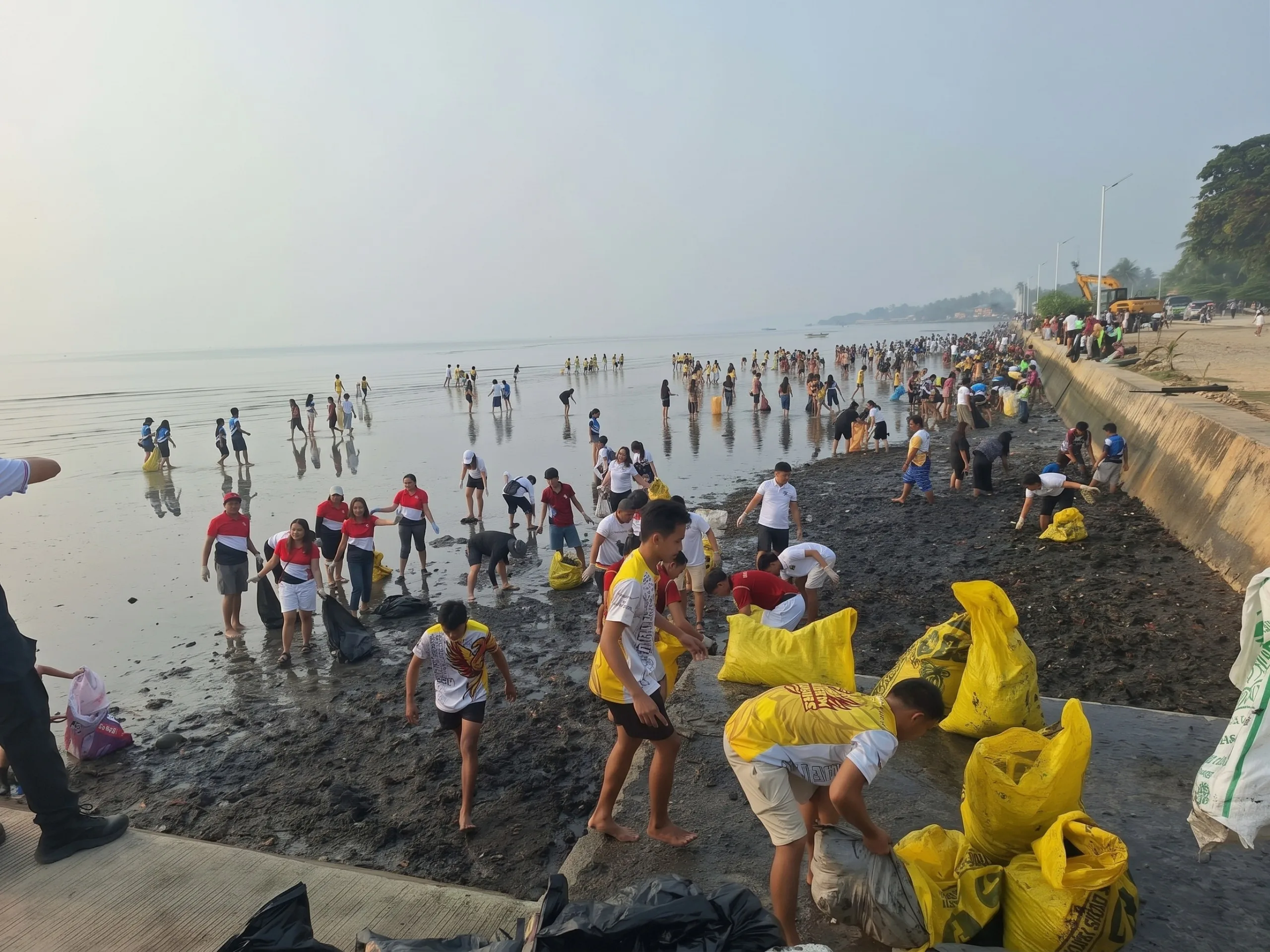
CEBU — Nearly 3,000 volunteers descended on the coastal barangays of Sibonga on September 19, 2026, for the International Coastal Cleanup Day. The massive turnout underscored the community's commitment to protecting its marine environment and prompted national agencies to push for smarter waste management systems.
A Community United for the Sea
Around 2,940 participants gathered as early as 4:30 AM, representing government agencies, private organizations, and local residents. Students from Sibonga Community College formed the largest contingent with nearly 2,700 participants. Fisherfolk, fish wardens, police, coast guard, fire protection personnel, and municipal employees joined forces for the cleanup.
Vice Mayor Mariano Laude welcomed the volunteers during a short program at 6:30 AM. He emphasized that collective participation is essential to safeguarding Sibonga's coastal and marine resources. The cleanup then proceeded along designated shoreline areas, with teams fanning out to collect debris.
Councilor Thomas Codilla, chair of the Committee on Environment, highlighted the diverse sectors involved. He noted the presence of vendors, tricycle operators, women's groups, cooperatives, youth, teachers, church groups, and other volunteers. "This is people in action," he said. "This is participatory governance."
Commitments to Institutionalize Change
Codilla pledged to institutionalize a Municipal People's Council through an ordinance. He also identified three environmental priorities for Sibonga: strengthening the solid waste management ordinance with stricter penalties for dumping in coastal areas, allocating funds for permanent materials recovery facilities in seven coastal barangays, and conducting quarterly coastal cleanups.
He emphasized that mangrove rehabilitation would accompany these efforts. "The ocean does not need us, but we will need an ocean," Codilla said. His words captured the urgency of protecting marine ecosystems for future generations.
Cebu Provincial Environment and Natural Resources Officer Rodel Bontuyan echoed this sentiment. He stressed that protecting the marine environment begins with individual responsibility and proper waste disposal. Waste discarded in upland areas, he warned, can eventually be carried downstream to the sea.
National Call for Predictive Governance
The cleanup aligns with the Climate Change Commission's call to use coastal cleanup data for improving waste management systems nationwide. More than 100,000 volunteers collected over 46 tons of garbage from waterways and coastal areas across the country.
CCC Vice Chairperson Robert E.A. Borje said the data should tell agencies what kinds of waste are reaching the waters and where they originate. He urged the DENR, DILG, and local governments to use this information to improve collection routes and strengthen barangay waste systems.
Borje noted that the approach supports President Ferdinand R. Marcos Jr.'s call for predictive governance. The goal is to use available information to anticipate problems and guide government action, preventing garbage from reaching rivers and coastlines.
Cebu's Broader Environmental Push
The Sibonga cleanup is part of Cebu's wider efforts to address solid waste challenges. In August 2026, Governor Pamela Baricuatro convened the Provincial Solid Waste Management Board to strengthen coordination. The Clean Cebu Campaign, launched in March, reinforces the province's response to waste management issues.
The Balamban initiative also demonstrates the upland-to-coast connection. The municipal government conducted coastal cleanups alongside the launch of CarbonPH, a restoration partnership between the Aboitiz Foundation and GCash GForest. The project aims to grow one million trees and restore 1,200 hectares.
The International Coastal Cleanup is spearheaded by the DENR-Environmental Management Bureau 7. This year's theme, "Clean Seas for Resilient Communities," was implemented across Cebu's municipalities and cities with support from various stakeholders.