


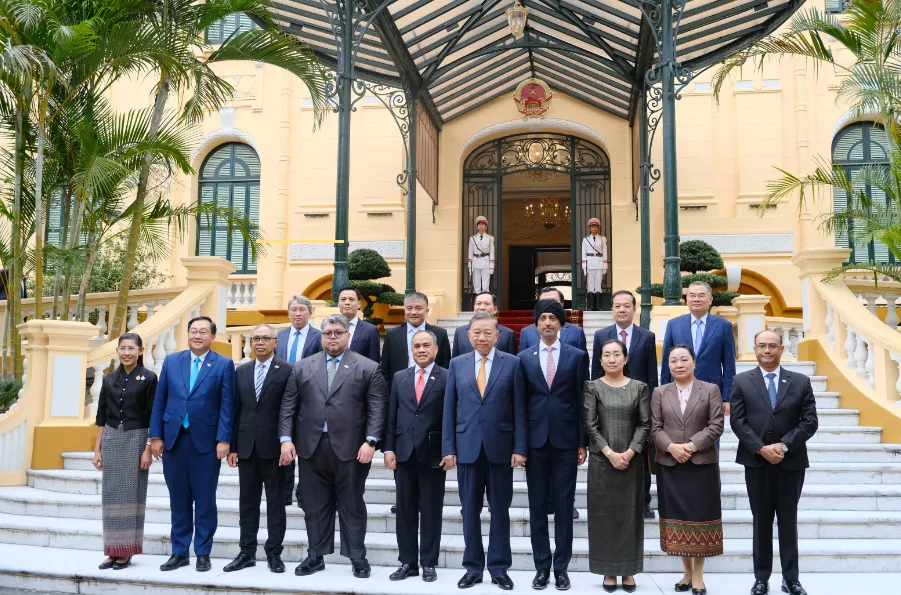
VIETNAM — A gathering of ASEAN ambassadors and Vietnamese President Tô Lâm on August 4, 2026 produced commitments that could reshape job markets and improve protections for overseas Filipino workers across the region. The high‑level meeting in Hanoi spotlighted emerging industries where Filipino talent is in demand.
A Region Ripe with Opportunity
Philippine Ambassador Francisco Noel R. Fernandez III led the ASEAN diplomatic corps in congratulating President To Lam on his recent election. He praised Vietnam’s rapid economic rise, including its classification as an upper‑middle‑income economy, and acknowledged the country’s contribution to ASEAN’s robust growth. The ambassador also recognized Vietnam’s upcoming APEC chairmanship in 2027, underscoring that regional cooperation delivers tangible stability.
President To Lam noted that ASEAN has remained firm through global adversity, and that 2026 marks the 50th anniversary of the Treaty of Amity and Cooperation. He described the expanding number of countries acceding to the treaty as proof of ASEAN’s attractiveness. The Vietnamese leader stressed that the region’s 700 million people represent a powerful engine for growth.
Technology and Skills: A Clear Signal for OFWs
The president’s recommendations directly point to sectors where Filipino workers can thrive. He urged ASEAN to strengthen economic cooperation in new and emerging fields such as digital transformation, semiconductors, artificial intelligence, food security, and energy. These are all areas where the Philippines has been building a skilled workforce.
For OFWs, this signals an expanding job market beyond traditional roles. Vietnam’s push into high‑tech industries, combined with ASEAN’s collective emphasis on technology, creates demand for Filipino IT professionals, engineers, educators, and skilled technicians. The meeting underscored that the region’s future lies in knowledge‑based economies, and the Philippines stands ready to supply that talent.
Stability That Protects Workers and Trade
Beyond economic gains, the meeting reinforced the diplomatic framework that safeguards Filipino interests. President To Lam emphasized maintaining ASEAN solidarity and centrality amid eroding global trust. For the Philippines, this means continued stability in the South China Sea—a critical passage for Filipino seafarers and commercial vessels—and stronger labor protections for workers based in Vietnam.
Ambassador Fernandez reaffirmed the commitment of ASEAN missions in Hanoi to work with Vietnamese institutions on promoting the bloc’s priorities. The Philippine Embassy team, including Second Secretary Jackielou‑Mary Huelgas and Third Secretary Danica Denise Manicad, attended the meeting, reflecting the government’s hands‑on approach to diplomacy that directly benefits Filipinos overseas.
Food Security and the Filipino Consumer
Vietnam remains one of the Philippines’ top suppliers of rice. The meeting’s focus on food security and intra‑ASEAN trade integration helps ensure stable supply chains, which can temper local price spikes and shield Filipino households from food inflation. For OFWs sending remittances home, stable commodity prices mean their hard‑earned money goes further.
The president’s call for increased trade and investment within ASEAN also opens doors for Philippine exporters and service providers. A more integrated regional market of 700 million consumers offers opportunities that can generate employment both abroad and at home, creating a virtuous cycle of economic growth.
