


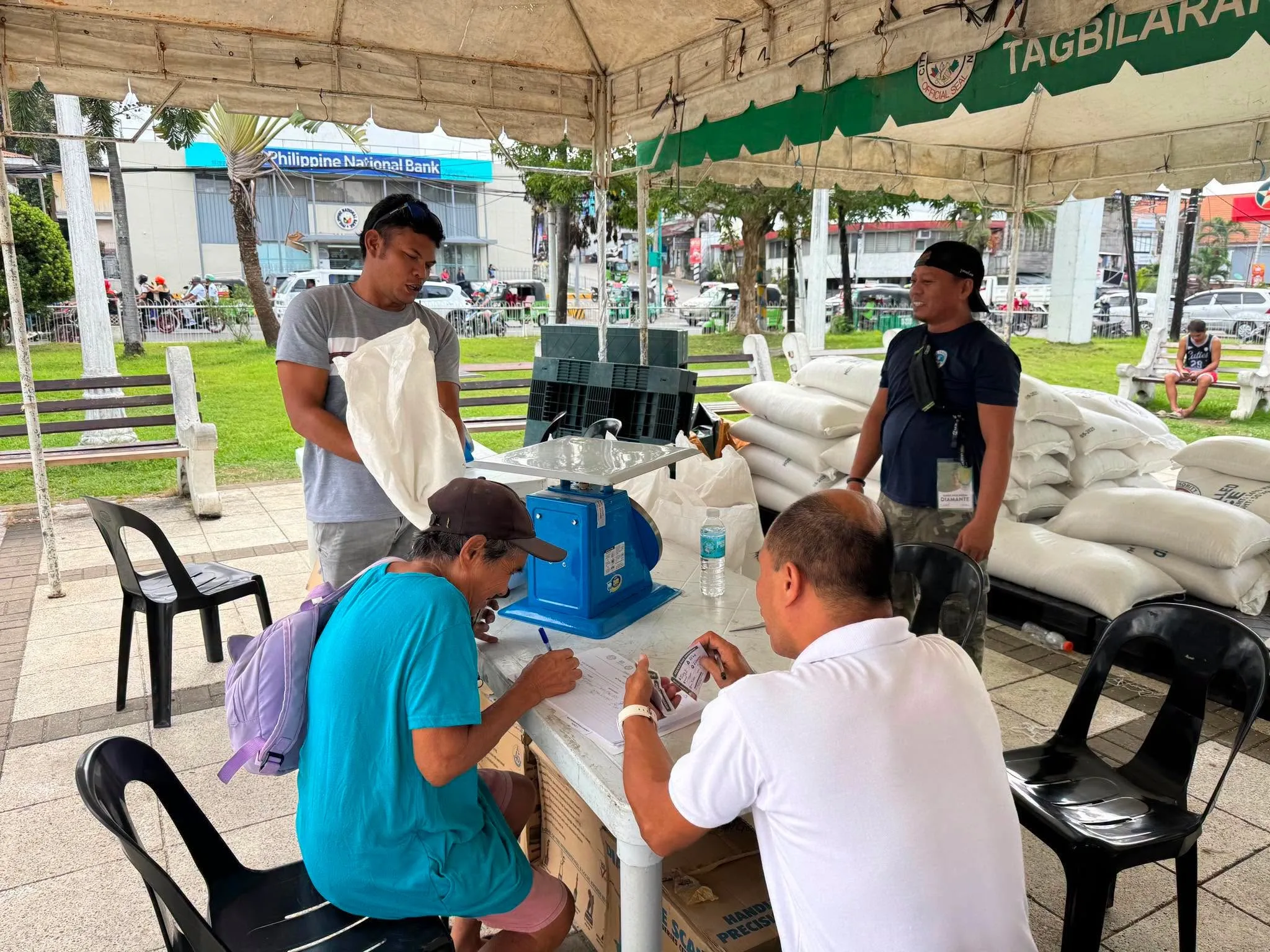
BOHOL — The Provincial Government of Bohol has dramatically scaled up its "Benteng Bigas Meron Na" (P20 Rice Project), expanding from an initial seven local government units to all 47 municipalities and Tagbilaran City. Backed by a ₱24‑million provincial fund, the program now targets approximately 120,000 vulnerable Boholanos.
A Massive Scale‑Up from 7 to 48 LGUs
The program's expansion represents a six‑fold increase in reach compared to its 2025 launch. Every municipality across Bohol now participates, ensuring that no community is left behind. The ₱24‑million allocation subsidizes the cost of rice, bringing it down to just ₱20 per kilogram for qualified beneficiaries.
Governor Erico Aristotle C. Aumentado led the initiative, which covers indigent families, senior citizens, persons with disabilities, solo parents, and indigenous peoples. Special attention is given to island barangays that cannot cultivate rice locally. The program is a cornerstone of the province's commitment to food security and inclusive development.
A Strategic Partnership Secures Supply
A Memorandum of Agreement with Food Terminal Incorporated (FTI) formalized the supply chain for the subsidized rice. FTI President and CEO Joseph Rudolph C. Lo joined Governor Aumentado for the signing, witnessed by provincial and national officials. The partnership ensures transparent procurement and efficient distribution across all participating LGUs.
National Food Authority Administrator Dr. Larry R. Lacson and DA Assistant Secretary Atty. Genevieve E. Velicaria‑Guevarra also attended the signing. Their presence underscored the alignment between provincial and national food security efforts. The MOA guarantees a steady supply of quality rice, protecting the program from market volatility.
Relief for Vulnerable Families
Commercial rice prices in local markets typically range from ₱50 to ₱60 per kilogram. The subsidized ₱20 rate frees up significant household income for other essential needs such as healthcare, education, and utilities. For a family consuming 10 kilograms of rice monthly, the savings can amount to ₱300 to ₱400 per distribution period.
Beneficiaries access the rice through designated Kadiwa outlets and municipal distribution hubs. Eligible residents present LGU‑issued identification to purchase their allocated ration. The program is designed to be simple, transparent, and easy to access, minimizing bureaucratic hurdles for those who need it most.
Supporting Local Farmers
Beyond providing affordable food, the program creates a stable market for Boholano rice farmers. Locally harvested palay is procured through NFA and FTI partnerships, then milled and distributed within the province. This approach keeps the economic benefits circulating within Bohol's agricultural communities.
By guaranteeing demand for local produce, the program encourages farmers to plant with confidence. The dual impact—affordable rice for consumers and reliable income for producers—strengthens the entire agricultural value chain. It is a model that balances social welfare with economic development.
A Model for Inclusive Growth
The nationwide Rice‑for‑All Program has reached over 12 million beneficiaries across the Philippines, with 15,000 to 20,000 metric tons distributed monthly. Bohol's expansion aligns with the national rollout, which targets 15 million low‑income households through June 2028. The province's proactive approach serves as a benchmark for other LGUs seeking to replicate its success.
