


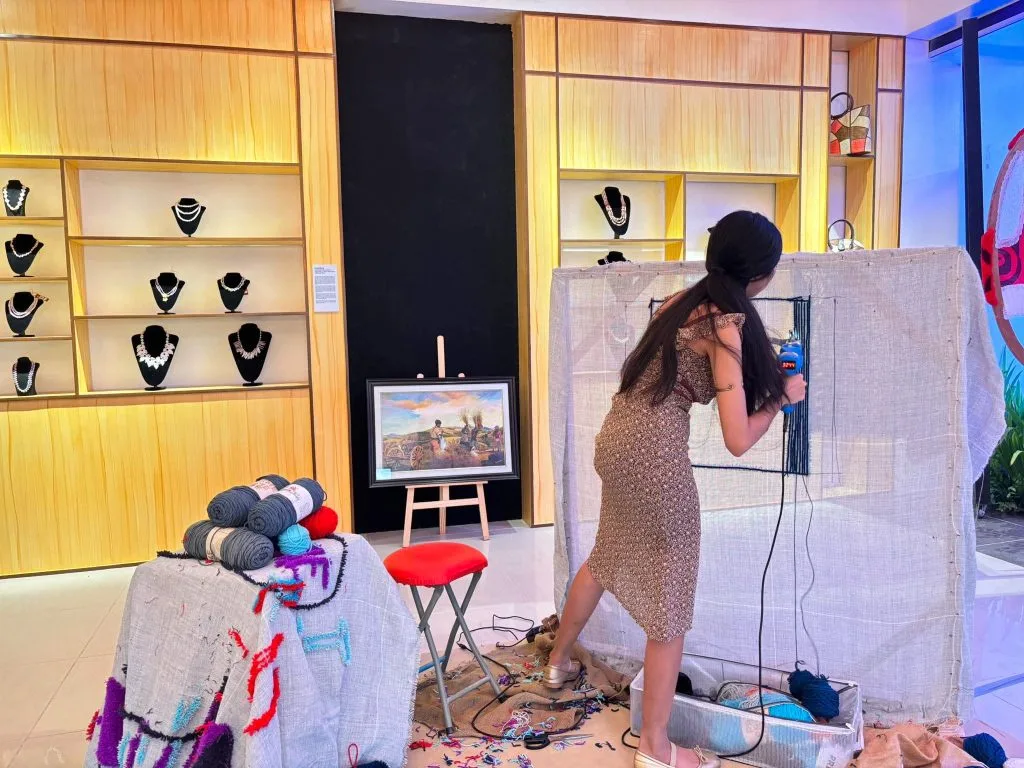
CEBU — For 25-year-old Mary Joy Espina, art is both a language and a lifeline. Through her tufting-based textile creations, she honors the parents she lost and sustains herself as a young creative entrepreneur in Cebu.
A Promise That Became a Craft
Espina calls her art "Yarning," a term that fuses "yarn" with "yearning." The name traces back to an unfulfilled promise—learning tufting with her mother, whose gardening, needlework, and brushwork shaped their home. That unfinished plan now anchors everything she creates.
Having lost both parents, she channels her grief into every textured piece. She credits them for nurturing her artistic spirit despite expectations she might pursue medicine or law. Their support gave her confidence to follow her passion for painting, sewing, and design.
What began as her undergraduate thesis and her mother's hobby has grown into a livelihood. Over three years, she has earned between P18,000 and P40,000 per project, depending on size and complexity. Small works take three to five hours, while larger commissions require two to three days.
Building a Creative Career From Scratch
Espina graduated from the University of the Philippines Cebu and was among the artists featured when the Lapu-Lapu City Art Gallery and Cultural Hub reopened in June. She accepts event installations and custom orders, steadily building a client base through referrals and online visibility.
She acknowledged the difficulty of choosing art over more conventional paths. Self-doubt and financial uncertainty tested her resolve, yet she persevered. She urged fellow young artists to keep finding ways forward despite the odds and to trust that provision will come.
Her journey mirrors a rising sector. Preliminary Philippine Statistics Authority data show the creative economy grew 6.9 percent to P2.12 trillion in 2025, accounting for 7.6 percent of gross domestic product. Artists like Espina are contributing to that momentum.
A Gallery That Opens Doors
Before the hub reopened, artists in Lapu-Lapu City, historically called Opon, had no dedicated venue for public exposure. Espina described the gallery as a breakthrough for the local art community. It gives both established and emerging creatives a platform to reach wider audiences.
DOT-7 OIC Regional Director Gelena Asis-Dimpas said the hub forms part of the emerging Central Visayas Creative Tourism Circuit. It offers curated exhibits, cultural programs, and storytelling initiatives. The initiative positions local artistry within the region's tourism offerings.
National Policy Backs Creative Workers
The government adopted the Philippine Creative Industries Development Plan 2025-2034 through Memorandum Circular 103, signed in October 2025. The ten-year roadmap aims to protect intellectual property and ensure fair compensation for workers in crafts, design, and cultural heritage.
The plan implements Republic Act 11904, the Philippine Creative Industries Development Act, which designates September as Philippine Creative Industries Month. The Department of Trade and Industry Central Visayas has begun localizing the plan alongside partner agencies.
Espina expressed gratitude to the Lapu-Lapu City Government and DOT-7 for providing artists with a venue. She hopes more creatives will emerge and share their work. The gallery sits on Amores Road in Barangay Gun-ob.
