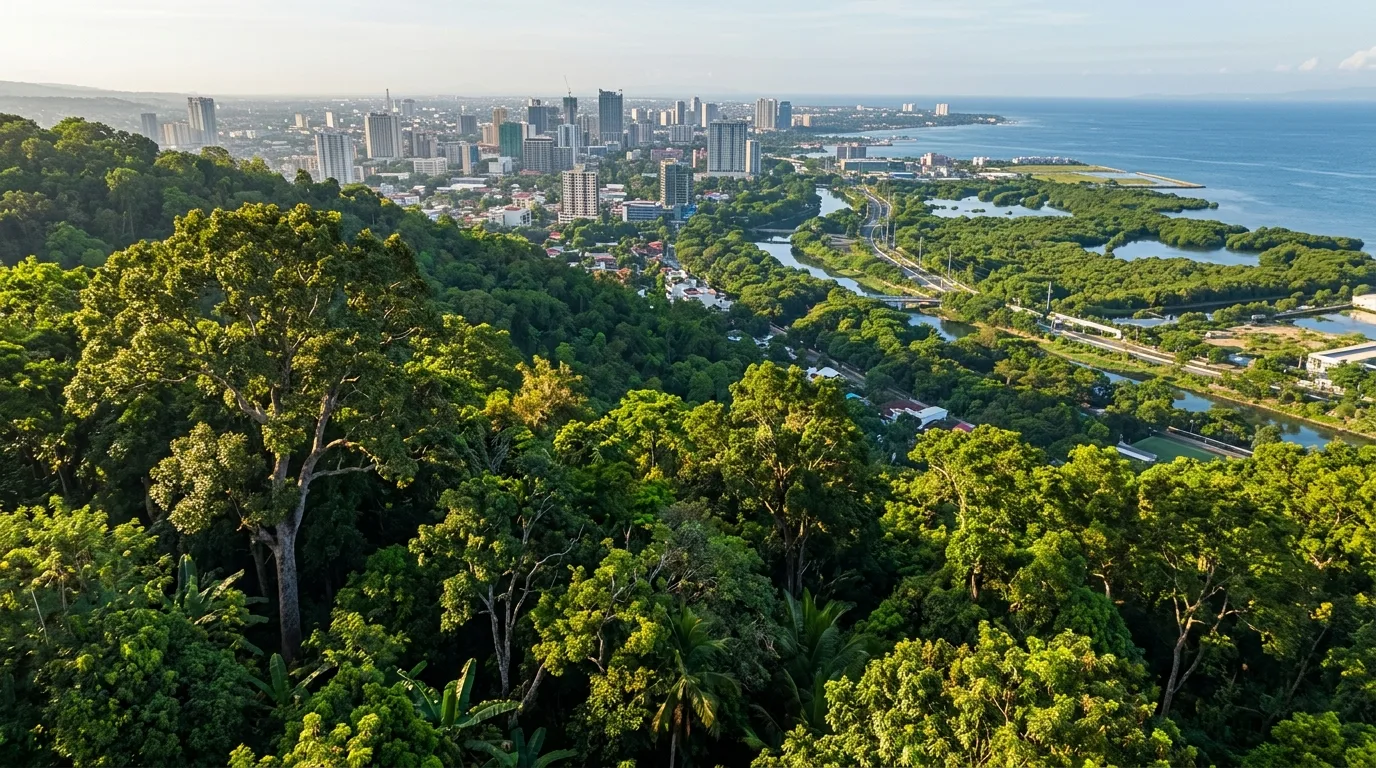
Cebu — The city is on the verge of establishing a comprehensive legal framework to safeguard its remaining natural heritage by prohibiting the cutting, removal, and earth-balling of native and endemic trees. Authored by Councilor Mikel Rama, the proposed Cebu City Urban Biodiversity Management Ordinance seeks to institutionalize the protection of Key Biodiversity Areas (KBAs) and Local Conservation Areas (LCAs) across the city. As rapid urbanization continues to strain local ecosystems, this measure aims to integrate essential biodiversity conservation into land-use planning, zoning, and future infrastructure projects to ensure a more resilient urban environment.
Stronger Safeguards for Ecological Heritage
The proposed ordinance establishes a clear prohibition against any activity that would remove or damage native and endemic trees within designated ecologically important sites. This includes all mangrove forests and associated wetlands, as well as critical areas like Pond A in the South Road Properties, which serves as a vital habitat for migratory birds. By making it unlawful to cut or earth-ball these trees, the city aims to prevent a repeat of past environmental losses where ineffective transfer methods resulted in the death of hundreds of trees. Furthermore, the measure mandates that all future tree-planting activities in both public and private sectors must prioritize native and endemic forest species, effectively discouraging the planting of exotic varieties.
Integrating Green Infrastructure into Development
Beyond mere protection, the ordinance directs city offices to proactively enhance the urban landscape by creating ecological corridors that connect fragmented habitats. These green paths would be developed along roadsides, center islands, riverbanks, and public lots using native vegetation to support local wildlife movement and improve air quality. To further mitigate the impacts of urbanization, the proposal encourages the use of permeable materials in parks, sidewalks, and parking areas to increase water absorption and manage flood risks. This strategy reflects a shift toward holistic urban planning, where nature is not treated as an obstacle but as a fundamental component of the city's infrastructure.
Ensuring Compliance and Long-Term Accountability
To oversee the effective implementation of these policies, the ordinance proposes the creation of a dedicated Technical Working Group comprised of representatives from the Cebu City Environment and Natural Resources Office, the academe, and environmental organizations. This body will be responsible for reviewing the Cebu City Urban Biodiversity Management Plan every three years and conducting periodic inventories of tree species found within the city. The measure also sets a clear enforcement mechanism, with violators facing fines of P5,000 per offense or potential imprisonment of six months. By allocating an annual budget of P2.5 million, the city demonstrates a firm commitment to financing these conservation goals and ensuring they remain a priority regardless of shifting political administrations.