


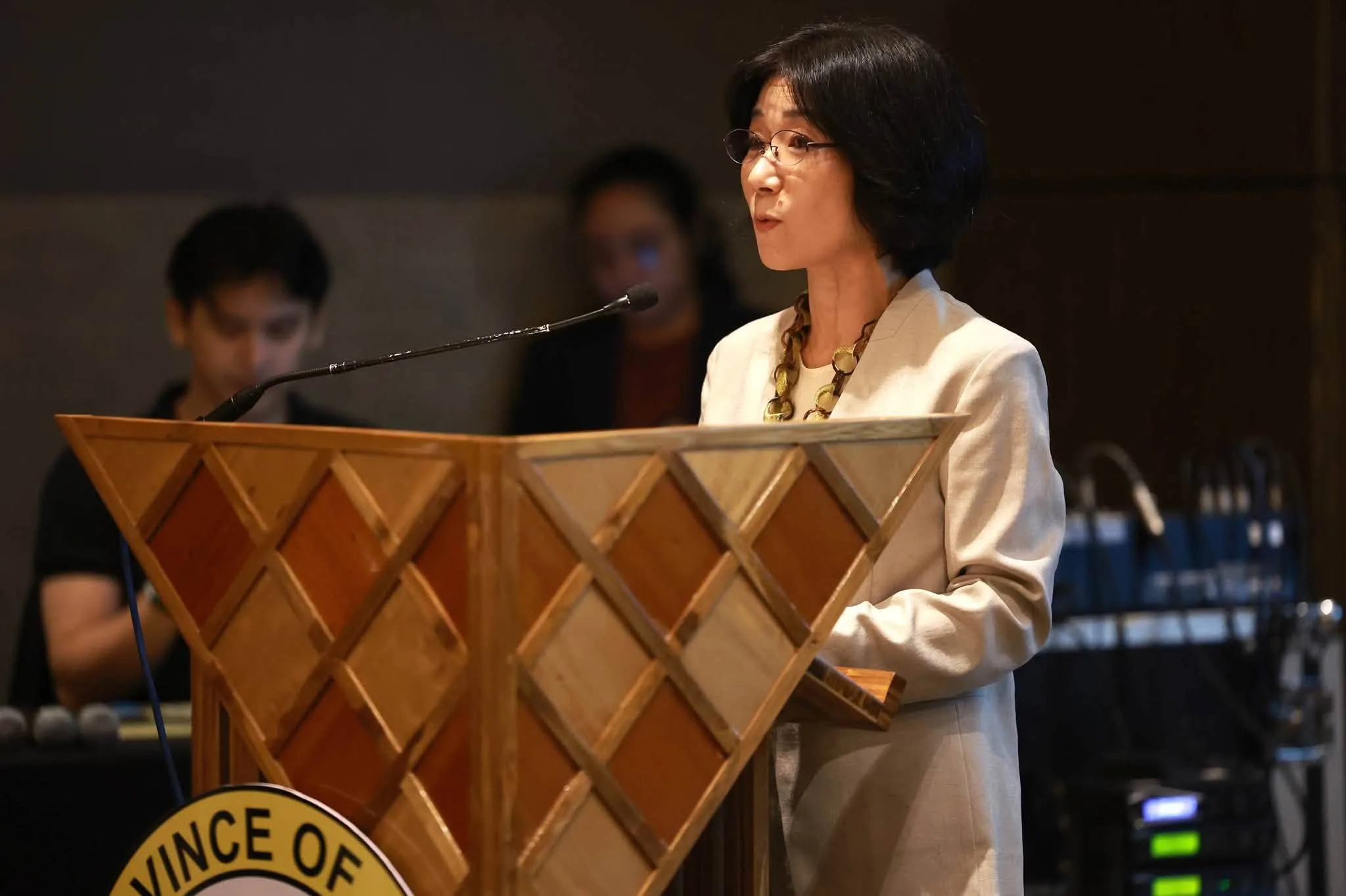
CEBU — The Cebu Provincial Government and its Japanese partners launched a feasibility study on September 11, 2026, for a proposed Green Transformation Park. The initiative aims to establish a more integrated and sustainable waste management system that turns discarded materials into valuable resources.
A Bold Shift in Waste Management
The project is being pursued with GUUN Co. Ltd., a Yokohama-based environmental company engaged in waste treatment, recycling, and environmental system integration. GUUN has already established a waste-plastic recycling operation in Cebu and has experience working with local governments.
The GX Park represents a fundamental shift in how Cebu approaches waste. It will combine various waste management solutions in one location, adhering to the core principles of reduce, reuse, and recycle. The facility will process both commercial and municipal waste, supporting sustainable growth.
Governor Pamela Baricuatro highlighted the importance of translating the project into concrete action. She said addressing Cebu's waste problem will require cooperation among government, businesses, industries, and communities. Her call for unity reflects the project's framework, which emphasizes that no single sector can solve the waste problem alone.
Strategic Locations Across the Island
The initiative calls for the GX Park to be built in three strategic areas. These locations are Danao City in the north, Cebu City in the central region, and one local government unit in the south. This island-wide approach creates a unified waste management network.
The feasibility study was spearheaded by GUUN, with funding and technical support from Japan's Ministry of Environment. Additional expertise is provided by Y-Bridge, ensuring world-class standards are met. The project benefits significantly from international partnership and knowledge exchange.
The Cebu delegation also participated in the Asia-Pacific Circular Cities Forum 2026, which ran from September 3 to 4 in Japan. They observed Yokohama's successful tourism and sustainability assets, gaining valuable insights for Cebu's own green transformation. The forum provided a platform for learning and exchange among Asian countries.
From Disposal to Resource Recovery
The feasibility study presented a vision of developing an eco-industrial park where waste materials can be processed, recycled, and transformed into useful products and alternative fuels. The park is envisioned as a shared framework where government, business, and industry can work under the same plan rather than address waste concerns separately.
Yasuko Kurihara, deputy consul general of the Consulate General of Japan in Cebu, pointed out the urgency of finding long-term solutions as waste generation continues to increase. She said the initiative comes as the Philippines and Japan mark the 17th year of their diplomatic relations, underscoring continuing cooperation on environmental concerns.
The discussions also covered the Asian Circular Cities Declaration, which promotes cooperation among Asian countries by sharing knowledge and experience in advancing circular-economy approaches. The declaration aligns with Cebu's goals of balancing economic development with environmental stewardship.
Education and Enforcement as Key Pillars
For the Cebu Provincial Government, technology alone will not solve the province's waste problem. Rodel Bontuyan of the Provincial Environment and Natural Resources Office said public education and enforcement, particularly at the household level, are equally important. He stressed that without strong enforcement, long-term goals cannot be achieved.
Provincial Board Member Stanley Caminero called for the study to determine workable ways to strengthen discipline in waste management. He emphasized that the feasibility study has to be realistic and grounded in the province's actual capacities.
The kickoff meeting gathered local leaders and representatives from participating local government units and private-sector organizations. Among those present were Board Members Raymond Calderon and Kerrie Kean Shimura, Cebu City Mayor Nestor Archival, and representatives from the Cebu Chamber of Commerce and Industry.
Building a Future-Ready Cebu
The GX Park initiative is a core component of the province's long-term vision. By adopting a circular city approach, Cebu is preparing for climate resilience and sustainable growth. The feasibility study, conducted by international experts, will ensure proper implementation and position Cebu as a leader in environmental management in the Philippines.
