


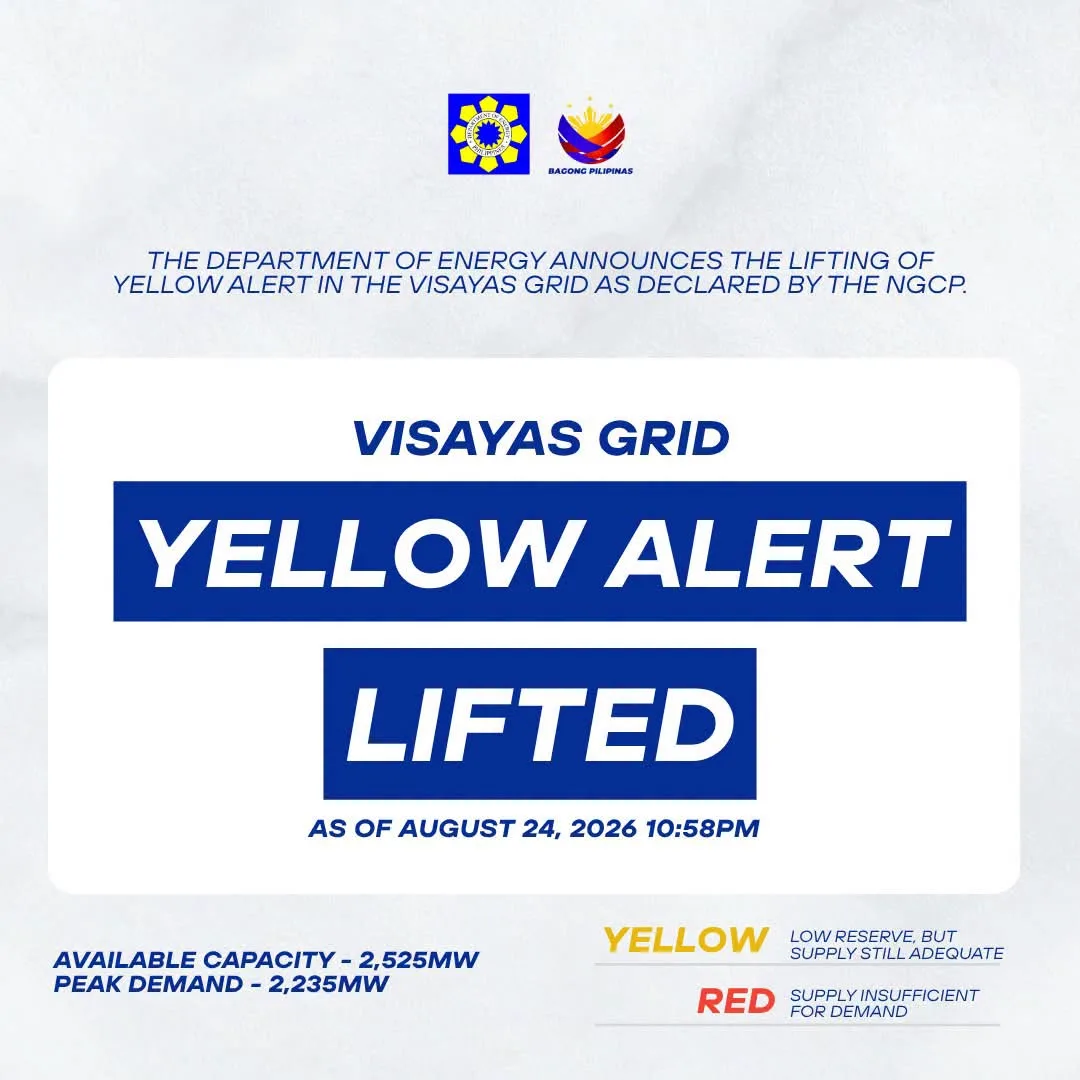
CEBU — The Visayas grid's power supply crisis showed significant signs of easing on Monday, August 24, 2026, as energy authorities announced the expected resumption of key power plants within the week. The Department of Energy (DOE) is coordinating efforts to stabilize the grid and prevent further outages.
A Path to Power Restoration
DOE Secretary Sharon Garin confirmed that Therma Visayas Inc. (TVI) Unit 2, with a capacity of 169 megawatts, and Kepco SPC Power Corporation Unit 2, at 105 megawatts, are set to return to service this week. This immediate injection of 274 megawatts is expected to cover the current deficit that triggered peak-hour alerts.
Secretary Garin also announced that additional capacity is coming soon. TVI's Unit 1, another 169 megawatts, and Cebu Energy Development Corporation's 82-megawatt Unit 1 are scheduled to resume by September. This will add a further 251 megawatts, rebuilding the grid's contingency reserves and providing a more stable supply.
Understanding the Grid Alerts
The recent instability was marked by red and yellow alerts issued by the National Grid Corporation of the Philippines (NGCP). A red alert, lifted on Monday evening, indicates a severe power deficit where supply is insufficient to meet demand, leading to rotational brownouts. A yellow alert means reserves are thin but demand is still being met.
Both alerts were officially lifted late Monday night as available capacity increased and peak demand slightly decreased. The NGCP reported available capacity at 2,505 megawatts against a peak demand of 2,392 megawatts as the red alert was lifted. This shift towards balance offered immediate relief to residents and businesses in the region.
Economic and Household Relief
For Cebu's economy, the stabilization of power is critical. Businesses, IT-BPM hubs, and factories in Metro Cebu often rely on costly backup diesel generators during outages. Fewer blackouts mean lower operational costs and increased productivity for these key economic drivers.
Household consumers also benefit directly. Residential customers under utilities like VECO and CEBECO will face fewer unexpected power interruptions. This improves daily life and reduces the risk of damage to appliances and sensitive electronics.
Long-Term Grid Security
Looking ahead, the DOE is planning significant infrastructure upgrades. Secretary Garin mentioned ongoing talks to install around 250 megawatts of battery-powered energy storage systems across Negros, Cebu, Leyte, and Iloilo. These facilities will help stabilize the grid against future fluctuations.
The implementation of these battery systems is projected to reduce yellow alerts in the Visayas by at least 50 percent. This is a major step toward a more resilient and reliable power network. Such investments are crucial for supporting the region's continued economic growth and investor confidence.
