


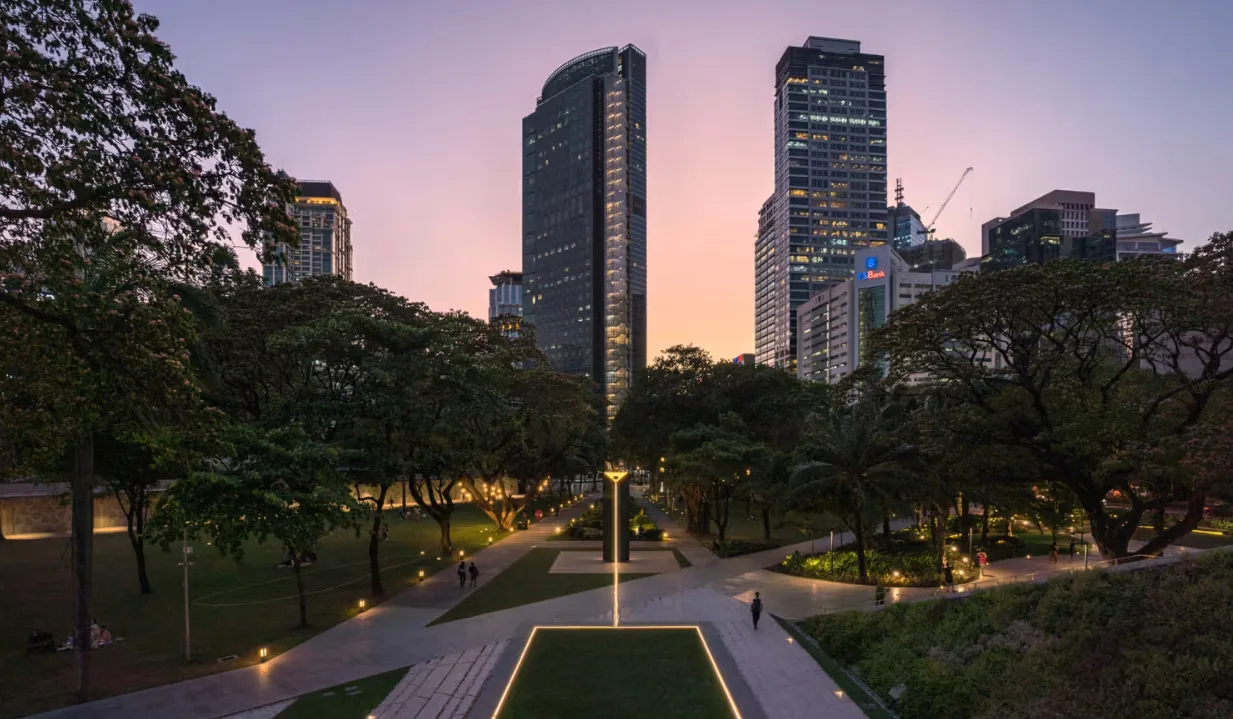
MAKATI CITY — Makati remains the Philippines’ most established central business district, and its property market in 2026 presents a distinct set of opportunities for investors weighing house-and-lot purchases against condominium units. With land values reaching PHP1.0 million per square meter and secondary residential vacancy at just 12.8 percent, less than half the Metro Manila average of 25 percent, the city’s fundamentals continue to support long-term value. The choice between a landed home and a condo, however, depends less on prestige and more on an investor’s goals, budget, and time horizon. Understanding how each asset class actually performs in Makati’s current market is essential before committing capital, particularly since rental yields and appreciation rates differ dramatically between the two.
Land Scarcity and Capital Appreciation
Makati CBD is effectively built out, with very little developable land remaining inside the district. This constraint has pushed average land values to the highest in Metro Manila, and the parcels that do trade are small, expensive, and usually earmarked for premium product. For house-and-lot investors, this scarcity translates into strong long-term appreciation but also an extremely high entry point. A five-bedroom home in Dasmariñas Village, for example recently listed at PHP624 million, reflecting the ultra-luxury tier of the landed market. More modest house-and-lot options exist in areas like La Paz, where a 164-square-meter property was offered at PHP28 million, but these remain significantly costlier than a comparable condominium in terms of upfront capital.
Condominiums, by contrast, offer a more accessible entry into the Makati market. Pre-selling units average PHP500,000 per square meter, while secondary market prices range from PHP248,000 to PHP309,000 per square meter. Projects along Ayala Avenue, Makati Avenue, and Legazpi Village command the highest prices, ranging from PHP526,000 to PHP885,000 per square meter. While capital appreciation for condos is generally slower than for landed property, the lower entry cost allows investors to enter the market with less equity and potentially diversify across multiple units. The trade-off is that condominium values are more sensitive to supply cycles, and Metro Manila is currently working through one of the largest residential oversupply periods in its history, with vacancy projected to peak at 25.6 percent by end-2026.
Rental Yields and Income Potential
For investors seeking immediate rental income, condominiums in Makati offer a clearer path. Gross rental yields in the secondary market range from approximately 3.3 to 4.8 percent, while prime areas such as Rockwell and Ayala Center can reach 4.5 to 8 percent depending on the unit and location. One- to three-bedroom units in Makati CBD command average monthly rents of PHP840 to PHP1,000 per square meter, supported by demand from expatriates, senior executives, and young professionals. The rental market is deepest in walkable neighborhoods like Salcedo and Legazpi Villages, which are favored by tenants who value proximity to offices and lifestyle destinations. Pre-selling units, however, generate much lower yields, closer to 2.0 to 2.4 percent, because the acquisition price is significantly higher relative to achievable rent.
House-and-lot investments tell a very different story. While landed properties in Makati can generate rental income, the yields are dramatically lower than condominiums because the acquisition costs are enormous while rental rates, even for luxury homes, are capped by what the market will bear. Prime villages like Dasmariñas, Forbes Park, and Bel-Air typically see gross rental yields of just 1.5 to 2.5 percent. A house valued at PHP459 million, for instance, might command a monthly rent of PHP861,000, producing an annual gross yield of approximately 2.3 percent. For the broader Makati house market, gross yields generally fall within the 3 to 5 percent range, still well below condo returns. The primary return driver for landed property is land appreciation, not rental cash flow. The 14.9 percent figure sometimes cited in property listings is a rough estimate that conflates median sale prices with average rents across an extremely wide range of properties, and it does not reflect the typical investor experience.
Liquidity, Entry Costs, and Market Outlook
Condominiums offer superior liquidity in Makati’s resale market. The city has the most liquid residential resale market in the Philippines, meaning investors can exit their positions more easily when needed. Entry costs are also lower, with studio units starting at around PHP4.4 million and one-bedroom units at PHP6 to 8 million. This accessibility makes condos attractive to a broader pool of buyers, including foreign investors who are restricted from owning land in the Philippines. The ongoing redevelopment of Makati, including zoning changes that allow higher floor area ratios, will introduce additional supply in the coming years, which could temper price growth but also signals continued confidence in the district.
House-and-lot investments require a longer time horizon and a higher tolerance for illiquidity. Transactions in gated villages like Dasmariñas, Bel-Air, and Magallanes are infrequent and often involve lengthy negotiations. However, for investors with the capital to hold, landed property in Makati offers a store of value that is largely insulated from the oversupply pressures affecting the condominium segment. The limited supply of land within the CBD means that well-located houses will remain scarce, supporting their long-term appreciation. Capital appreciation for Makati land runs approximately 5 to 8 percent annually, while prime condominiums in the CBD appreciate at roughly 4 to 6 percent per year. As Colliers forecasts a gradual recovery in capital values by 2027, both asset classes stand to benefit, but the choice ultimately hinges on whether an investor prioritizes income and liquidity or long-term land appreciation.
