


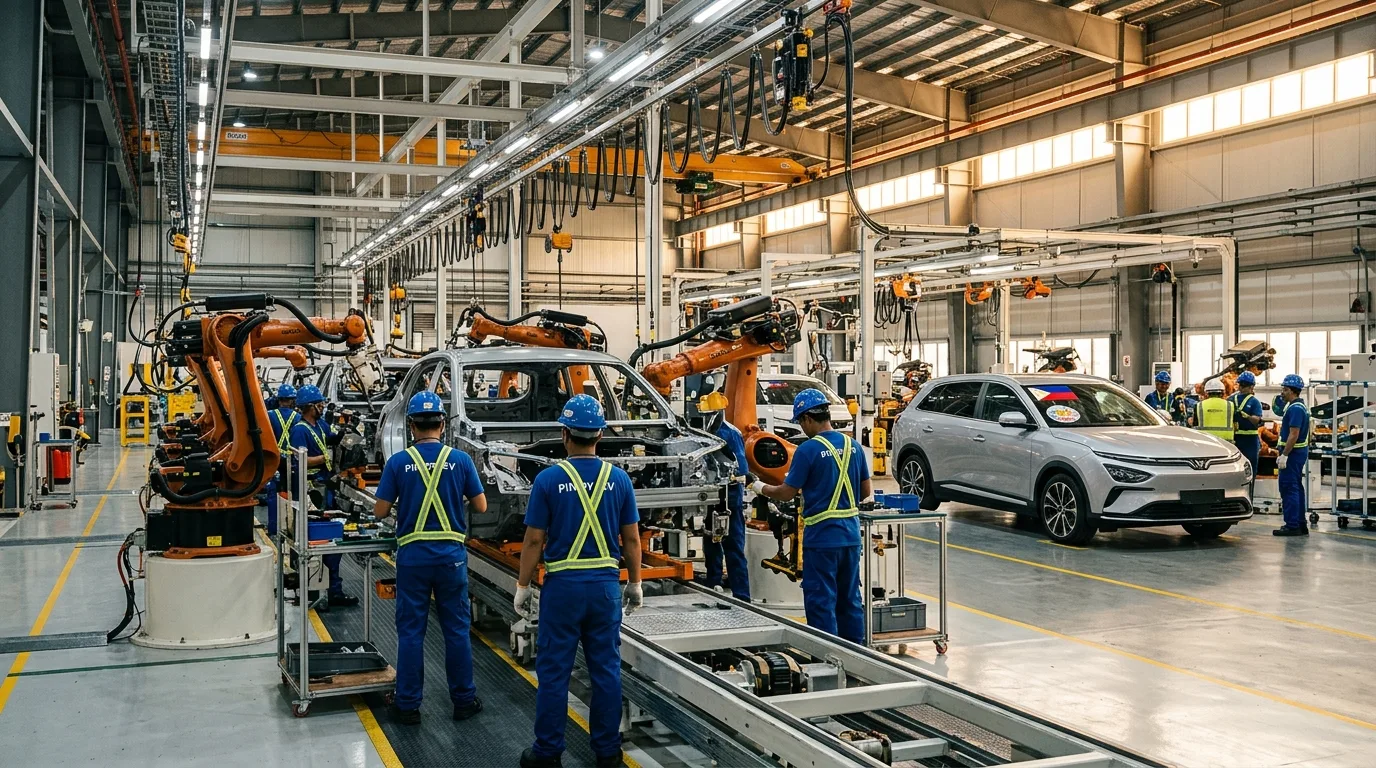
PHILIPPINES — President Ferdinand R. Marcos Jr. signed Executive Order No. 121 on July 29, 2026, creating the Electric Vehicle Incentive Strategy (EVIS) Program. The landmark policy is expected to cut electric vehicle prices by six to twelve percent, translating to savings of up to ₱200,000 per unit.
A Vision for Local Production
The executive order moves the Philippines from simply using electric vehicles to actually building them. It establishes a ₱60‑billion incentive package designed to attract at least four major automotive manufacturers to set up domestic assembly plants. The program provides performance‑based tax payment certificates to companies that meet strict investment and production milestones.
Department of Energy Secretary Sharon Garin said the directive turns vision into action by giving investors the confidence to manufacture locally. She noted that transportation remains one of the largest consumers of imported petroleum, and shifting to EVs powered by domestic renewable energy strengthens national energy resilience. The result will be more affordable and accessible electric vehicles for Filipino families.
How the Incentives Work
Qualifying manufacturers must commit to a minimum of ₱5 billion in fresh capital and produce at least 10,000 EV units, including mandatory local parts. They must introduce their locally built models within three years of registration. In return, they receive tax payment certificates that can offset national taxes and import duties.
The incentives are divided into fixed investment support and production volume incentives. Battery electric vehicle manufacturers can receive up to 40 percent reimbursement on capital expenditures, while hybrid and plug‑in hybrid makers qualify for up to 30 percent. An additional production incentive of up to 12 percent of ex‑factory price, capped at ₱200,000 per unit, further encourages volume output.
Market Impact and Consumer Benefits
Lower logistics and manufacturing costs are projected to improve market competition and give consumers more choices. The Department of Energy estimates that prevailing EV prices could drop by six to twelve percent, making zero‑emission vehicles more attainable for middle‑class households. This price reduction is expected to accelerate the country’s shift toward sustainable mobility.
Trade and Industry Secretary Ma. Cristina Roque described the order as a landmark policy that positions the Philippines as an emerging hub for electric vehicle manufacturing in the region. She emphasized that the program supports a strong local ecosystem that generates quality jobs and deepens Philippine participation in global value chains. The initiative also signals to international investors that the country is ready to compete for high‑value manufacturing.
A Greener, More Competitive Economy
The EVIS Program is backed by an Inter‑Agency Committee that includes the Departments of Energy, Finance, Transportation, and Budget and Management, along with the private sector. This whole‑of‑government approach ensures coordinated implementation and faster results. The policy aligns with the Philippines’ broader push for renewable energy and reduced dependence on imported fuel.
For everyday Filipinos, the impact will be felt at the dealership. Electric vehicles that were once considered luxury items will inch closer to mainstream affordability. The program’s success depends on manufacturers seizing the opportunity, but the framework is now firmly in place to drive the next chapter of Philippine motoring.
