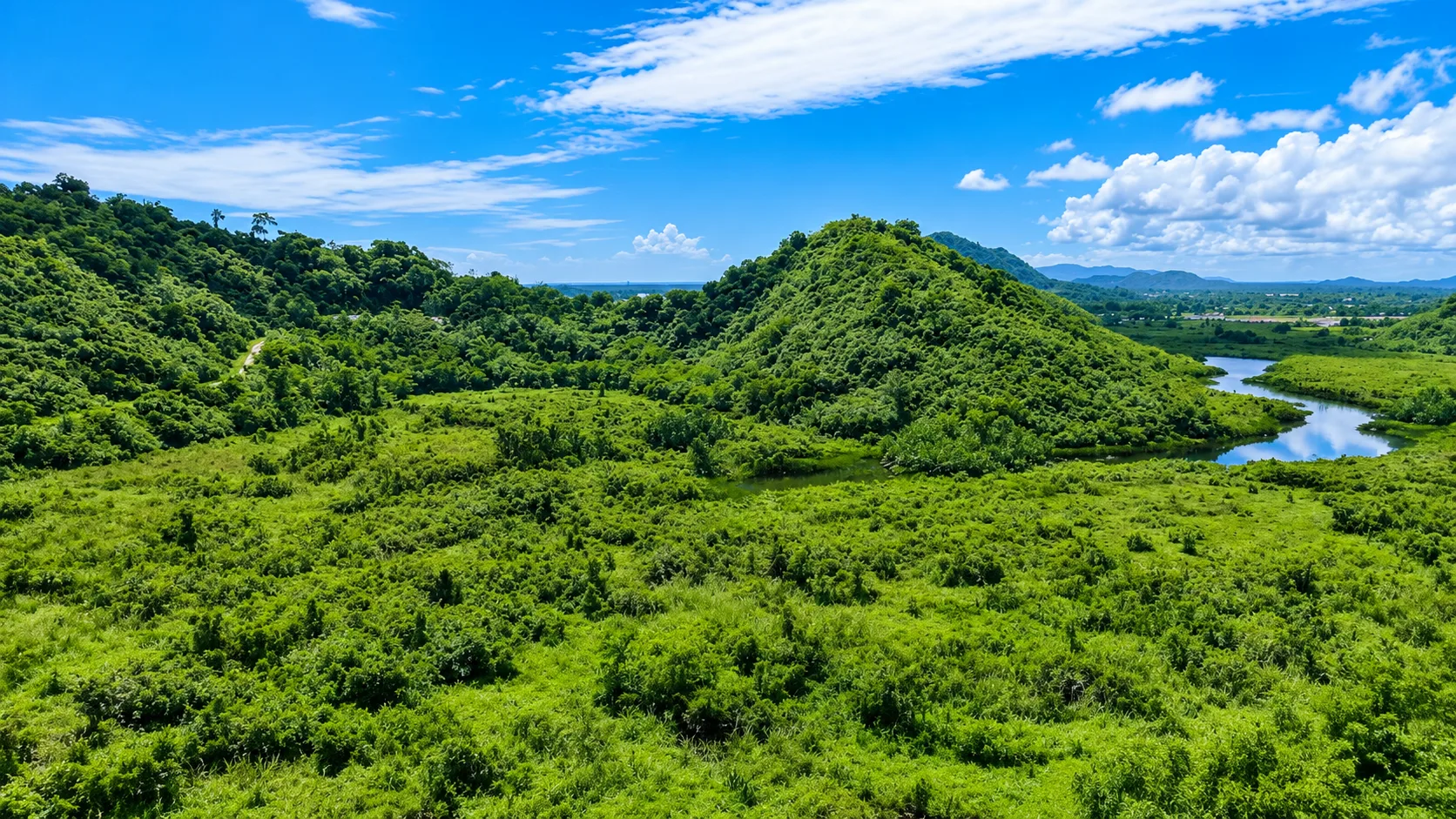
TACLOBAN CITY — Expanding the nation's inventory of carbon-rich wetland ecosystems, the Department of Environment and Natural Resources (DENR) has confirmed a newly identified peatland spanning a probable 168.34 hectares in Palo, Leyte.
The Palo, Leyte Peatland (PLP) covers portions of Barangays Barayong and Campetik, according to a recent assessment report published by the DENR’s Ecosystems Research and Development Bureau (ERDB). The discovery brings the total number of confirmed peatlands across the Philippines to 28, with 18 already evaluated by the bureau since national mapping began in 2018.
Scientific Findings And Organic Profile
The assessment was conducted by the ERDB’s Watershed and Water Resources Research, Development and Extension Center in coordination with the DENR Leyte Provincial Office. Field teams documented peat deposits reaching depths of up to 150 centimeters.
Laboratory analysis of 11 soil samples taken from three strategic locations revealed an average organic matter content of 21.83 percent, with sample levels ranging between 10.84 percent and 33.70 percent. While these findings align with international organic matter criteria for tropical peatlands under the Ramsar Convention, the DENR noted that further field validation will be required to establish the site’s formal national classification under DENR Administrative Order No. 2022-06.
Researchers also documented diverse wetland flora, including:
Lumbiya (Metroxylon sagu)
Gaas (Xerotes longifolia)
Cayapo / Kiyapo (Pistia stratiotes)
The newly confirmed site lies southeast of the Leyte Sab-a Basin Peatland—one of the country’s largest recognized peatland systems, encompassing over 2,000 hectares.
Role In Climate Resilience And Conservation
Peatlands act as natural carbon sinks, accumulating partially decomposed organic material over thousands of years. Beyond storing carbon to mitigate global warming, these wetlands regulate local hydrological systems, absorb floodwaters, and support biodiversity.
Environmental officials warned that draining or disturbing peat ecosystems risks releasing massive amounts of stored carbon into the atmosphere.
Upcoming field validations in Palo will establish official conservation boundaries and guide municipal policy to protect the ecosystem from agricultural expansion and urban encroachment.