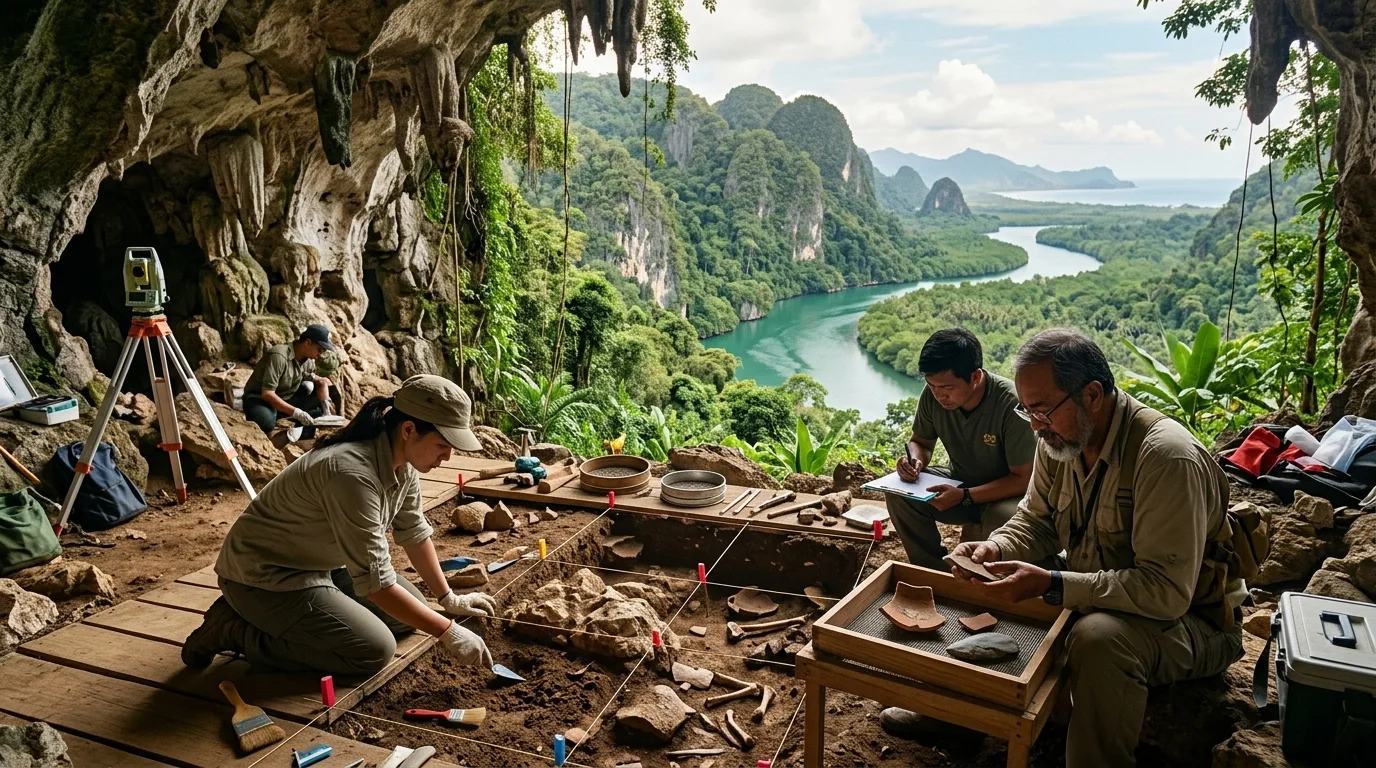
Palawan — Beyond its world-famous beaches and crystalline lagoons, Palawan holds a secret that predates modern civilization: it is the site of some of the most significant archaeological discoveries in Southeast Asia. Deep within its limestone caves, researchers have unearthed evidence of human habitation dating back tens of thousands of years. From ancient tools and burial jars to the famous Tabon Man, these remarkable findings reveal that Palawan has been a cradle of culture and human survival since the dawn of time.
The Cradle Of Human Civilization
The Tabon Caves, located in the municipality of Quezon, are widely known as the "Cradle of Civilization" in the Philippines. It was here in the 1960s that archaeologists discovered the skeletal remains of the "Tabon Man," proving that humans have lived on the island for at least 47,000 years. These limestone chambers are not just geological marvels; they are active historical archives that provide invaluable insights into the daily lives, migration patterns, and social structures of our earliest ancestors.
Artifacts Of Ancient Ingenuity
The caves have yielded a treasure trove of artifacts, including stone tools, pottery, and jewelry that showcase the advanced ingenuity of early Palawan settlers. One of the most iconic finds is the Manunggul Jar, a breathtaking burial vessel featuring a boat with two figures, symbolizing the journey of the soul to the afterlife. These stunning pieces are testaments to a sophisticated culture that valued artistry, spiritual belief, and deep community connections long before the modern era.
A Legacy Worth Protecting
Today, the site stands as a proud testament to the deep, layered history of the Philippines. By protecting and studying these archaeological wonders, we gain a greater appreciation for the resilience and creativity of the people who first called these islands home. Visiting these caves offers a unique, humbling experience that connects travelers to the ancient roots of the nation, reminding us that Palawan’s true beauty lies not just in its present-day landscapes, but in its rich, eternal story.