


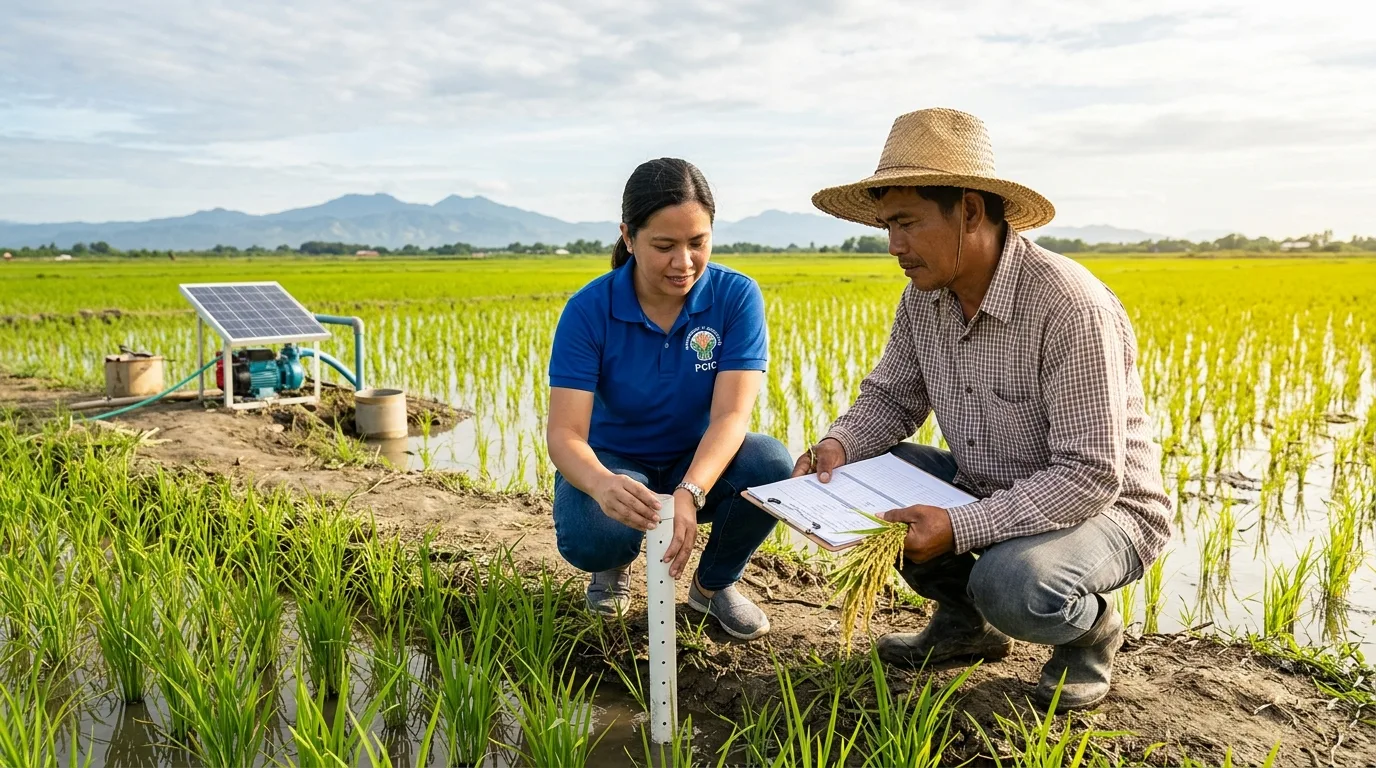
PAMPANGA, PHILIPPINES — As climatic shifts point toward an increased likelihood of El Niño phenomena, agricultural sectors across the country are being urged to implement proactive field strategies. El Niño threatens crop yields through prolonged dry spells, low rainfall, and water scarcity. To safeguard crops, manage available water tables, and cushion agricultural investments against severe financial losses, the Department of Agriculture—in coordination with provincial, municipal, and city agriculture offices—recommends comprehensive farm management practices.
Water Conservation Through Alternate Wetting and Drying
Among the most effective water-saving techniques is Alternate Wetting and Drying (AWD), which allows rice fields to dry intermittently rather than staying continuously flooded. A landmark study published in the Australian Journal of Agricultural and Resource Economics confirmed that "safe" AWD reduced water use by 8 to 13 percent in actual rice landscapes without any yield penalty, with some farms even experiencing yield increases of 14 to 22 percent . The protocol involves monitoring field water levels using a simple 25-centimeter perforated PVC tube and re-irrigating only when water drops 15 centimeters below the soil surface . Beyond water savings, AWD also reduces methane emissions, making it a dual-benefit strategy for climate-conscious agriculture . The Philippine government, through the Department of Agriculture, continues to promote AWD adoption alongside cloud seeding operations and solar-powered irrigation system deployment to mitigate El Niño impacts.
Financial Safety Nets and Government Support
The Philippine Crop Insurance Corporation (PCIC) provides a critical lifeline for farmers facing climate-related losses, with coverage for typhoon, flood, drought, earthquake, volcanic eruption, plant diseases, and pest infestations . In the first half of 2026 alone, PCIC released over PHP 200 million in indemnity payments to more than 18,000 farmers across Region II whose crops were damaged by drought and related risks . The government has also introduced innovative Area-Based Yield Index Insurance, which uses satellite technology and historical yield data to speed up claims and provide impartial damage assessments for rice farmers . Farmers are strongly encouraged to enroll early with their Municipal, City, or Provincial Agriculture Office and explore available resources including free drought-tolerant seed allocations, shallow tube well rehabilitation, and climate-subsidy inputs distributed through DA Regional Field Offices.
