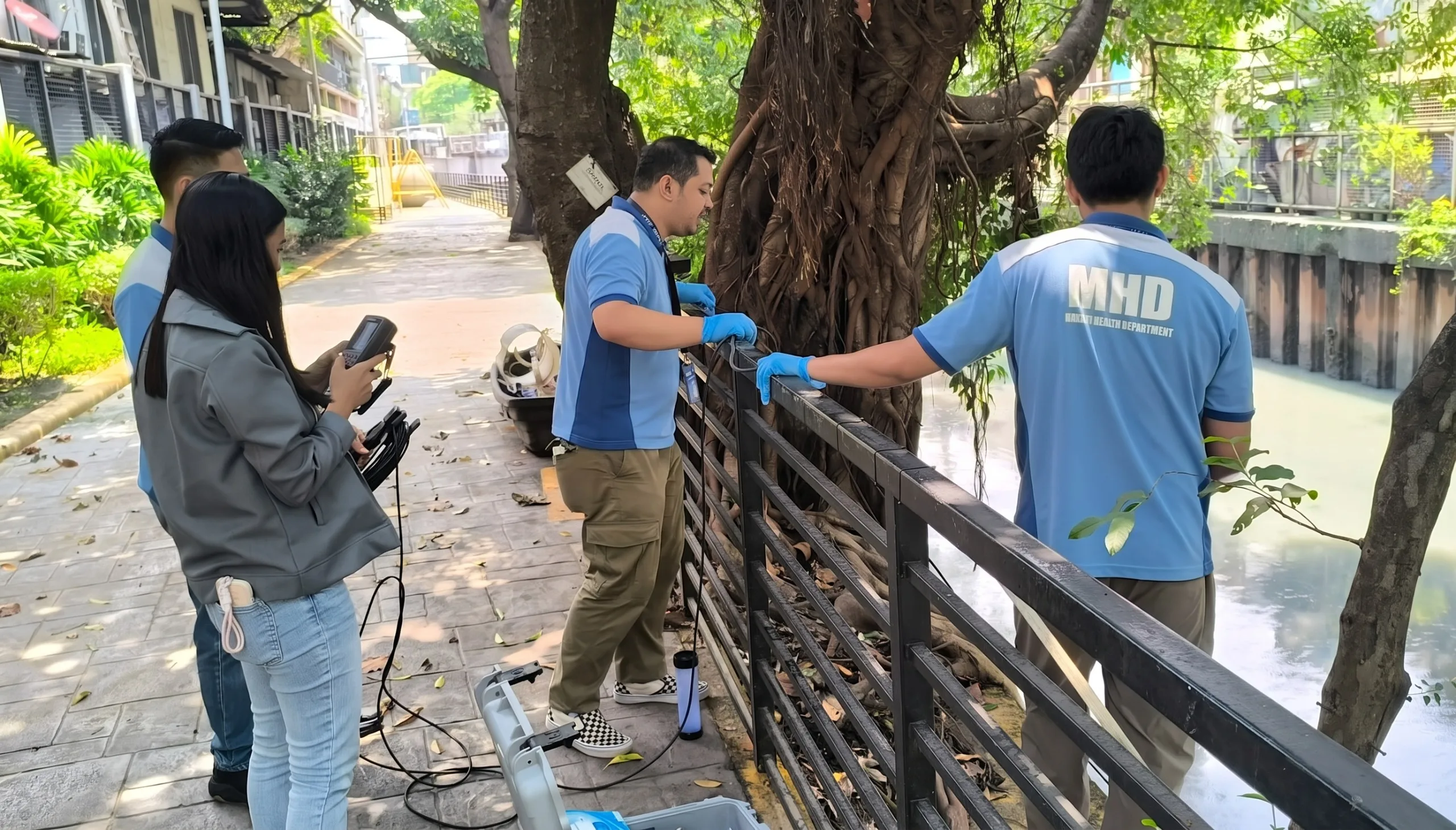
MAKATI CITY — The Environmental Health and Sanitation Division of the Makati Health Department conducted ambient water quality monitoring along the Tripa de Gallina waterway in Barangay San Isidro as part of the city’s continuing efforts to assess and protect its waterways. The regular monitoring helps track the condition of the waterway and provides data that can guide environmental management and public health measures. Stretching 7.6 kilometers, Tripa de Gallina is recognized as the longest creek in Metro Manila and serves as a major tributary of the Pasay River system.
Keeping Watch Over Water Quality
Regular water quality monitoring allows the city to identify possible changes in water conditions, including signs of pollution or contamination that may affect nearby communities and the surrounding environment. The information gathered through these assessments can help authorities determine appropriate measures to address potential risks and maintain the waterway’s condition. The initiative also supports Makati’s broader Waterways Management Program, which focuses on waterway rehabilitation, regular monitoring, and environmental protection. The program forms part of the city’s efforts to improve the condition of its waterways while incorporating sustainability into urban management.
Supporting Makati’s Waterways Management Program
Makati’s continuing work on its waterways has produced recognition under the Manila Bay Rehabilitation Program. The city improved from 14th place in 2017 to 1st place in 2023, when it received the Most Improved Local Government Unit (LGU) Award. The monitoring of Tripa de Gallina contributes to this continuing effort by providing information on the waterway’s condition and helping the city evaluate whether rehabilitation and management measures are being sustained.
From Rehabilitation to Long-Term Stewardship
Makati’s waterway initiatives also developed in response to environmental responsibilities arising from the Supreme Court’s 2008 decision concerning the rehabilitation of Manila Bay. In 2011, the city established Task Force Makati Waterways to coordinate efforts related to its waterways and later institutionalized its Waterways Management Program as a long-term environmental initiative. The program is aligned with several United Nations Sustainable Development Goals, including SDG 6 on Clean Water and Sanitation, SDG 13 on Climate Action, and SDG 14 on Life Below Water. In Barangay San Isidro, the rehabilitation of Tripa de Gallina combined relocation efforts, infrastructure improvements, and community participation to address longstanding flooding concerns. The barangay subsequently received a Galing Pook Award in 2025, following two consecutive years without flooding in an area previously identified as flood-prone.
Maintaining the Gains
Continued water quality monitoring remains an important part of sustaining these environmental improvements. By regularly assessing Tripa de Gallina, Makati can keep track of changes in water conditions while supporting the long-term management and rehabilitation of one of the city’s major waterways. The initiative demonstrates how environmental monitoring, infrastructure improvements, and community stewardship can work together to support cleaner and more resilient urban waterways.