


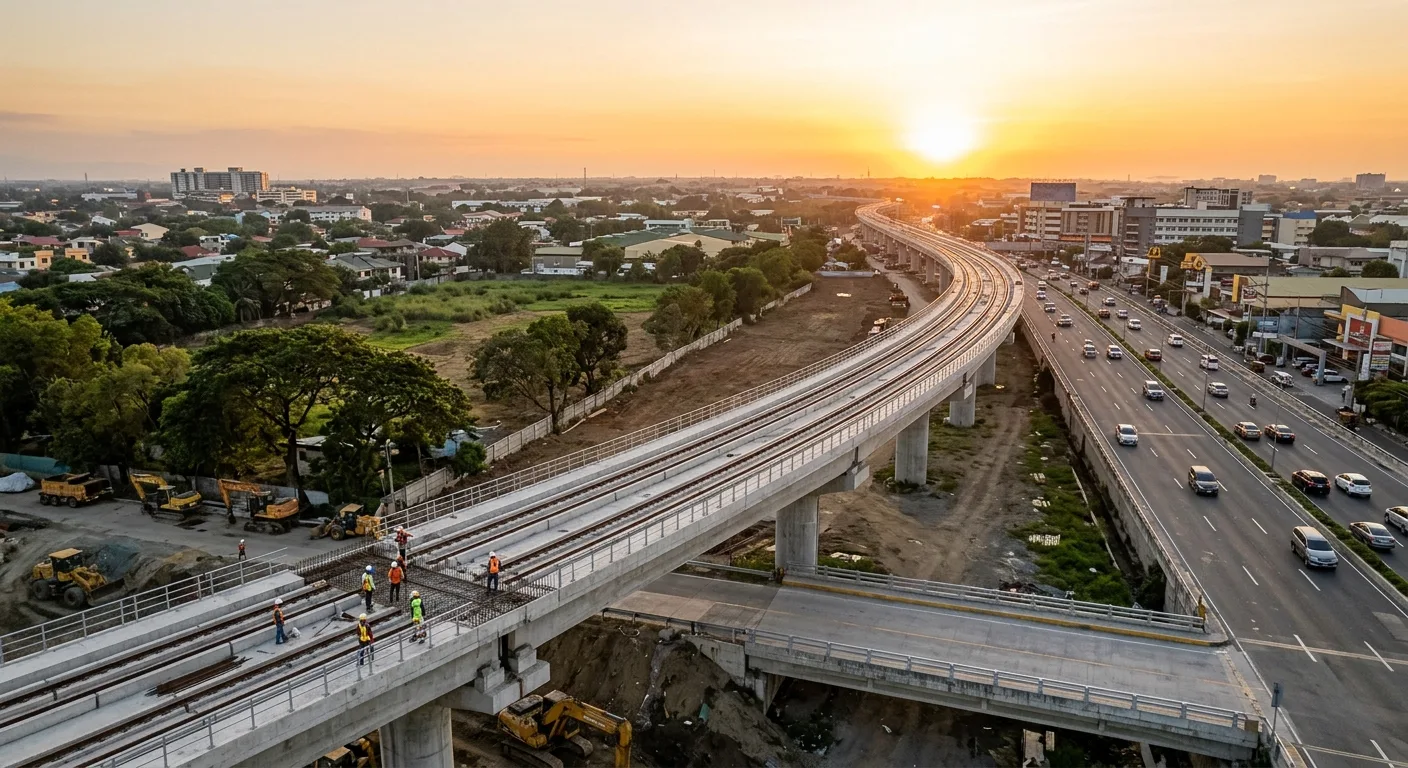
The LRT-1 Cavite Extension project resolved a major right-of-way bottleneck after the Villar family agreed to donate their land, paving the way for the final leg of the railway extension to push through. Transportation Secretary Giovanni Lopez confirmed that the Villars are open to donating the property, dismissing earlier reports that right-of-way acquisition remained a major obstacle . This development supports the target completion date of 2028 and aims to reduce travel time to under 25 minutes.
A Major Roadblock Cleared
The right-of-way (ROW) issue has been one of the key challenges delaying the LRT-1 Cavite Extension, which is the biggest railway project in the south of Metro Manila. The second phase of the project involves the construction of the Las Piñas and Zapote stations on land owned by the Villar family, with the Department of Public Works and Highways (DPWH) having previously built the C5-Quirino Flyover on the same area .
“As a matter of fact, the Villar family wants to donate their property,” Transportation Secretary Giovanni Lopez said in an interview on July 22, 2026. “They want to donate their land as part of the extension” . This commitment removes what had been considered a major obstacle to the timely delivery of the project, which the Light Rail Transit Authority (LRTA) has committed to complete before the end of the Marcos administration's term in 2028.
Engineering Challenges and Solutions
With the land acquisition issue addressed, the government is now focusing on engineering challenges along the alignment, including the potential dismantling of the C-5 Quirino flyover in Las Piñas . However, Lopez noted that a traffic study must first be conducted before deciding on the flyover's removal, with authorities also evaluating whether the flyover can remain intact while accommodating the elevated railway structure .
The LRTA has already committed to completing the entire LRT-1 Cavite Extension by 2028. Once fully operational, the extended LRT-1 is expected to serve up to 800,000 passengers daily from the current average daily ridership of around 440,000 . The full line will cut travel time between Pasay City and Cavite to less than 25 minutes, providing commuters with a direct railway connection between communities in Cavite, Las Piñas, and Parañaque to key areas in Metro Manila.
