


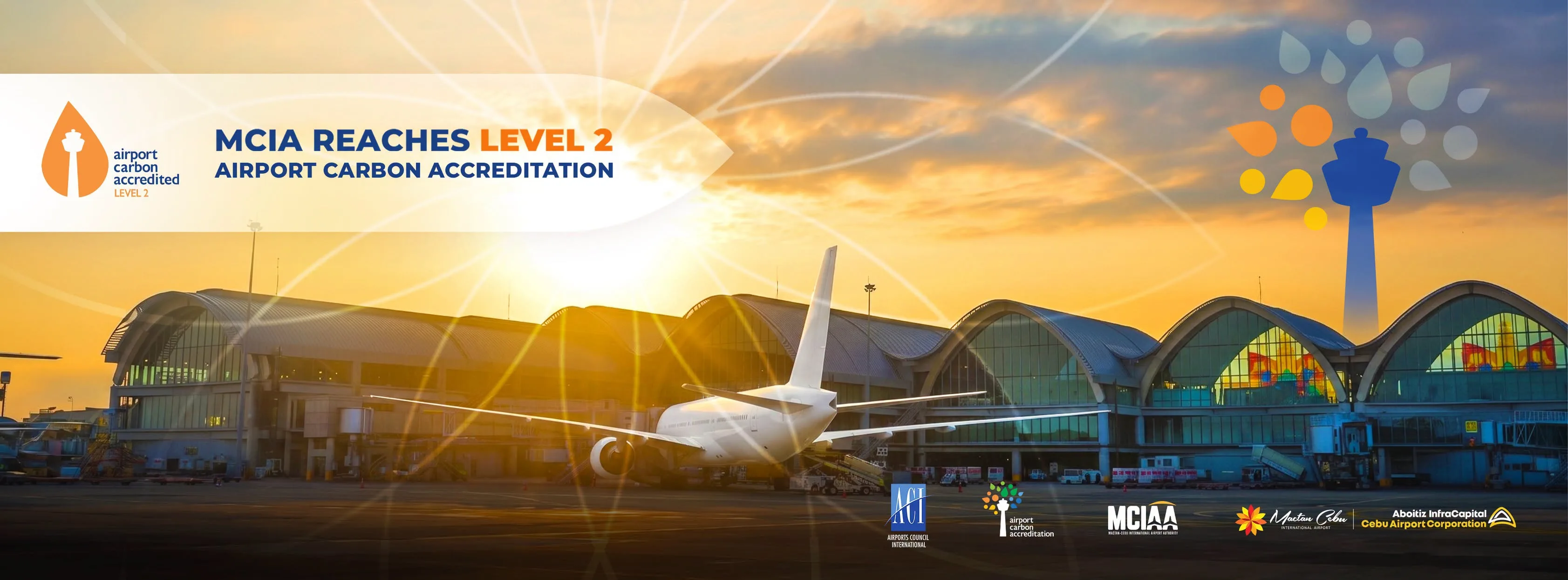
CEBU — Mactan-Cebu International Airport (MCIA) has become the first and only airport in the Philippines to secure Level 2 Airport Carbon Accreditation from Airports Council International Asia-Pacific and Middle East. The milestone positions Cebu as a leader in sustainable aviation and strengthens its appeal as a responsible travel gateway.
A Milestone for Green Aviation
The accreditation recognizes MCIA’s completion of a verified greenhouse gas inventory and the successful implementation of carbon management strategies. Airport operator Aboitiz InfraCapital Cebu Airport Corporation (ACAC) confirmed the achievement, noting it reflects real, measurable progress in reducing emissions. The certification signals a shift from planning to actual environmental performance.
MCIA General Manager Ricia Montejo said the validation proves that sustainability is embedded in every aspect of airport operations. She emphasized the balance between smart energy solutions and world-class passenger service. The recognition elevates Cebu’s status as a premier transfer hub committed to global best practices.
Concrete Actions Behind the Recognition
The airport has deployed a range of emission reduction measures to earn the Level 2 status. A 1.64 MWp rooftop solar power system supplies clean energy, while smart sensors optimize lighting and cooling. Upgraded building management systems and improved HVAC protocols further reduce energy intensity per passenger and cargo movement.
LED lighting conversion and fuel consumption monitoring for vehicles and equipment add additional savings. These initiatives demonstrate how technical precision and environmental stewardship can go hand in hand. Every kilowatt saved contributes to a greener travel experience without compromising comfort.
An Ambitious Path to Net Zero
Under its updated Carbon Management Plan, MCIA has set a bold target to cut Scope 1 and Scope 2 emission intensity by over 90 percent by 2029 compared to baseline levels. The long-term vision extends to achieving net-zero carbon emissions by 2050. These commitments align with global aviation goals and support the Philippines’ climate agenda.
Mactan-Cebu International Airport Authority General Manager and CEO Julius G. Neri Jr. credited the strong public-private partnership between MCIAA and ACAC for the success. He said the collaboration continues to introduce eco-friendly technologies and optimize airfield efficiency. The accreditation proves that government and private sector can work together to deliver sustainable infrastructure.
A History of Green Innovation
MCIA has consistently invested in green infrastructure that reduces environmental impact. In 2024, the airport launched bridge mounted equipment that supplies parked aircraft with electricity and cabin cooling without burning jet fuel. This reduces emissions and noise at boarding gates.
By 2025, airlines operating at MCIA began using fully electric ground support equipment and Single-Engine Taxi-In procedures. These ground operations changes cut fuel consumption during taxiing and turnaround. Together, they form a comprehensive approach to lowering the airport’s carbon footprint.
A Greener Gateway for Travelers
The accreditation reinforces MCIA’s reputation as a forward-thinking airport that prioritizes environmental responsibility. Travelers passing through Cebu now move through a facility actively working to protect the environment. The recognition also attracts eco-conscious tourists and airlines seeking sustainable partners.
As international travel rebounds, sustainable infrastructure becomes a competitive advantage. MCIA’s Level 2 achievement sends a clear signal to the global aviation community that Philippine airports can lead in climate action. The journey to net zero has begun, and Cebu is at the forefront.
