


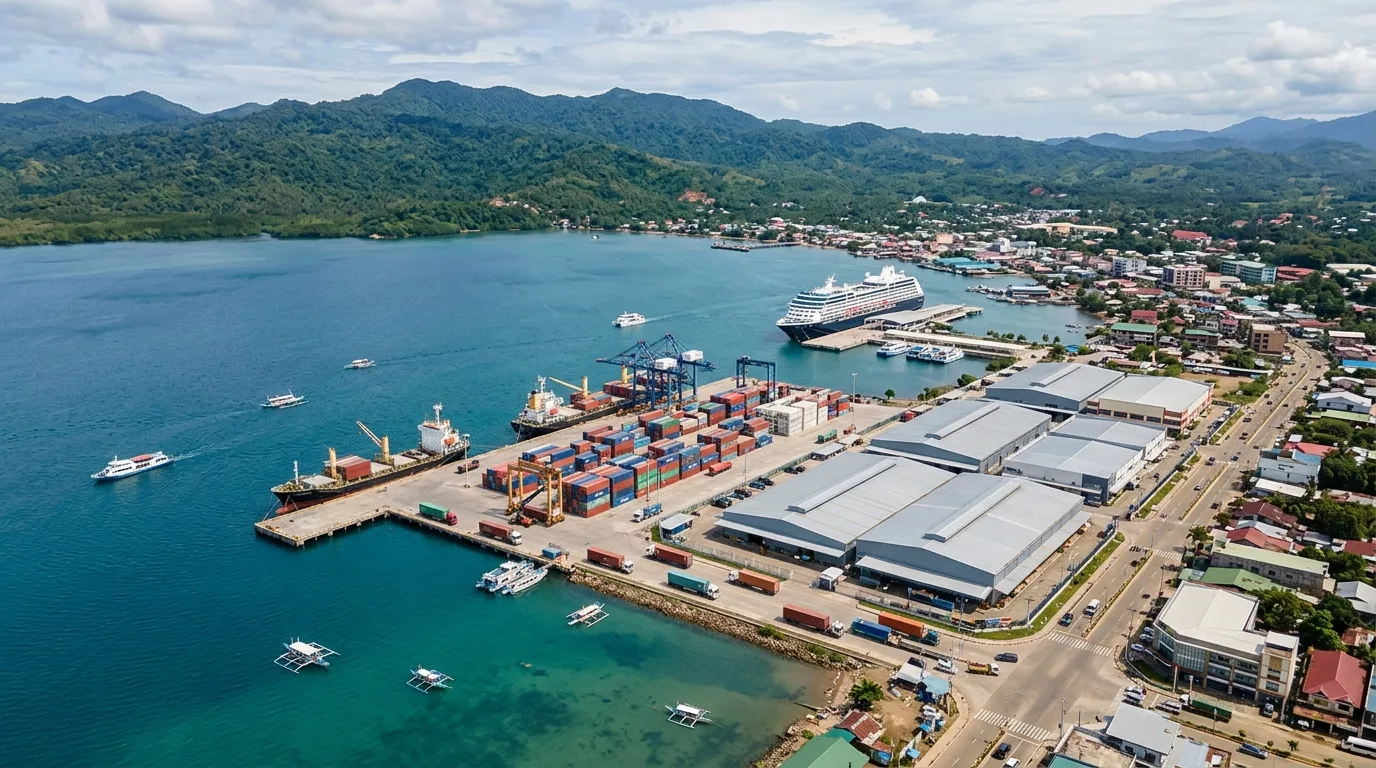
Palawan — The island's economic blueprint is uniquely anchored to its coastlines, making its maritime ports the foundational backbone of local trade, tourism, and real estate development. As an archipelagic province reliant on inter-island shipping for goods and visitor arrivals, the performance and expansion of facilities like the Puerto Princesa Port and regional piers directly shape commercial activity. Far beyond handling cargo vessels, Palawan's modern port network creates a widespread ripple effect across mainland commerce and island logistics. Analyzing this "port effect" highlights how maritime connectivity fuels long-term growth across the Philippines' last ecological frontier.
Stabilizing Supply Chains and Lowering Freight Costs
Because Palawan relies heavily on imported building materials, consumer goods, and fuel from mainland Luzon and Mindoro, port efficiency directly influences everyday living and operational costs. Upgraded berth capacities and modern cargo-handling facilities at the Philippine Ports Authority PMO Palawan reduce vessel congestion and shorten turnaround times. Lowering maritime freight expenses helps stabilize local retail prices while making large-scale resort construction and infrastructure projects financially viable. Consequently, efficient cargo logistics give local businesses the operational confidence needed to expand their market footprint.
Catalyzing International Cruise Tourism and Local Commerce
Modernized port facilities serve as the primary gateway for high-spending international cruise travelers exploring Palawan's coastal destinations. Dedicated cruise berths in Puerto Princesa, along with upgraded passenger terminals in Coron and El Nido, allow luxury liners to dock seamlessly without disrupting local inter-island ferry traffic. Each cruise ship arrival generates immediate, high-yield revenue for local tour operators, transport cooperatives, artisanal night markets, and dining establishments. Business operators can track official travel guidelines and destination highlights through platforms like Guide to the Philippines.
Fueling Economic Zones and Real Estate Expansion
Beyond immediate trade and passenger traffic, port proximity significantly boosts property values and opens strategic investment corridors. The development of major industrial initiatives—such as the mega ecozone project near Puerto Princesa and regional trade links within the BIMP-EAGA corridor—relies entirely on robust maritime access. Commercial developers actively acquire land along port-connected transit corridors to build logistics warehouses, cold-storage units, and mixed-use commercial hubs. Investors and travelers exploring commercial land developments can review regional listings and local business guides via Tripadvisor.
