


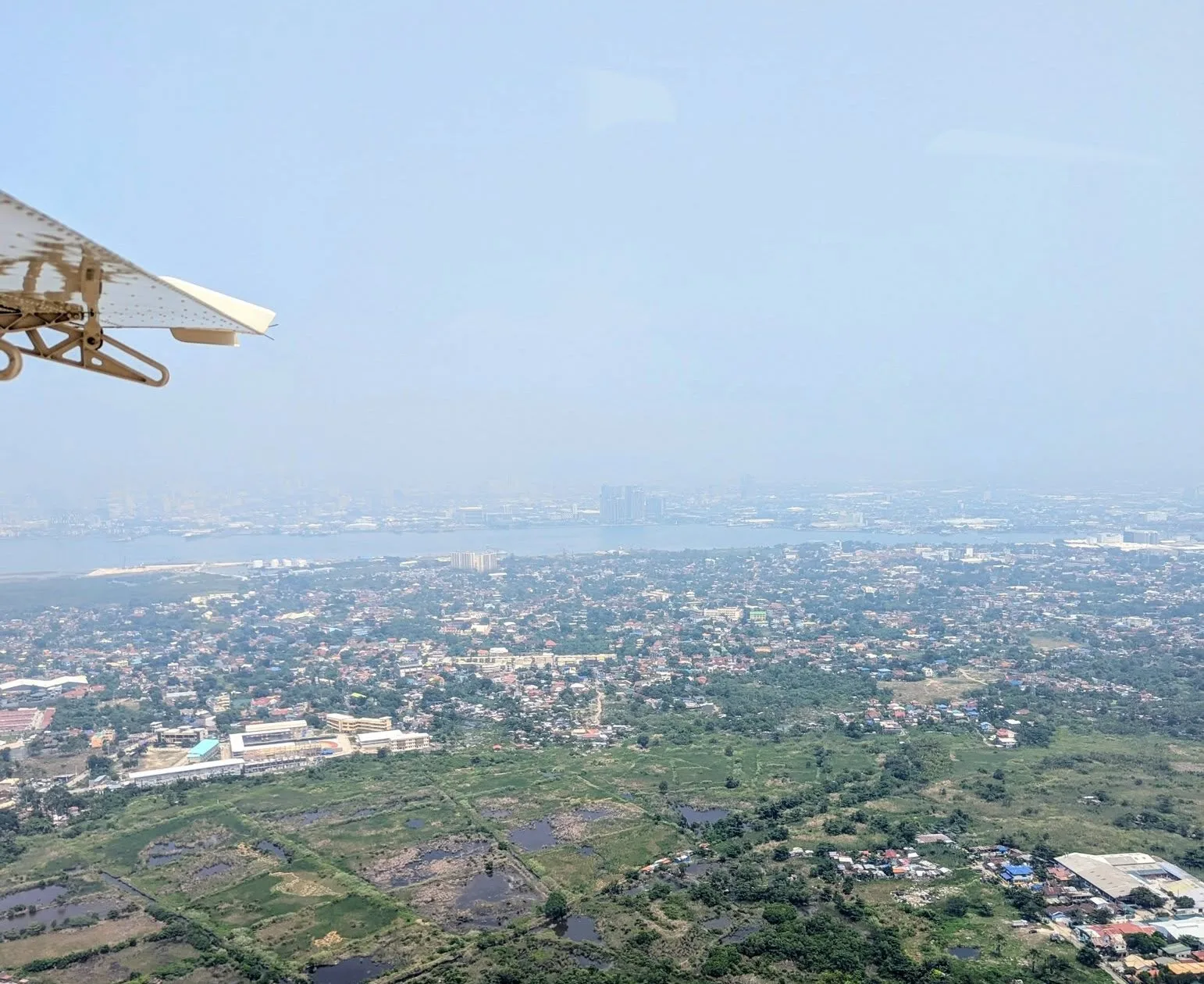
CEBU — A visible layer of haze blanketed parts of Metro Cebu at noon on Saturday, September 19, 2026, as transboundary haze from wildfires in Indonesia continued to affect air quality across the region. The hazy conditions reduced visibility over the metro and surrounding areas, with the iconic Cebu-Cordova Link Expressway barely visible from some vantage points.
Air Quality Plummets to Acutely Unhealthy
The Environmental Management Bureau Region VII (EMB-7) recorded an Air Quality Index of 264 at its Metro Cebu monitoring station as of 11:00 AM on September 19. This reading falls under the "Acutely Unhealthy" classification, marking the highest AQI recorded since the haze episode began. The figure represented a sharp reversal from earlier in the week when air quality had briefly improved to "fair" levels.
The deterioration began late Friday, with the AQI climbing from 118 at 8:00 PM to 146 by 11:00 PM. By 2:00 AM Saturday, it had reached 180, classified as "Very Unhealthy," before escalating to 209 at 4:00 AM and finally 264 by late morning. The monitoring station in Barangay Cabitoonan, Toledo City, recorded a significantly lower AQI of 103, classified as "Unhealthy for Sensitive Groups."
Health Advisories Issued for Residents
Under the "Acutely Unhealthy" classification, EMB-7 advised the public to limit outdoor exertion. People with heart or respiratory conditions, including asthma, were urged to stay indoors and rest as much as possible. Unnecessary trips outdoors should also be postponed until air quality improves.
Residents were encouraged to wear protective masks, particularly N95 masks, if going outside is unavoidable. The bureau noted that motor vehicle use may be restricted and industrial activities may be curtailed depending on the severity and persistence of the pollution. The public was urged to regularly check official air quality updates and advisories, as conditions can change throughout the day.
Local Leaders Urge Caution
Talisay City Mayor Samsam Gullas spoke with EMB officials on Saturday morning to inquire why air quality had deteriorated again despite recent rainfall. He said the bureau explained that elevated pollution remained influenced by transboundary haze from forest and land fires in Indonesia, with prevailing air patterns carrying smoke and fine particulate matter toward the Philippines.
Gullas expressed concern over students spending time outdoors despite class suspensions prompted by the poor air quality. He encouraged residents who wish to exercise or play sports to use indoor facilities while the AQI remains high. He also appealed to the public to take the advisory seriously, particularly for the sake of children.
A Month of Fluctuating Air Quality
Metro Cebu's air quality has fluctuated dramatically throughout September. The AQI was recorded at 173, classified as "Very Unhealthy," on September 1, before worsening to 251, classified as "Acutely Unhealthy," on September 3. Air quality subsequently improved, reaching "Fair" levels by September 10 and remaining stable through September 16.
The improvement was briefly interrupted on September 12 when the AQI climbed to 154 before dropping again. The September 19 reading of 264 surpassed the previous peak of 251 recorded on September 3. EMB-7 continues to monitor local ambient air quality and has identified elevated fine particulate matter, or PM2.5, as a primary concern during the haze episode.
