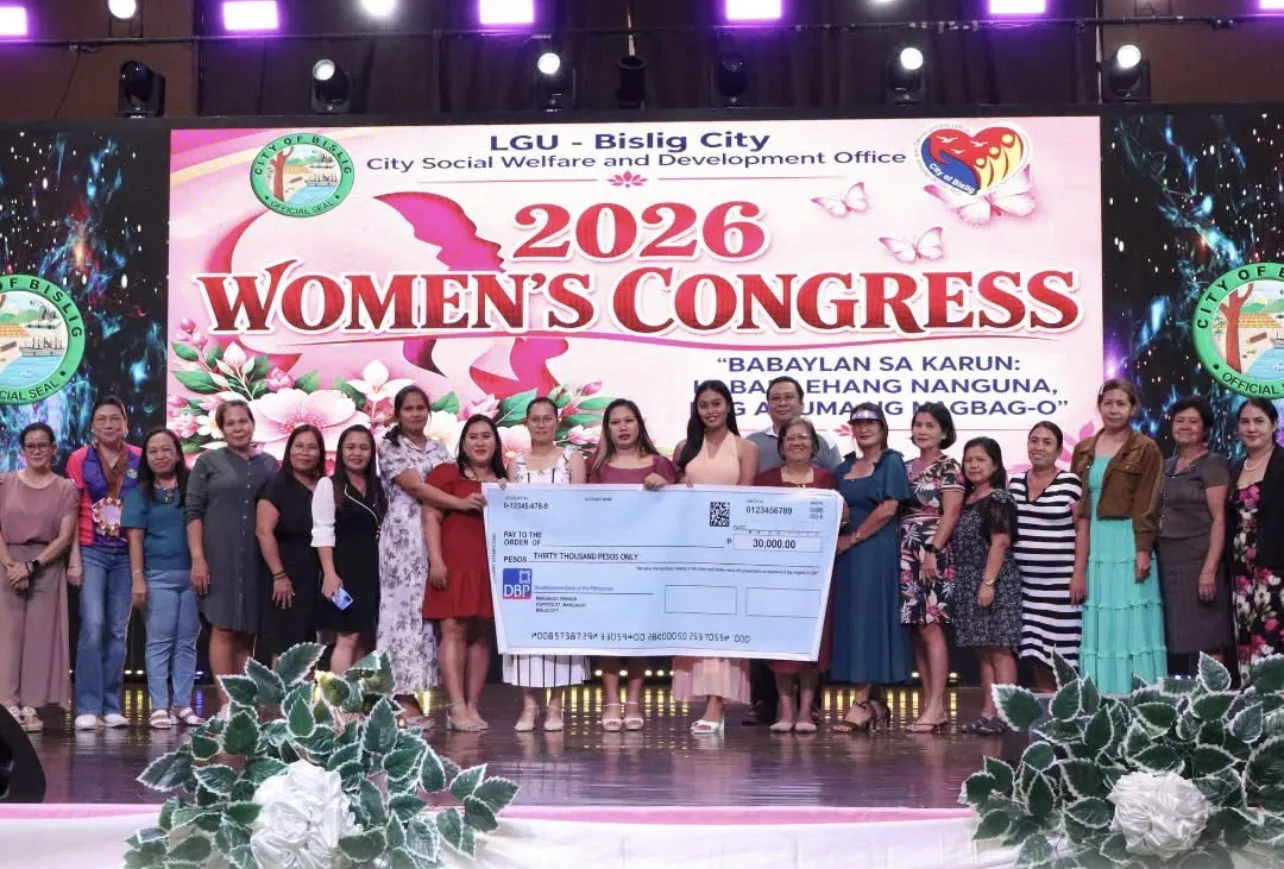
BISLIG CITY — Women from different communities gathered in Bislig City on November 11, 2026, for a congress that highlighted their contributions to families, local leadership, and community development. Organized by the City Government through the City Social Welfare and Development Office (CSWDO), the event was held at the Bislig City Cultural and Sports Center in Poblacion. Anchored on the theme “Babaylan sa Karun: Kababaehang Nanguna, Nag-Amuma, ug Nag-Bag-o,” the gathering provided a venue for discussions on women's rights, leadership, resilience, and participation in society. It also recognized the importance of creating opportunities for women to take active roles in shaping their communities.
Discussions Strengthen Awareness of Women's Rights and Leadership
The congress featured talks from Regional Trial Court Branch 14 Family Court Presiding Judge Kim E. Ortiz-Liquido and Butuan City CSWD Officer Golda Vergara-Pocon, who shared insights on women's rights, leadership, and empowerment. Their discussions encouraged participants to better understand the challenges women face and the role they can play in promoting positive change. The gathering also included an inspirational message from a representative of the City Officials United Spouses Association of Bislig, emphasizing the value of supporting women's voices and recognizing their contributions. Through these sessions, the event brought attention to the need for continued awareness, cooperation, and opportunities for women across different sectors of the community.
Livelihood Assistance Supports Women's Participation
Alongside the discussions, the city government extended livelihood capital assistance to four qualified Barangay Women's Associations and provided additional seed capital to the Federation of Barangay Women's Associations (FOBWA). The funding is intended to support their livelihood initiatives and help strengthen their capacity to pursue income-generating activities. By extending assistance through organized women's groups, the initiative connects empowerment with practical community-level support and collective participation. The congress therefore served not only as a gathering for learning and recognition but also as an avenue to reinforce women's involvement in local development and efforts to improve their communities.