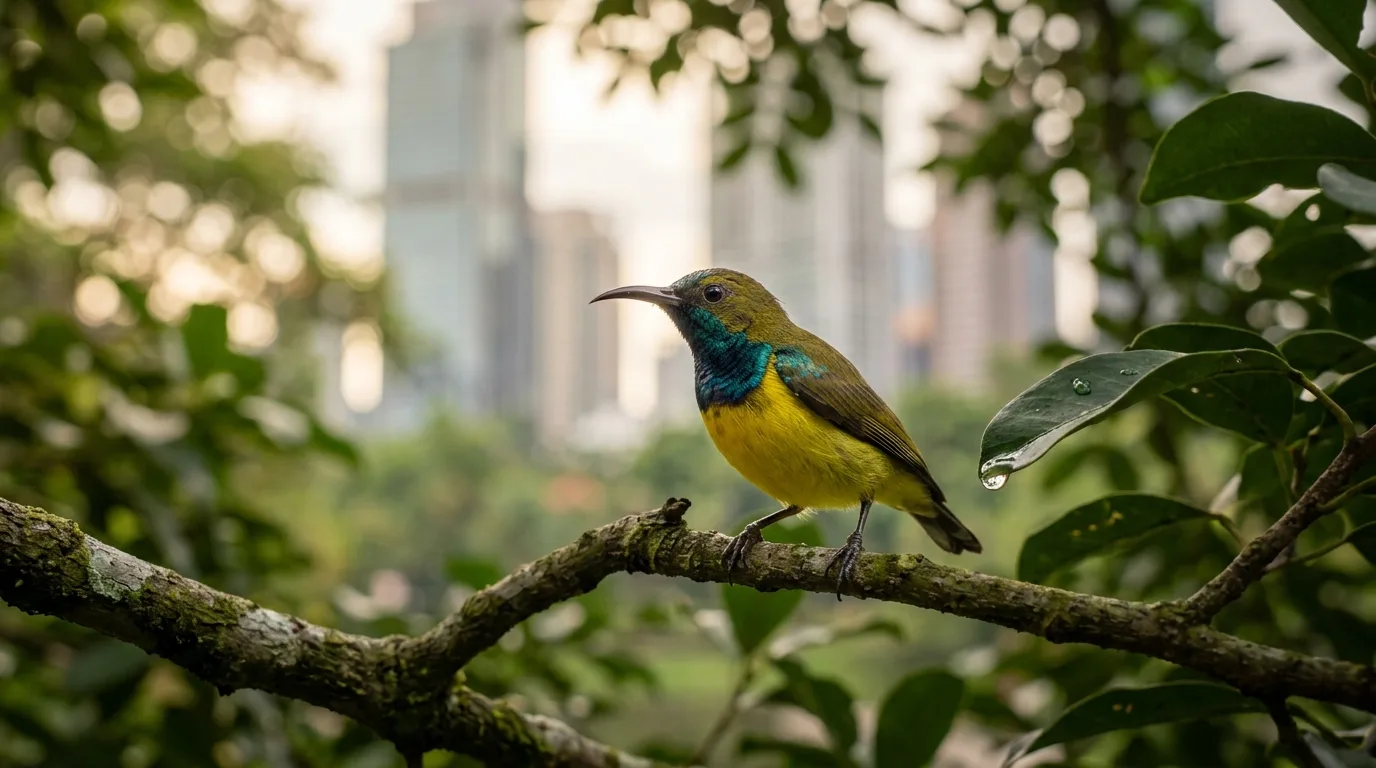
CEBU — The city government has signed a partnership agreement with the Department of Environment and Natural Resources Region VII to implement the Urban Biodiversity Program. The Memorandum of Agreement was signed on September 25, 2026, at the Mayor's Conference Room, marking a significant step toward sustainable urban development.
A Unified Commitment to Conservation
Mayor Cindi King-Chan led the signing ceremony alongside Vice Mayor Celedonio Sitoy and DENR Regional Executive Director Laudemir Salac. Also present were Provincial Environment and Natural Resources Officer Atty. Romeo Bulotano Jr., CENR Officer For. Nolito Lapinig, and CENRO Officer-in-Charge Jocelyn Abayan.
The partnership establishes an Urban Biodiversity Composite Team to ensure coordinated and efficient implementation. The team will be chaired by the PENR Officer of Cebu Province and co-chaired by the City Mayor. Technical staff from the City Environment and Natural Resources Office, City Planning and Development Coordinator, and PENRO will comprise the team. City Councilors led by Councilor Rufo Bering, Chairman of the Committee on Environment and Climate Change Adaptation, witnessed the event.
Roles and Responsibilities Under the Agreement
DENR-7 shall provide technical and advisory support, capacitate the local government in biodiversity assessments, and provide policy direction. The agency will also monitor and evaluate the implementation of the Urban Biodiversity Management Plan and assist the city in determining its City Biodiversity Index.
The city government, meanwhile, ensures that the program is mainstreamed in its Comprehensive Land Use Plans and Zoning Ordinances. It will adopt the City Biodiversity Index as a monitoring tool through a city ordinance or resolution. The city will also encourage business sector participation and conduct training of trainers to capacitate stakeholders and the private sector.
Mayor Chan's Vision for Responsible Growth
Mayor Cindi emphasized that protecting the natural environment must be part of how the city plans its growth. She noted that green spaces, trees, waterways, coastal areas, and other natural resources are part of the environment communities depend on.
"We want Lapu-Lapu City to grow responsibly, knowing what we have, what needs to be protected, and how we can care for these resources for the generations that will come after us," she said. Her message underscored the importance of assessment, mapping, and planning in managing the city's biodiversity.
Integrating Biodiversity into Urban Planning
The partnership aims to integrate biodiversity conservation into the city's urban planning and climate and disaster risk programs. This approach ensures that environmental considerations are not an afterthought but a foundational element of development.
By adopting the City Biodiversity Index, Lapu-Lapu City gains a measurable tool to track progress and identify areas needing protection. The preparation of a Biodiversity Management Plan will provide a roadmap for sustaining the city's natural assets. These initiatives position Lapu-Lapu City as a model for other local governments aiming to balance growth with environmental stewardship.