


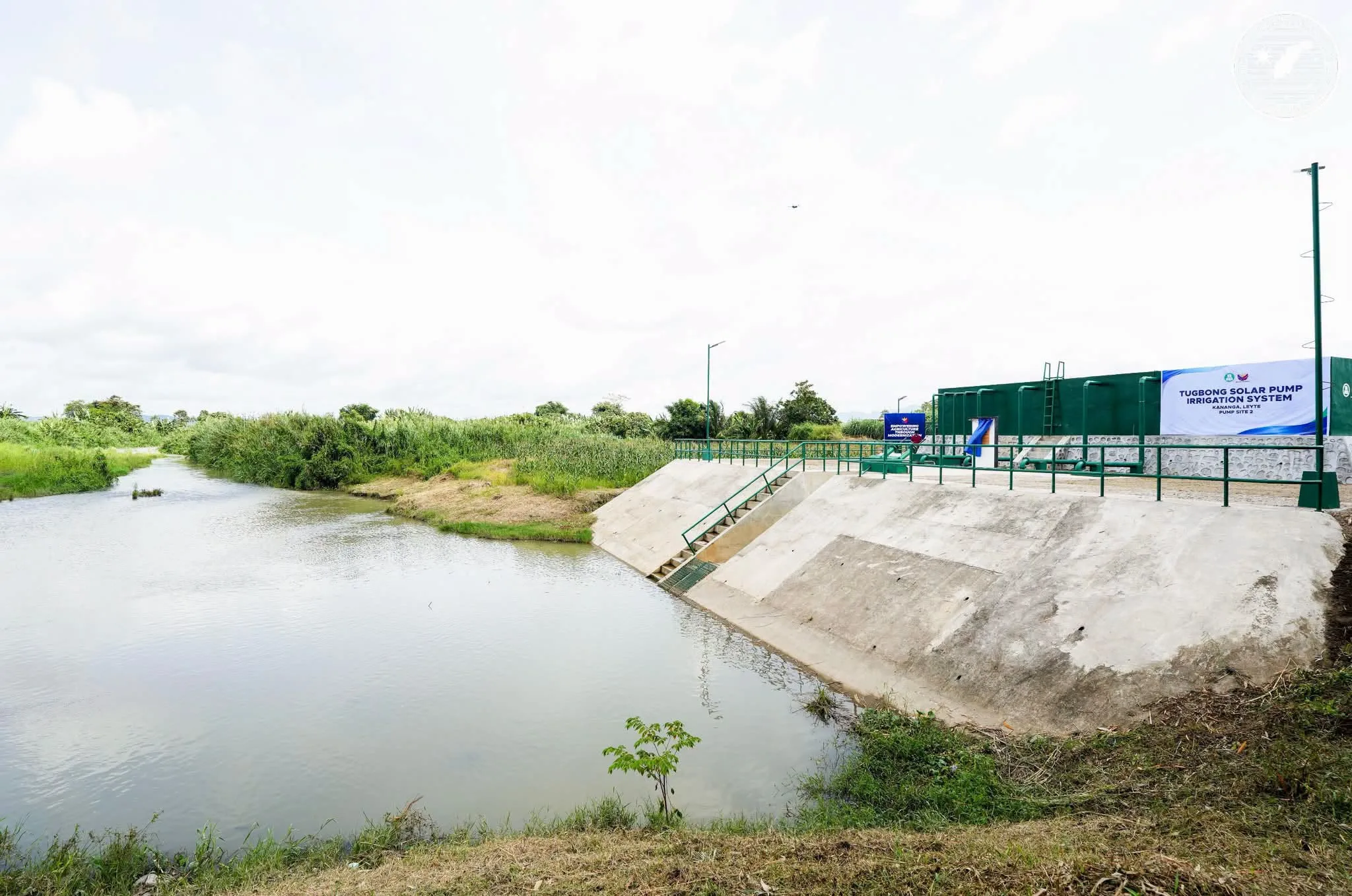
KANANGA, Leyte — The Tugbong Solar Pump Irrigation Project has been inaugurated, delivering a reliable and fuel-free water source to 115 hectares of rice fields in Barangays Tugbong and Sto. Niño. The ₱91-million facility, built by the National Irrigation Administration, is set to begin operations in November 2026.
A Solar-Powered Lifeline for Kananga Farmers
For decades, farmers in this town relied on rainfall or expensive diesel-powered pumps to water their crops. The new solar facility changes that equation entirely. By harnessing the sun’s energy, it eliminates fuel expenses that previously ate into already thin profit margins.
The project directly benefits 66 farmer-members of the TONAY Solar Irrigators Association, composed of 35 men and 31 women. These farmers will manage and maintain the facility, ensuring that the infrastructure remains operational for years to come. The association’s leadership reflects a strong commitment to inclusive agricultural development.
How the Tugbong SPIP Works
The system operates across two sites, each equipped with 240 solar panels capable of generating 305 watts of power. Eight 15-horsepower submersible pumps draw water from underground sources, pushing it through a pipe network and farm-level irrigation system. The entire operation runs without a single drop of diesel.
This design is particularly crucial during prolonged dry spells. When surface water sources like rivers and creeks run dry, the solar pumps can still access groundwater, providing a buffer against drought conditions. The technology ensures that farmers can plant with confidence, even when the rains fail.
Cutting Costs and Boosting Yields
The financial impact is immediate and significant. Farmers are expected to save between ₱17,280 and ₱25,920 per day on fuel costs, according to project estimates. Over a season, these savings can be redirected toward family needs, farm improvements, or additional inputs.
More importantly, the reliable water supply allows farmers to increase their planting cycles from two to three per year. This shift could substantially raise annual harvests and incomes. For 77-year-old farmer Marciano Nahine, the project offers hope of recovering losses from past dry spells. He recalled harvesting only 50 cavans per hectare instead of the previous 100 due to water shortages.
Women Leading the Charge
Four of the five members of the TONAY Solar Irrigators Association’s Board of Trustees are women. This female-led leadership structure highlights the growing role of women in agricultural management and community-based irrigation governance. Their involvement strengthens the project’s long-term sustainability and social impact.
The association’s president, Judith Rio, expressed gratitude for the project, noting that it has introduced farmers to technology that makes agricultural work less burdensome. The savings from fuel alone, she said, have already eased the financial pressure on farming families.
A Nationwide Push for Climate-Smart Agriculture
The Tugbong SPIP is part of a broader national effort to expand solar-powered irrigation across the country. Approximately 3,000 solar pump irrigation systems have already been established nationwide, with more in the pipeline. These facilities are designed to reduce dependence on fossil fuels while building resilience against El Niño.
Another solar project in Ormoc City, the Guintigui-an SPIP, will serve 70 hectares of farmland and benefit 87 farmers. Together, these initiatives signal a strategic shift toward climate-smart agriculture. By investing in renewable energy infrastructure, the government is helping farmers adapt to a future of increasingly unpredictable weather.
