


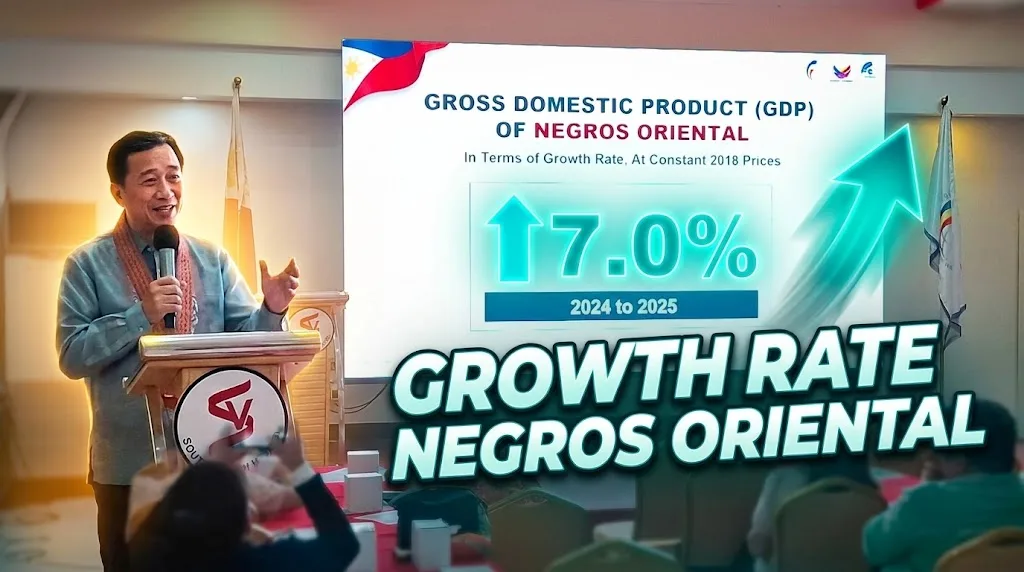
Negros Oriental recorded 7.0% economic growth in 2025, highlighting the province’s economic progress across key sectors, including services, agriculture, fisheries and forestry, and industry. The latest figures were presented by the Philippine Statistics Authority (PSA)–Negros Oriental during the Provincial Product Accounts Data Dissemination Forum held on October 15, 2026, at Southview Hotel in Dumaguete City.
Negros Oriental Records 7% Economic Growth
The province’s latest Gross Domestic Product (GDP) data showed that its economy grew by 7.0% from 2024 to 2025. The figures provide an overview of the province’s economic performance and the industries contributing to its development. PSA–Negros Oriental Chief Statistical Specialist Engr. Ariel Fortuito presented the information during the forum, sharing insights into the province’s economic output and the contributions of its major sectors.
The results highlight the importance of tracking local economic performance to better understand the province’s development and changing economic activities.
Services Sector Leads Economic Growth
Among the major contributors, the services sector accounted for 4.7 percentage points of Negros Oriental’s reported 7.0% economic growth. Services encompass a broad range of activities, including trade, transportation, accommodation, food services, and other businesses that support daily economic activity. Agriculture, fisheries and forestry, along with industry, also contributed to the province’s overall economic performance. Together, these sectors reflect the diverse activities that support livelihoods, businesses, and local communities across Negros Oriental.
Dumaguete Forum Highlights Provincial Economic Data
The Provincial Product Accounts Data Dissemination Forum brought together participants to learn about the province’s latest economic figures and understand how different industries contributed to growth. The presentation provided an opportunity to share official statistics that can help government agencies, businesses, researchers, and other stakeholders better understand Negros Oriental’s economic conditions.
